How to Set Saddle Fore-Aft Position
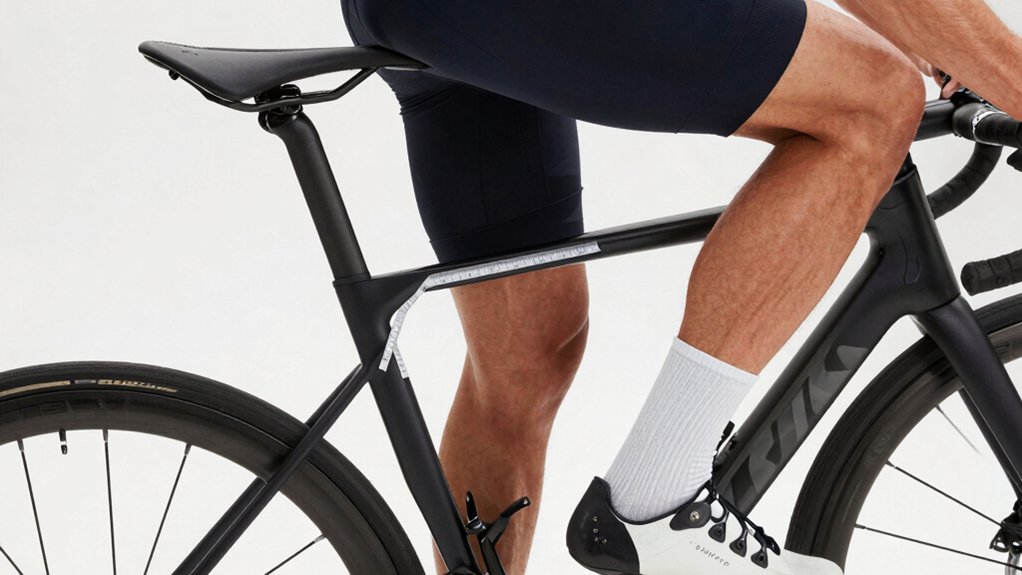
Start from a baseline (KOPS or greater trochanter). Then move the saddle in small measured steps—about 0.5 cm (5 mm)—and re-test balance and comfort after each change. If balance fails, shift back 0.5–1.0 cm and shorten reach.
Large moves (approximately 10–20 mm) require lowering height approximately 3 mm per 10 mm setback. Finger-tighten rails; torque per manufacturer spec. Then re-torque after a short ride. Follow incremental checks and torque sequence to avoid damage. More setup tips follow.
Quick Overview
- Start from a baseline (KOPS or greater trochanter) and record saddle setback relative to the seat tube axis in 0.5 cm increments.
- Move saddle fore/aft in 5 mm steps. Re-test balance and hip-centered position after each change for about 20 minutes.
- Use a 3:1 height adjustment rule: 10 mm back ≈ 3 mm lower. Re-check reach and pelvic comfort after major moves.
- If balance fails, shift saddle back 0.5–1.0 cm; shorten reach as needed. Then repeat the balance test.
- Torque rails per manufacturer specs with a calibrated wrench; follow progressive tightening and re-torque after a short ride.
Saddle Setback Measurements Chart
Wondering how much saddle setback will change your saddle height? You’ll use a simple 3:1 ratio: moving saddle back 10mm needs ~3mm height reduction. Moving forward 3mm raises height ~1mm. After major saddle setback changes, reassess height and repeat balance tests.
| Move (mm) | Height change (mm) | Action |
|---|---|---|
| Back 10 | Down 3 | Re-torque clamp, re-test |
| Forward 3 | Up 1 | Check reach, hand load |
| Back 20 | Down 6 | Shorten reach if needed |
For fore aft adjustments, start small. Keep saddle angle, respect clamp limits, and validate with the balance test to ensure hip-centered position and proper pedal reach.
Cm Saddle Setback Guide
How many millimeters should you move your saddle back? Use centimeters as clear increments: small changes matter. Start from your baseline (KOPS or greater trochanter alignment). Then adjust in 5mm (0.5cm) steps and re-test balance. Remember saddle height changes shift fore-aft; so compensate if you alter height.
- Measure setback in cm from seat tube axis to a reference on the saddle, and record each change.
- Ride-test after each 0.5cm move for 20 minutes, noting hand load and pelvic comfort.
If balance test fails, move saddle back 0.5–1.0cm and shorten reach. Avoid torque or rail stress. Use two word discussion ideas like “comfort vs power” and “reach balance” when comparing saddle fore aft positions.
Torque Specs for Rails
Check the rail clamp torque values for your saddle and follow the manufacturer’s torque ranges to avoid slipping or crushing the rails. Use a calibrated torque wrench and the proper torque sequence: alternating bolts and incrementing to final torque to get even clamping.
Watch for common over-torque signs like flattened or cracked rails, stripped bolts, or sudden saddle tilt. Stop if you see them.
Rail Clamp Torque Values
What torque should you use on your saddle rails to keep position secure without crushing them? Use the lowest setting that prevents slippage. For most alloy rails, a 6–8 Nm target on the rail clamp is safe. For hardened steel rails, you can lean toward 8–10 Nm; for lightweight carbon rails, stay conservative at 4–6 Nm and follow manufacturer guidance.
Always tighten incrementally. Check saddle setback and fore-aft alignment; then torque again after a short ride. Use a calibrated torque wrench and apply even pressure to both clamp bolts if present. Avoid asymmetric tightening that shifts setback. If rails deform or creak at recommended values, stop and inspect: damaged rails need replacement rather than higher torque.
Manufacturer Torque Ranges
Why do manufacturers give ranges instead of single numbers? They account for material differences, rail diameter, clamp design, and lubricant presence. You should follow published torque ranges to avoid crushing alloy rails or under-clamping carbon ones.
Start at the low end for carbon rails and increase only if slippage occurs. Check saddle setback and fore-aft alignment after each tweak. Use progressive, small increments and re-torque after a short ride; clamps bed in and can loosen.
If you change saddle setback significantly, recheck torque because clamp loading shifts. Never exceed the upper limit; doing so risks rail damage and altered geometry. Treat the range as a safe window: torque for secure fixation, not maximum force.
Torque Measurement Tools
When you adjust saddle setback and clamp torque, you’ll need the right tools to measure and apply the specified range accurately. Use a calibrated torque wrench rated for the low Nm values common to rail clamp bolts; click-type or beam models work if they’re in good condition. Fit the correct bit or adapter to avoid rounding fasteners.
For repeatable torque measurement, set the wrench to the manufacturer’s lower and upper limits. Then apply smooth, controlled force until the wrench indicates. If your rail clamp uses an integrated torque indicator, verify it against your wrench periodically.
Avoid over-torquing: metal rails and alloy clamps fail with excessive force. Keep tools clean and storage-calibrated. Replace any wrench with suspect accuracy.
Torque Sequence Steps
How tightly should you torque saddle rail clamps? Use a controlled fore aft torque sequence: Finger-tighten rail clamps, then set to one-third of final spec on each bolt in turn. Mirror-tighten to two-thirds, then finish to full spec.
Work in small increments and alternate sides to keep the saddle centered on the saddle rails. Use a calibrated torque wrench and the manufacturer’s specified Nm; if unspecified, 4–8 Nm is common for alloy rails, lower for carbon. After final torque, check fore‑aft position and make minute adjustments only by loosening both clamps, sliding rails, and reapplying the same sequence.
Re-torque after a short test ride. This prevents slippage, uneven clamping, and rail damage.
Common Over‑Torque Signs
Wondering what to watch for when you’ve over-torqued the saddle rail clamps? You’ll see clear torque related signs: flattened or shiny rails, crushed alloy clamps, or threads showing distortion. Rails may fracture later under load. Torque strips or indents in carbon shells are a red flag.
Check for squeezed clamp bodies that bind adjustment; that’ll hide true fore aft cues during setup. If the saddle won’t slide smoothly, or small torque changes cause large positional shifts, you’ve exceeded safe clamp load. On carbon rails, look for hairline cracks or matrix crazing near clamp contact.
If you spot these, stop and document torque used. Replace damaged parts and reassemble with manufacturer torque specs and a calibrated wrench.
Frequently Asked Questions
How Does Saddle Height Change Affect Fore-Aft Position?
Raising or lowering saddle height shifts the saddle fore‑aft: raise 1mm and the saddle moves about 0.3mm rearward. Lower 1mm and it moves 0.3mm forward. That interaction changes saddle tilt effects and alters knee bending at top and bottom of the stroke.
Is KOPS Still Useful for Modern Bike Fitters?
Yes, you can still use KOPS as a discussion ideas starter, but you shouldn’t treat it as definitive. It’s practical for quick checks and rider buy-in.
Yet modern fitters pair it with saddle geometry, greater trochanter alignment, and dynamic ride tests. You’ll use KOPS to frame positioning; then verify and adjust fore-aft with hip balance, ride-forward testing, and saddle height interactions to ensure comfort, power, and correct center-of-gravity.
How Do I Use the Greater Trochanter for Fore-Aft Setup?
Align the greater trochanter with the seat tube axis to set fore aft setup. Use saddle anatomy landmarks and a plumb line from hip to pedal spindle; adjust rails until the trochanter sits over the axis.
Check hip mechanics by doing a balance test and short pedal efforts. If hips rock or you feel too far forward, move the saddle aft in small increments. Reassess reach and comfort after each change.
When Should I Move the Saddle Forward Incrementally?
Move the saddle forward incrementally when knee tracking drifts behind the pedal spindle or you fail the balance test and feel excessive rearward hip load. Shift 5mm, ride 20 minutes, and reassess knee tracking and saddle setback relative to your greater trochanter.
If hand pressure drops too low or reach feels overstretched, stop and move back slightly. Repeat until knee tracks cleanly over the pedal and your weight balances comfortably.
How Does Fore-Aft Affect Hand Pressure and Balance?
Fore-aft interaction directly shifts your center of gravity. Moving the saddle forward increases hand pressure, while moving it back reduces it. You’ll feel hand pressure dynamics change: forward opens hips, loads the front end and hands. Aft shifts weight rearward, relaxes your arms and engages glutes.
Use small 5mm steps; ride-test 20 minutes. Stop if hand weight or quad-hamstring imbalance appears, and adjust reach if you move the saddle back.
Conclusion
You’ve now got the tools to set saddle fore-aft confidently: use the centimeters setback chart, follow manufacturer rail-clamp torque ranges, and verify with a calibrated torque wrench.
Start from a neutral setback, make small fore-aft adjustments, then tighten bolts in the prescribed sequence to target torque. Check for creaks or slipping as signs of over-torque.
Reassess comfort and pedaling efficiency after a short test ride, and fine-tune as needed.
Related: How to Set Handlebar Height on