Cycling Recovery Basics
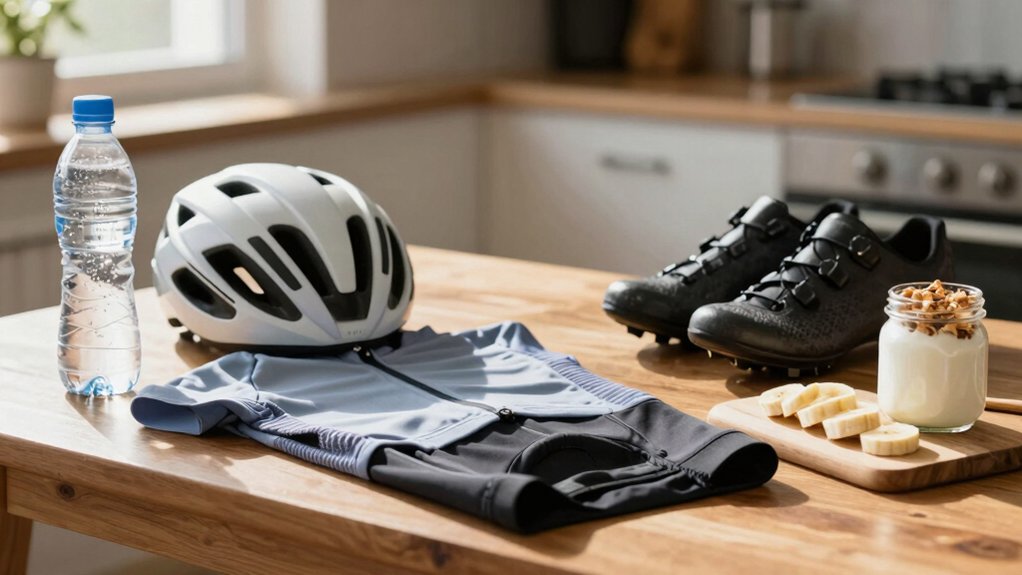
You should treat recovery rides as controlled, low‑intensity sessions—typically 30–90 minutes at ~55–75% of your lactate threshold or ~60–70% max HR—to promote blood flow and speed repair.
Keep cadence smooth (≈85–95 rpm or whatever feels effortless); use easy gears; and avoid surges that spike HR or power. Track cadence and HR to detect >5% drift, and adjust gear or duration.
Follow simple sensor checks and brief neuromuscular intervals to correct issues. You’ll learn practical next steps.
Quick Overview
- Do 30–60 minute easy rides after hard sessions to boost blood flow and aid recovery.
- Use 60–90 minute low-intensity rides during recovery weeks to maintain volume without stress.
- Keep heart rate in low zones (~55–75% LT or ~60–70% max HR) to stay below threshold.
- Maintain a smooth, consistent cadence and small timely gear shifts to prevent neuromuscular fatigue.
- Record cadence, HR, and power. Review lap-by-lap metrics to spot >5% cadence drift or incomplete recovery.
Recovery Ride Duration Chart
How long should your recovery rides be? You’ll use evidence-based durations tied to prior load and goals: standard 30–60 min, extended 60–90 min, or specific 60–90+ min for recovery weeks. Track fatigue and adjust.
| Duration | Context | Purpose |
|---|---|---|
| 30–60 min | After hard sessions | Promote blood flow |
| 60–90 min | Recovery week/endurance | Maintain volume |
| 90 min+ | Post multi-day event | Gradual return |
Apply two word discussion ideas when planning (e.g., “easy tempo”). Note recovery nuances like prior fatigue scaling and monitor cadence interaction with perceived effort. Keep cadence moderate to low to avoid neuromuscular stress.
Use PMC charts and simple HR checks to decide progression; err on shorter if uncertain.
Heart-Rate Target Ranges
Because heart rate gives a quantifiable window into internal load, set clear target bands for recovery rides (typically 55–75% of your lactate threshold or ~60–70% of max HR) to ensure you’re stimulating circulation without adding metabolic stress. Use Heart Rate Zones to prescribe sessions, monitor drift, and validate recovery status objectively.
- Zone selection: Pick low zones (zone 1–2) and stay below threshold to avoid recruiting high metabolic pathways.
- Duration control: Limit time in target bands to planned recovery durations from the chart; longer low-intensity steady-state supports capillary perfusion.
- Cadence consistency: Maintain smooth pedaling to promote blood flow without spiking HR.
- Monitoring: Track HR zones over weeks to detect incomplete recovery and adjust training load.
Pedal Cadence Troubleshooting Tips
Watch for cadence drift during rides by monitoring consistent RPMs and using cadence sensors to detect subtle changes that signal fatigue or poor technique.
If you notice drift, correct gear selection and focus on a smooth, circular pedal stroke while using short intervals to retrain neuromuscular control.
These practical steps: sensor feedback, targeted interval work, and deliberate gear changes are supported by evidence for improving efficiency and recovery.
Detecting Cadence Drift
When did you last check whether your pedal cadence stayed consistent throughout a ride? Use objective monitoring: record cadence with a reliable sensor and review lap-by-lap metrics to quantify cadence drift and cadence drift detection.
Compare mean cadence across intervals, noting progressive declines >5% as meaningful. Cross-reference power and heart rate to distinguish neuromuscular fatigue from pacing changes.
Inspect sensor integrity and magnet alignment to exclude measurement error before concluding true drift. If drift appears only late in sessions, attribute it to cumulative fatigue; if it occurs early, consider equipment or setup faults.
Document occurrences over multiple rides to establish patterns. This evidence-based approach lets you separate real physiological decline from artefacts and plan targeted recovery or technique interventions.
Correcting Gear Selection
Cadence drift you’ve detected on repeat intervals often points to more than fatigue alone; gear choice and shifting strategy play a measurable role in maintaining target cadence. You should assess gear selection relative to power and terrain: select a gear that lets you sustain target revolutions per minute with minimal torque spikes.
Use small, timely shifts before cadence falls rather than large jumps that force abrupt neuromuscular adjustments. For cadence troubleshooting, record cadence and gear ratio during intervals to identify patterns where drift begins. Adjust chainring/cassette combinations in training to find ranges that match your preferred cadence band.
Practice controlled, anticipatory shifts on slight gradients. This reduces transient cadence loss and supports consistent recovery between efforts.
Smooth Pedal Stroke
Why is a smooth pedal stroke essential for maintaining power and reducing fatigue? You’ll reduce metabolic cost and uneven muscle loading by eliminating dead spots that waste energy.
Assess torque application through short drills: perform 30-second single-leg spins and 60-second high-cadence bursts, noting asymmetry or stalling. Use biomechanical cues—ankle dorsiflexion on the upstroke, circular force application—and prioritize neuromuscular control over higher resistance.
If you feel erratic pedaling, apply cadence troubleshooting: lower resistance, focus on even pressure throughout 360 degrees, and repeat controlled intervals until rhythm stabilizes. Track perceived effort and power consistency; improvements should appear within weeks.
This systematic approach, supported by cadence control research, preserves power output and minimizes cumulative fatigue.
Using Cadence Sensors
Building on smooth-pedal techniques, using a cadence sensor gives you objective feedback to correct dead spots and asymmetries that subjective feeling can miss. You’ll first validate cadence sensor installation: mount the magnet or sensor per manufacturer torque specs, align it to trigger consistently, and confirm readings at low and high rpm.
Calibrate in controlled spins and note left-right imbalances. Small, repeatable deficits indicate neuromuscular asymmetry rather than bike setup. Use averaged cadence metrics to guide technique adjustments; do not use them as a sole performance target.
Protect cadence data privacy by anonymizing uploads and limiting cloud sync when possible. Review app permissions and delete raw logs you don’t need. Regular checks maintain sensor accuracy and reproducible recovery monitoring.
Training With Intervals
Having trouble holding target rpm during interval sets? You should assess cadence consistency objectively: use a sensor, log rpm, and review variance across repetitions.
Fatigue, improper gearing, and inconsistent interval pacing drive drops in cadence. Structure intervals with clear work:rest ratios. Start conservatively and prioritize a cadence you can sustain for all reps rather than maximal rpm for a single effort. If cadence decays >5–8% across repeats, increase recovery or lower intensity.
Implement short neuromuscular drills (20–30 s at slightly higher rpm) after a proper warm-up to reinforce motor patterns. Monitor sleep, nutrition, and hydration; insufficient recovery undermines steady cadence. Adjust training load if you see persistent cadence inconsistency despite tactical changes.
Frequently Asked Questions
How Much Sleep Do Cyclists Need for Optimal Recovery Nightly?
You need between 6 hours 45 minutes and 9 hours of sleep nightly for prime recovery. Adequate sleep is the primary recovery strategy; amounts below about 6.5 hours are insufficient for hard training.
Prioritize consistent sleep schedules, as quality sleep outweighs other recovery strategies and largely determines training adaptation. If you’re short on sleep, adjust training load, optimize nutrition and hydration, and use active recovery to mitigate deficits.
What Should Post-Ride Meals Include for Best Recovery?
Include both post ride protein and carbohydrates promptly: aim for 20–30 g protein and a 3:1–4:1 carb:protein ratio within 30–60 minutes. You’ll restore glycogen and stimulate muscle repair by prioritizing carbohydrate timing and spreading protein intake through the next few hours.
Choose whole foods like lean meat, dairy, or plant protein plus starchy carbs or fruit. Add fluids and electrolytes to complete rehydration and support recovery.
How Does Hydration Affect Back-To-Back Training Days?
Proper hydration strategies directly preserve performance on back-to-back training days by maintaining blood volume, thermoregulation, and neuromuscular function. You’ll recover faster when you rehydrate promptly after each session; replace electrolytes lost in sweat; and drink consistently before the next workout.
Monitor urine color and body mass changes to guide fluid needs. Neglecting rehydration impairs power, slows muscle repair, and degrades consecutive-day training quality.
Are Compression Garments Worth Using After Hard Efforts?
Yes, compression garments can help after hard efforts, but modestly. You’ll gain compression benefits like reduced soreness and improved perceived recovery, supporting circulation and recovery psychology.
However, garment limitations include small objective performance gains and variable responses between athletes. Use them as an adjunct to sleep, nutrition, and hydration.
Weigh cost effectiveness: low-to-moderate price makes them a reasonable supplemental tool; they are not a primary recovery strategy.
When Should I Schedule Rest Weeks in a Training Plan?
Schedule rest weeks every 3–6 weeks depending on training load and goals. You’ll use rest week scheduling to allow progression, fatigue management, and reset intensity. Monitor sleep, performance, and mood to distinguish recovering versus overtraining.
In training cycle planning, reduce volume by 40–60% and cut intensity while keeping short, easy sessions. You’ll prioritize nutrition and sleep during rest weeks to maximize adaptation and prevent cumulative fatigue.
Conclusion
You’ll recover faster and ride more consistently when you prioritize low-intensity, cadence-aware sessions that match evidence-based heart-rate targets and sensible durations. Use cadence sensors to detect drift, troubleshoot gear selection, and smooth your pedal stroke. Rather than chasing speed or watts, focus on these aspects.
Intervals still have a place; however, keep them controlled and purposeful within a recovery framework. Apply these practical, measurable strategies consistently, and you’ll reduce fatigue, lower injury risk, and improve long-term performance.
Related: How to Use Cadence and Heart