How to Index Bike Shifting
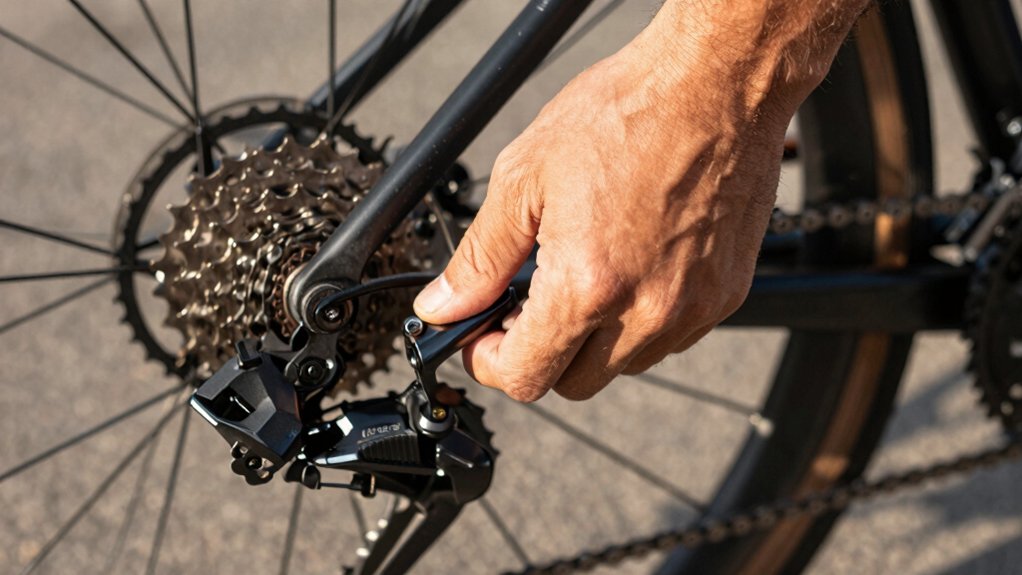
You’ll index your bike by setting cable tension, adjusting high/low limit screws, and confirming pulley alignment so each click moves one cog cleanly. Shift to a middle sprocket. Turn the barrel adjuster counterclockwise to tighten until shifts are crisp; turn it clockwise to loosen if it overshoots.
Set the high screw with the chain on the smallest cog; set the low screw on the largest. Then test across the cassette and tweak for no rub. Follow the steps below to learn precise tuning.
What Is Bike Shifter Indexing?
- Set the derailleur to a middle cog, then adjust cable tension with the barrel adjuster until shifts are crisp and complete.
- Use the high screw on the smallest cog and the low screw on the largest to stop overshoot and align the upper pulley.
- Watch the upper pulley under each sprocket while pedaling. Fine-tune barrel turns until one click equals one cog.
- Choose a cassette tooth spread matching your drivetrain and derailleur capacity to maintain consistent indexing and clean steps.
- Finish with a test ride. Recheck pulley alignment across all cogs, and make small limit or tension tweaks for perfect shifts.
Cassette Tooth Counts Table
A cassette’s tooth counts determine how smoothly and widely your drivetrain shifts. Road cassettes (like 11–28T) use tight, consistent steps for speed. Gravel cassettes (11–34T to 11–40T) balance range and spacing for mixed terrain. MTB cassettes (11–42T or 10–50T) give very wide low-end gears with larger jumps that need careful derailleur setup.
You’ll read sprocket steps and plan derailleur indexing based on cassette teeth patterns: consistent gaps simplify indexing; wide-range cassettes demand precise limit and cable settings. Choose a cassette whose tooth spread matches your riding and derailleur capacity. The table below links range to feeling so you pick confidently.
| Range | Feeling |
|---|---|
| 11–28T | Smooth, fast |
| 11–34T | Versatile, balanced |
| 11–42T | Grippy, forgiving |
| 10–50T | Epic, demanding |
Cable Tension Quick-Adjust Steps
How tight should the cable feel when you click through gears? You want responsive, not rigid: light resistance that moves the derailleur smoothly with each click. Use quick adjustments at the barrel adjuster to tune cable tension until shifts are crisp and without hesitation.
- Shift to a middle cog. Click the shifter one step toward harder gears. Then turn the barrel adjuster counterclockwise in small increments until the derailleur moves cleanly; this increases cable tension.
- If the chain overshoots or feels tight, wind the barrel adjuster clockwise to reduce cable tension until the shift settles without delay.
- Test across the cassette. Make further quick adjustments while pedaling until every click produces a precise, complete shift.
Limit Screw Calibration Procedure
Start by locating and gently setting the high and low limit screws so the derailleur can’t overshift off the cassette.
Check gear alignment across the cassette; adjust cable tension if the chain hesitates. Use small derailleur positioning tweaks to center the pulleys under each cog.
Finish with a short test ride and fine-tune the screws and cable until shifts are crisp and the chain is secure.
High And Low Screws
Why adjust the high and low screws? You set the high screws and low screws to stop the derailleur at the cassette extremes so the chain won’t overshoot or drop.
First, shift to the smallest cog and back off cable tension. Turn the high screw until the upper pulley aligns just inside the smallest sprocket without rubbing. Then shift to the largest cog, release cable as needed, and turn the low screw so the pulley aligns just inside the largest sprocket but won’t push the chain into the spokes.
Make small quarter-turns, recheck shifts after each change, and ride-test under light load. Proper limit adjustment prevents chain drops and bent hangers; it keeps indexing reliable and safe.
Gear Alignment Check
With your high and low screws roughly set, check gear alignment by observing how the derailleur’s upper pulley tracks each sprocket as you click through the cassette. Stand behind the bike, pedal slowly, and watch the pulley move directly under each cog tooth.
If the pulley lags or rubs, note the position; limit screws should prevent overshoot but not cause constant derailleur noise. Inspect cogs and chain for gear wear: worn teeth make precise tracking impossible.
Do visual checks at several cassette positions, including extremes and middle gears. If the pulley consistently misaligns only at one cog, re-seat the derailleur hanger or adjust the corresponding limit screw slightly.
Confirm smooth, silent transitions before finishing.
Cable Tension Adjustment
How do you get crisp, consistent shifts across the cassette? Start by ensuring no cable slack: shift to the smallest cog, loosen the cable anchor, pull taut, then retighten.
Backpedal slowly while actuating the shifter to confirm movement without binding. Use the barrel adjuster to fine-tune tension; turn clockwise to reduce slack and counterclockwise to add tension until each click moves the chain one cog.
Now calibrate limit screws to protect derailleur alignment: set the high and low stops so the derailleur can reach end cogs without overshooting.
Recheck cable tension after limit adjustments; tension changes subtly with screw movement. Ride-test through the cassette and make small barrel-adjuster tweaks until shifts are precise and repeatable.
Derailleur Positioning Tips
Want the derailleur to stop exactly where it should? Start by setting cable tension correctly so shifts reach each cog reliably. Shift to the smallest rear cog, hold the shifter, then adjust the high (H) limit screw until the upper jockey wheel aligns vertically with that cog.
Release the shifter, move to the largest cog, and use the low (L) limit screw to prevent overshooting into spokes. Align the jockey wheel with the largest sprocket without rubbing. Re-check cable tension after limits are set; small tension changes can alter end positions.
If the chain resists smooth entry, back off a half-turn on the relevant limit and re-fine cable tension. Finish with slow manual shifts through the cassette to confirm accurate derailleur positioning.
Test Ride Fine-Tuning
Ready to verify your limit settings on the road? Take a short ride in a quiet area, shift through every gear, and listen for chain rub or hesitation. Use small adjustments to the high and low limit screws if the chain tries to drop off or won’t reach extreme cogs.
Return to a stop and fine-tune cable tension with the barrel adjuster after noticing any delayed engagement. Repeat rides for under-load checks: pedal at a steady cadence while shifting up and down the cassette to confirm clean, instant moves. Note how changes affect bicycle aesthetics and practical cable routing.
Also consider urban commuting conditions: stop-and-go shifts and debris before finalizing your limit screw calibration.
How Often Should You Check Your Bike Shifter Indexing on a Bike?
You should inspect your bike shifter indexing at least once a month for routine riders and before every long ride if you commute daily or ride in wet or dusty conditions. Catching wear early keeps repair costs low and prevents the cascading damage that turns a small component issue into a full drivetrain or wheelset replacement.
Frequently Asked Questions
Can I Index Shifting on an Electronic Groupset Instead of Cables?
Yes, you can’t index electronic shifting the same way as cables. However, you can ignore common indexing myths: electronic systems use servos and software to position derailleurs precisely.
Wireless shifting setups (Di2, AXS, Campagnolo) let you adjust trim, shifts, and sync modes via apps or base units rather than cable tension. You’ll configure shift maps, update firmware, and fine-tune positions digitally for crisp, reliable shifts without mechanical indexing.
How Often Should I Replace Worn Shifter Cables Housing?
Replace worn shifter cables and housing roughly every 1–2 years or sooner if you notice sticky shifting, frayed cables, or corrosion. Riding conditions, tire pressure impacts, and frame design routing can accelerate wear. Wet, gritty roads and tight bends wear housings faster.
Inspect cables with every major service and swap them during drivetrain overhauls or after 3,000–5,000 miles. Fresh cables keep indexing crisp and protect your derailleurs and shifting performance.
Will Cross-Chaining Damage My Drivetrain Long-Term?
Yes, cross-chaining will wear components faster. You’ll force the chain at an extreme angle, increasing lateral stress on chainrings, cassette teeth and derailleur pulleys. This accelerates wear and risks poor wheel alignment and shifted indexing. It can also affect brake compatibility if wheel or frame flex alters rotor/travel clearance.
Avoid extreme gear combinations; use middle-range gears and shift the front or rear to keep the chain straighter to prolong drivetrain life.
Can I Index a 1x Drivetrain Differently Than a 2x?
Yes, you can index a 1x differently than a 2x. With different gearing and no front shifts, you’ll set the rear spacing and limit screws for a single chainline and prioritize consistent indexing across the cassette.
Your shifting philosophy shifts from managing chainrings to optimizing cassette jumps and clutch tension. Adjust B-tension, derailleur alignment, and cable pull so each click lands cleanly. You’ll get simpler, more reliable shifts.
Do Wheel Hub Spacing or Cassette Type Affect Indexing?
Yes. Wheel hub spacing and cassette type affect indexing because they determine cassette placement and tooth spacing. If hub spacing changes, your cassette sits differently on the freehub; this alters shift alignment.
Different cassette types (brand, speed, tooth profile) have varied sprocket spacing. Therefore, your derailleur pull per click must match. You’ll need correct freehub compatibility; this may require a different derailleur limit or cable tension. Additionally, you will need to fine-tune indexing.
Which Shifter Indexing Setup Approach Is Right for Your Bike?
You’ve got the basics to index your shifting: check cassette tooth counts, set initial cable tension, and calibrate the high and low limit screws so the chain can’t overshoot.
Verify hanger and derailleur alignment, make small cable-tension tweaks with the barrel adjuster, and confirm shifting through every gear. After each change, test-ride and fine-tune. With these steps done patiently and precisely, your drivetrain will shift crisply and reliably.