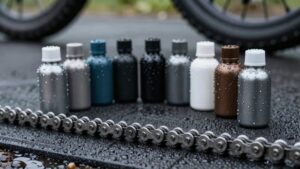
Wet Lube Vs Dry Lube Differences
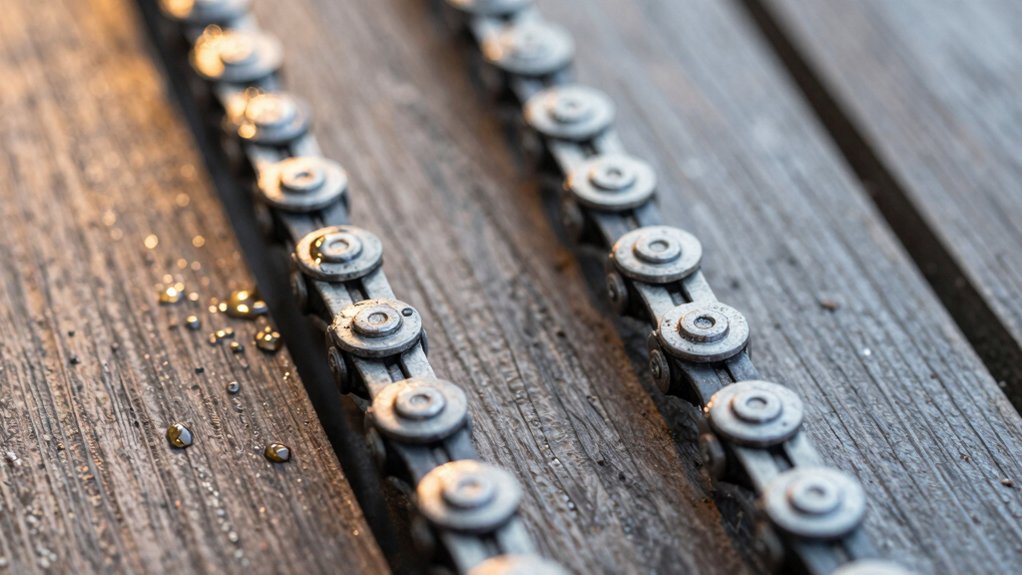
You should pick wet lube when you ride in rain, salt, or want long intervals between cleans because it gives a durable film and corrosion resistance.
Choose dry or wax for the lowest friction, cleaner chains, and dusty or short-service rides since they cut drag and shed grit. Temperature alters behavior: cold thickens wet oils and can make wax brittle. Heat thins oils and speeds wear.
Keep seasonal swaps in mind; more details follow.
What Is Wet vs Dry Bike Chain Lube?
- Dry Lubes/waxes give the lowest friction in clean, dry conditions, maximizing drivetrain efficiency.
- Wet Lubes form a viscous film that better protects against water, salt, and corrosion in wet conditions.
- Dry/wax options shed dust and need more frequent reapplication after dirty rides. Wet oils last longer between services and tolerate high-mileage, infrequent-clean maintenance.
- Temperature and season: use wet in cold/wet or salty winters. Switch to dry/wax for warm, dry riding.
Wet vs Dry Friction Values
How do wet and dry lubes actually compare on friction? You’ll see wet vs dry trade-offs in friction values: dry options and drip/hot-melt waxes give the lowest coefficients, cutting measured losses to ~3–4W. While typical wet oils register higher coefficients, they offer durable film strength.
In dry dust, you’ll get lower ongoing friction with dry/drip wax. In wet or salty conditions, the viscous wet film keeps friction from spiking by preventing metal-on-metal contact. Choose by conditions: prioritize lowest friction values for clean, dry rides; pick wet when longevity and corrosion resistance matter.
| Emotion | Choice | Outcome |
|---|---|---|
| Relief | Dry wax | Low friction, crisp shifts |
| Confidence | Wet oil | Lasting protection, steady drag |
Chain Compatibility Checklist
Now that you’ve weighed friction and weather performance, pick lubricants that match your chain’s material, finish, and riding habits. You’ll check chain compatibility to avoid wasted lube, poor wear protection, or flaky buildup. Consider whether your chain has a plated finish, stainless links, or a wax coating factory treatment: each responds differently to wet or dry formulas.
- Match finish: Plated or stainless chains tolerate wet lube well. Wax-coated chains often prefer dry, wax-based products.
- Riding conditions: Choose wet lube for persistent rain/mud. Pick dry lube for dusty, mixed trails to limit dirt pickup.
- Maintenance cadence: If you ride high mileage between cleans, favor wet formulas. If you clean and reapply frequently, use dry/wax options.
Temperature-Dependent Maintenance
You’ll notice lube behavior changes with temperature: cold thickens wet formulas and can make dry waxes brittle. Heat can thin wet lubes and accelerate breakdown. Watch for freeze–thaw cycling that forces additives out. Plan seasonal re-lubrication timing accordingly.
Adjust application (how much and when) based on expected conditions to keep the chain protected without over- or under-lubricating.
Cold-Weather Viscosity
Feeling the chill? You’ll notice cold weather viscosity changes how wet and dry lubes behave. In low temperatures, wet lube thickens, so it stays put and protects against corrosion; however, it can slow chain movement at startup.
Dry lube’s lower viscosity and wax-like film can become brittle or slow to set in the cold, requiring longer curing times. Your temperature driven application choice should match conditions: pick wet lube for cold, wet roads or salty winter commutes where staying lubricated matters. Choose dry lube when you’ll ride in cold, dry, dusty environments and can allow extra drying time.
Check performance after the first few miles and reapply if you hear creaks or feel stiffness.
Heat-Induced Breakdown
High heat can accelerate lubricant breakdown, so you should monitor lube performance after long, hard rides or climbs where chain temperatures climb. You’ll notice wet lube can thin under sustained heat, increasing fling and attracting grit; that heat induced breakdown shortens service intervals.
Dry lube’s wax-like film resists immediate thinning but can soften, reducing protection when temperatures stay high. For temperature driven application, choose wet lube for long, hot rides where retention matters and you can tolerate more contamination. Alternatively, reapply dry lube after cooling for cleaner operation.
Inspect chain stretch, noise, and visual film after hot efforts. If you see thinning, excess drip, or reduced film integrity, clean and relube. Schedule checks sooner after high-temperature exposures.
Freeze–Thaw Cycling
After hot rides, you check for thinning and excess drip; the opposite problem can show up when temperatures swing below freezing. You’ll find some wet lubes thicken or gel, slowing penetration and leaving sticky residue that attracts grit.
By contrast, dry lube’s wax film can become brittle, cracking under contraction and exposing metal to moisture. Inspect moving parts after cold snaps: spin the drivetrain, listen for clicking, and feel for uneven rotation. If you see flaking or hardened deposits, clean and reapply at moderate temperature. Store bottles away from freezing to preserve consistency.
In winter cycling, prioritize lubricants rated for low-temperature stability and schedule more frequent checks. Freeze–thaw cycles accelerate wear when films fail.
Temperature-Driven Application
When temperatures swing, adjust your lube choice and timing to keep the drivetrain protected and moving smoothly: use lower-viscosity wet lubes or solvent-thinned dry applications for cold starts so lubricant penetrates. Avoid applying wax-based dry lubes when temperatures are near freezing; they can harden and flake. Schedule fresh application after prolonged heat or cold exposure to restore proper film behavior.
You’ll treat temperature sensitive application as part of routine checks. In cold conditions, favor wet or thinned dry lube to ensure flow into pins and rollers. In high heat, avoid thin oils that run off and consider a more stable wet formula. Don’t apply wax based coating just before freezes, and always verify film integrity after extreme temperature events.
Seasonal Re-Lubrication Timing
Because temperatures change your lube’s behavior, schedule seasonal re-lubrication to match weather-driven needs: switch to a more robust wet lube or reapply a thinned dry/wax formula before cold spells. Consider a higher-viscosity wet option after prolonged heat to prevent runoff.
For seasonal re-lubrication timing, plan at least four checkpoints: late fall (move to wetter-weather wet lube), pre-winter salt exposure (use corrosion-resistant wet formulas), spring thaw (clean thoroughly and apply dry or wax as trails dry), and mid-summer heat (top up with higher-viscosity wet or reapply dry after cleaning).
Use temperature-driven application as your cue. If forecasts show sustained cold or rain, favor wet; if dry warm weeks follow, switch back to dry/wax for lower contamination and optimal chain life.
How Often Should You Check Your Wet vs Dry Bike Chain Lube on a Bike?
You should inspect your wet vs dry bike chain lube at least once a month for routine riders and before every long ride if you commute daily or ride in wet or dusty conditions. Catching wear early keeps repair costs low and prevents the cascading damage that turns a small component issue into a full drivetrain or wheelset replacement.
Frequently Asked Questions
How Long Should I Wait After Applying Dry Lube Before Riding?
You should wait until the dry lube dries fully; typically 2–6 hours, before riding. For best dry lube duration and application timing, apply in a clean, dry area. Spin the chain to distribute, wipe excess, then let the wax-like film set.
Shorter waits risk picking up dust and reducing mileage. Longer waits don’t hurt. If humidity’s high, give it closer to 6+ hours for optimal protection and quiet shifting.
Can I Mix Wet and Dry Lubes on the Same Chain?
Yes, you can mix wet and dry lubes, but you should avoid it unless necessary because compatibility concerns can cause inconsistent performance. If you mix, expect uneven film behavior: wet lube stays tacky and attracts dirt while dry lube may not bond properly.
For best results, fully remove the old lubricant and clean and dry the chain. Then apply one type consistently to ensure predictable longevity, noise control, and protection.
Which Lube Is Better for E-Bikes and High-Torque Motors?
Use wet lube for e-bikes and high-torque motors because it stays put under load, reduces wear, and helps manage motor heat by keeping drivetrain friction low. You’re factoring efficiency and longevity; wet lube minimizes reapplication and noise, improving ride comfort.
Wind resistance is unaffected by lube choice. Apply carefully to avoid excess fling, wipe off surplus, and expect longer intervals between services compared with dry lube.
Are There Environmental or Disposal Concerns for Each Lube Type?
Yes, you should care about environmental impact and disposal methods. You’ll avoid spills, wipe excess lube, and collect soiled rags for proper disposal. Wet lube’s thicker polymers and anti-corrosion additives can harm waterways; don’t wash chains into drains. Dry lube’s powdery coatings are less toxic but still require responsible cleanup.
Respect coating performance and follow application etiquette: apply sparingly, work in a controlled area, and dispose of contaminated materials per local hazardous-waste rules.
Does Lube Choice Affect Cassette and Chainring Wear Patterns?
Yes, your lube choice affects cassette and chainring wear patterns. If you pick incompatible lube compatibility (e.g., wet lube in dusty conditions), you’ll attract grime that accelerates abrasive wear and uneven chain wear patterns.
Dry lubes reduce grit pickup but need frequent reapplication to avoid premature metal-to-metal contact. Match lube to conditions; maintain proper application and cleaning, and you’ll minimize uneven wear and extend drivetrain life.
Which Wet vs Dry Lube Choice Approach Is Right for Your Bike?
You’ll choose wet or dry lube based on riding conditions and maintenance willingness. Wet lube gives lower friction in wet, muddy rides but attracts grime and needs periodic degreasing.
Dry lube keeps chains cleaner in dry, dusty conditions but wears faster in water and cold. Reapply more often in winter as viscosity and freeze-thaw effects change performance.
Check chain compatibility, monitor heat-induced breakdown, and set seasonal re-lubrication intervals to match temperature-driven needs.
Related reading: Bicycle Greases for — a closer look at this topic.