How to Choose Stem Length for Comfort
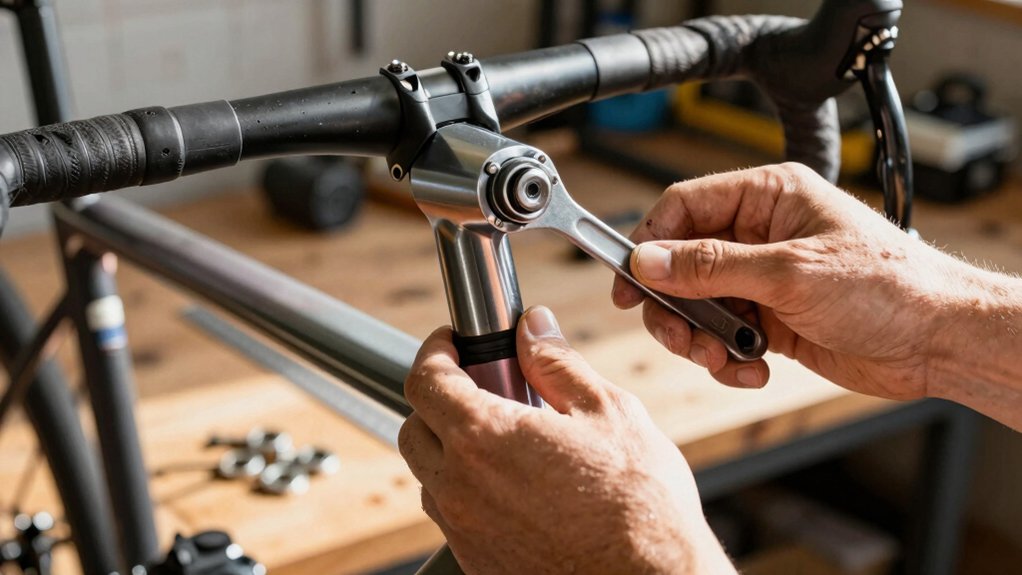
Pick a stem that puts your hands so your elbows have a slight bend and your shoulders stay relaxed. Start from the frame-recommended reach and adjust in 6–10 mm steps.
Account for stem angle, bar rise, and spacers: a higher stem angle or more spacers shortens reach, while a lower angle lengthens it. Match clamp diameter and torque specs, inspect bolts, and use carbon paste or shims as needed.
Try incremental spacer changes and test on-road to confirm fit; more detailed tuning follows.
Quick Overview
- Start from your frame-size recommended stem length, then adjust in 6–10 mm steps to fine-tune comfort and handling.
- Compute effective reach using stem length × cos(17° ± stem angle) and account for head tube angle and spacers.
- Choose a higher stem angle or add spacers to shorten reach and create a more upright, relaxed posture.
- Shorten the stem for quicker steering and longer stems for more stable, stretched positions. Use feel-to-reach ranges: upright −10–−20 mm, neutral −5–+5 mm, stretched +10–+20 mm.
- Verify clamp compatibility and torque settings; inspect bolts. Use carbon paste or shims when needed to ensure safe, reliable clamping.
Stem Length vs Reach Chart
Wondering how stem length actually changes your bar reach? You’ll use stem geometry and reach dynamics to predict horizontal reach precisely. Calculate reach with stem length × cos(17° ± angle) and note that stem angle, head tube angle, and spacers alter effective reach.
A higher stem angle shortens reach and eases back strain; a lower angle lengthens reach and increases front-wheel pressure. Start from recommended lengths by frame size, then adjust in 6–10mm increments until your elbows have a slight bend and shoulders stay relaxed. Match stem choice to handling needs: shorter for quick steering, longer for stability.
Use the table below to visualize relative feel and expected reach change.
| Feeling | Expected reach change |
|---|---|
| Upright | −10 to −20 mm |
| Neutral | −5 to +5 mm |
| Stretched | +10 to +20 mm |
| Aggressive | +20+ mm |
Torque & Clamp Specs
After you settle on stem length and angle to get reach and handling right, you’ll need to address torque and clamp specifications to protect the cockpit and maintain fit. You should verify torque compatibility between the stem, handlebar, and steerer to avoid slippage or carbon damage. Use a calibrated torque wrench and follow manufacturer values; over-torquing compresses materials, and under-torquing risks movement.
Inspect clamp hardware for correct bolt count, length, and preload pattern; replace stripped or mismatched bolts. Consider surface interface: carbon paste or thin shims can improve friction without excess force.
- Verify manufacturer torque compatibility across stem, bar, and headset.
- Use specified clamp hardware and torque sequence with calibrated wrench.
- Replace damaged bolts; check contact surfaces for proper friction.
Handlebar Rise Compatibility
Measure your handlebar rise first so you know the vertical offset you’re starting from. Then select a stem whose angle complements that rise to achieve your target posture. Match stem angle to your intended riding position: more positive rise for upright comfort, or negative/neutral for aggressive reach.
While checking clamp compatibility with your bar diameter and clamp profile, finish by testing the setup with spacers to fine-tune height and fore/aft reach before settling on a final stem length.
Measure Bar Rise First
How high should your bars sit relative to the stem and fork steerer? Measure bar rise first to ensure the stem can achieve the targeted handlebar height without compromising steering geometry. Use calipers or a straight edge to record vertical offset from the steerer clamp to the handlebar clamp centerline.
Compare that to your desired ergonomic setpoint, accounting for bar width and how bar sweep changes hand position. Cross-check with saddle position: raising bars typically reduces required saddle setback to maintain hip angle. If the measured rise exceeds stem capability, choose a higher-rise stem or spacers rather than forcing reach changes with stem length.
Precise measurement prevents unintended back, neck, or wrist strain. It also preserves predictable steering response across small stem adjustments.
Match Stem Angle
Why choose a stem angle that matches your bar rise? Matching stem angle to handlebar rise lets you set bar height predictably, preserving intended ergonomics. Choose a positive stem angle with a high-rise bar to maintain an upright spine and reduce lower-back load. Select a negative angle with low-rise bars for a lower silhouette but increased wrist extension.
You’ll adjust stem angle to fine-tune bar height without altering reach excessively; this keeps elbow flex and shoulder relaxation within ergonomic targets. Consistent stem angle-bar rise pairing prevents unwanted changes in steering geometry and keeps ride posture stable across terrain. When you match angles, small stem swaps produce repeatable, measurable effects on comfort and control.
Consider Riding Position
When you pick a stem, consider how the bar rise aligns with your preferred riding position: a positive-rise bar raises the hand position and keeps your spine more upright, while a low or negative-rise bar lowers your center of gravity and increases wrist extension.
You should evaluate how rise interacts with stem length to reach your riding posture targets. Positive rise shortens effective reach and reduces lower-back torque; this aids comfort goals for upright touring or commuting. Conversely, negative rise extends reach and increases wrist extension, which suits aerodynamic goals but raises the risk of ulnar compression.
Quantify desired spine angle, elbow flexion, and wrist neutral range. Then select stem rise and length that maintain those metrics. Small adjustments (6–10mm) noticeably shift comfort and control.
Check Handlebar Clamp
After you’ve defined the target spine angle and chosen stem length and rise, check that the bar clamp on your stem physically matches the handlebar’s riser profile and diameter. You’ll verify clamp diameter (commonly 31.8mm or 35mm) and axial profile: flat, tapered, or riser-specific. This ensures the clamp seats evenly and doesn’t induce local stress risers.
Measure with calipers, confirm torque specs, and inspect mating surfaces for gaps or mismatches. Consider disclaimer relevance: manufacturer fit notes and intended applications can invalidate warranties if ignored.
Prioritize safety considerations by using correct shims or a compatible stem rather than forcing a mismatch. Improper clamping risks slippage, rapid fatigue, or catastrophic failure. Document measurements for future adjustments or professional fit checks.
Test With Spacers
How high should your bars sit to match the stem’s rise? Use spacers to quantify handlebar rise compatibility: install a single test spacer under the stem, ride, then incrementally add or remove spacer height to observe posture and wrist angle changes. You’re measuring reach, elbow flexion, and shoulder loading rather than guessing rise values.
Note comfort thresholds where neck strain reduces and hand pressure decreases; record spacer height at each change. Small adjustments (5–10 mm) produce measurable shifts in hip angle and steering feel. If positive-rise stems still leave you reaching, combine shorter stem length with higher spacer stacks.
Use this controlled protocol to pair stem rise with spine alignment and optimal handling without compromising steering responsiveness.
Frequently Asked Questions
How Does Stem Length Affect Climbing Power and Cadence?
Shorter stems give you shorter leverage, shifting weight rearward and increasing low-cadence climbing power by allowing stronger hip extension. Longer stems move weight forward, favoring higher pedal cadence and steadier power delivery; however, they can strain wrists and reduce peak force.
You’ll tune stem length to balance weight distribution, hip angle, and comfort: choose shorter for torque-focused climbs and longer for sustained high-cadence efforts. Adjust in 6–10mm steps for testing.
Can Stem Length Influence Saddle Comfort Over Long Rides?
Yes, stem length can influence saddle comfort over long rides. By changing reach and handlebar height, stem length alters your hip angle, weight distribution, and pressure on the sit bones and perineum.
A too-long stem shifts weight forward, increasing saddle pressure. A too-short stem moves weight rearward, causing chafing or instability. Small stem adjustments (6–10mm) and testing will optimize saddle comfort and sustained ergonomics.
Do Stem Swaps Require Re-Bleeding Hydraulic Brakes?
No, you usually won’t need to re-bleed hydraulic brakes after a stem swap unless you disturb brake hoses or fittings. You should ensure stem retention hardware is secure and verify hydraulic compatibility of any new stem or spacer stack.
After installation, inspect hose routing for kinks or tension. Torque bolts to spec, and actuate the levers to confirm firm engagement. If you notice sponginess or leaks, then bleed the system immediately.
Will Stem Length Change Fit for Different Shoe/Pedal Setups?
Yes, changing shoe/pedal setups can alter your stem fit because pedal compatibility shifts your foot position relative to the crank, changing hip and torso angles. If cleat or platform differences move your contact point fore/aft or laterally, you’ll need to reassess reach and handlebar height.
Make small stem adjustments (6–10mm) or stem angle changes. Then test ergonomics and steering responsiveness to restore optimal power transfer and comfort.
Yes, stem length can cause stem numbness via unrelated pressure on shoulders, neck, or upper back. If a too-long stem stretches you forward, it increases load on cervical nerves. A too-short stem loads wrists but also alters shoulder tension, compressing brachial plexus.
You’ll notice tingling unrelated to wrist position when neck or shoulder posture is strained. Adjust length, rise, and reach incrementally; reassess nerve symptoms with a professional fit.
Conclusion
You’ve now got the data to pick a stem that fits your reach and posture. Measure bar rise first. Confirm handlebar clamp diameter and torque/clamp specs. Then match stem angle to fine-tune cockpit height.
Use the stem-length vs. reach chart to balance handling and comfort. Test adjustments with spacers, and verify torque settings. Ride-test incremental changes until your wrists, shoulders, and back feel neutral and controlled.
Related reading: How to Set up a Bike Trainer Correctly — a closer look at this topic.