Bottom Bracket Standards Chart: Every Size & Fit at a Glance
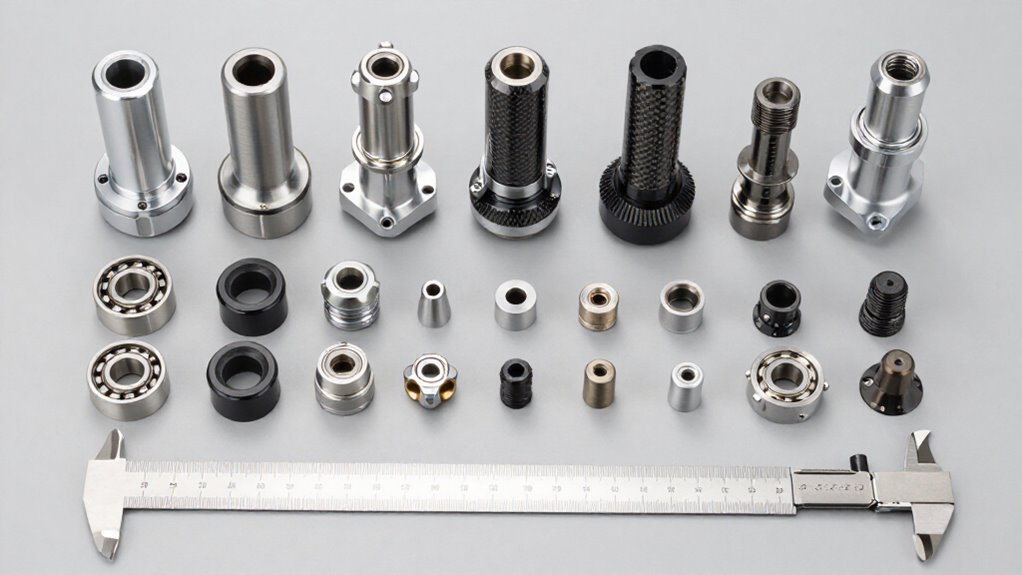
To identify any bottom bracket, you’ll match your frame’s shell width, bore or thread specification, and crank spindle standard before choosing cups or bearings. BSA uses 1.37 × 24 TPI threads and typically 68–100 mm shells; T47 uses M47 × 1.0 threads.
Press-fit shells are smooth bores: PF41, PF42, or PF46.
Italian is 70 mm with 36 × 24 TPI, while BB90 is 90.5 mm. The sections that follow clarify offset and installation details.
Measure Shell Width Before Buying
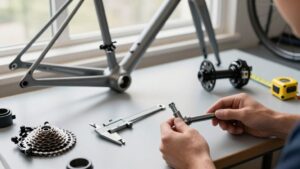
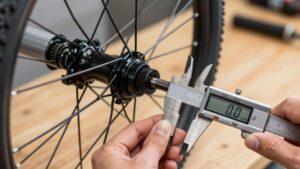
Before you buy a bottom bracket, measure the frame’s bottom bracket shell width from outside face to outside face with calipers. Record the result in millimeters and compare it with the frame’s specified standard.
Threaded BSA shells commonly measure 68, 73, 83, or 100 mm. BB30/OSBB frames typically use 68 or 73 mm shells, while Trek BB90 measures 90.5 mm. Width also distinguishes closely related standards: BB86 uses an 86.5 mm road shell, whereas BB92 uses a 91.5 mm mountain shell.
PF30 widths include 61 mm for road, 73 mm for mountain, 83 mm for downhill, and 100 mm for fat bikes. Don’t select by crank brand alone; the same spindle can require different bottom brackets across frame standards with identical crank spindle dimensions.
Shell Diameter and Bearing Fit
Shell width narrows the possibilities, but the shell’s inner diameter determines how the bottom bracket interfaces with the frame and which bearing or cup outer diameter will fit.
Measure the bore cleanly, then match its interface rather than assuming that a wide shell accepts every cup.
| Shell ID | Interface | Bearing/cup fit |
|---|---|---|
| ≈34 mm | BSA/ISO threaded | Cup-defined |
| 42 mm | BB30 direct press | 42 mm bearing |
| 46 mm | PF30 press-fit | 46 mm cup |
| 41 mm | BB86/92 press-fit | Model-specific cup |
T47 uses a threaded 47 mm-class interface, so you must match its cups to the frame’s thread specification.
Verify the maker’s drawing before ordering; nominal labels don’t replace measured bores or specified tolerances. A correct interference fit prevents movement, protects bearing alignment, and avoids cups that won’t seat.
Spindle Diameter Terminology
Spindle diameter identifies the crank axle size that a bottom bracket must support, so you select the BB around the crank, not the other way around. Shimano Hollowtech II systems typically use 24 mm spindles; their bottom brackets use bearings sized for that axle. SRAM DUB uses a 28.99 mm spindle and relies on DUB-specific bottom brackets or adapters to carry one crank platform across compatible frame interfaces.
BB30-family cranksets use 30 mm spindles, requiring bearings with a 30 mm inner diameter.
Don’t treat nominal diameter as the complete fit specification. You must also confirm the crank’s spindle length, its intended bearing engagement, and the required spacer arrangement. Correct diameter alone doesn’t ensure fit; verify spindle length, bearing engagement, and spacer requirements before ordering carefully.
BSA, T47, and Press-Fit Dimensions
You identify a BSA shell by its 1.37 × 24 TPI threads and its measured 68, 73, 83, or 100 mm width, while T47 uses M47 × 1.0 threads in a roughly 46 mm internal shell. For threadless frames, you match PF41, PF42, or PF46 systems by measuring the smooth bore diameter and shell width.
Measure both dimensions accurately before choosing cups, bearings, or adapters, or you’ll risk an incompatible fit.
BSA Threaded Shell Dimensions
At the threaded end of the bottom bracket standards chart, BSA (English) uses 1.37 in × 24 TPI (ENG) threads in a shell with an approximately 33.7 mm inner diameter. You identify a BSA frame by both this thread form and shell width, most commonly 68 mm for road applications or 73 mm for mountain bikes. Don’t choose cups from width alone: the 33.7 mm threaded bore distinguishes English shells from similarly sized-looking systems.
Installation direction matters. The non-drive-side cup has a right-hand thread, so you tighten it clockwise. The drive-side cup has a left-hand thread, so you tighten it counterclockwise; this orientation helps resist loosening under pedaling loads. Measure the shell width, inspect its threads, and select cups matched to your crank spindle.
T47 Thread And Shell Sizes
T47 uses an M47 × 1.0 threaded interface, giving the shell an approximately 46 mm internal diameter; substantially larger than a BSA shell’s 1.37 in × 24 TPI threading.
You must still identify shell width: T47 frames commonly measure 68, 73, 83, or 100 mm. Width determines correct cup configuration, spacer arrangement, and crankset application; thread designation alone doesn’t establish fit. T47 follows English/BSA thread handedness: install the non-drive-side cup with a right-hand, clockwise thread, and the drive-side cup with a left-hand, counterclockwise thread. Don’t treat its roughly 46 mm bore as a press-fit specification. T47 threads retain the cups, whereas press-fit families use unthreaded bores; matching a T47 bottom bracket requires both M47 × 1.0 threads and the specified shell width.
PF41 Press-Fit Dimensions
Unlike threaded BSA and T47 shells, PF41 identifies a press-fit family with a nominal 41 mm smooth shell bore and no internal threads. It groups frames commonly associated with BB86, BB89.5, BB92, BB107, BB121, BB132, PF24, and Shimano press-fit systems. Rather than threading cups into the frame, you press the correct bottom-bracket cups or bearings into the bore by interference fit.
BSA and T47 aren’t PF41 variants: BSA uses English 1.37 in × 24 TPI threads, while T47 uses M47 × 1.0 threads. To select parts, measure the shell’s inside diameter—approximately 41 mm—and then verify shell width, crankset axle specification, and the bottom bracket model’s stated compatibility. Don’t identify the shell solely by crank brand; its spindle and cup design still matter.
PF42 And PF46 Sizes
PF42 and PF46 identify two press-fit bottom-bracket bore families: PF42 uses an approximately 42 mm smooth frame-shell ID, while PF46 uses a 46 mm smooth ID. You’ll find PF42 across BB30, BB30a, BB30ai, and BBright direct-fit applications. This family supports bearings intended for 30 mm-spindle cranksets.
PF46 covers PF30, PF30a, PF30ai, BB386EVO, OSBB, and BBright press-fit variants. Its 46 mm bore normally accepts cups, adapters, or cartridge assemblies, allowing compatible 22/24 mm, SRAM DUB 28.99 mm, and 30 mm spindles. Don’t confuse PF46 with T47: T47 uses M47×1.0 threads rather than a smooth bore.
Once you identify PF42 or PF46, select the matching system and spindle-specific parts. This distinction prevents installing direct-fit bearings or cups designed for the other bore family in your frame.
Measuring Shell Width And Bore
Start by measuring the frame’s bottom-bracket shell, not the crank spindle, because shell bore, thread form, and width define the compatible standard. For BSA/English shells, confirm approximately 34.8 mm (1.37-inch) inner diameter and measure width: 68, 73, 83, or 100 mm, then select matching threaded cups. For T47, verify M47 × 1.0 threads and a roughly 46 mm bore; width identifies the correct T47 model.
Press-fit shells have no threads, so use calipers to establish bore first: BB30/PF30 measures 42 mm, while PF46 measures 46 mm. Next, record shell width: 61, 73, 83, or 100 mm, as applicable. Don’t trust markings; distinguish PF30 from similarly named variants by measured dimensions. Only afterward match bearings and cranks to spindle diameter: 24 mm or 30 mm. Correct measurements prevent incompatible purchases and later chainline errors entirely.
Check BB30a Shell Offset
Measure the BB30a shell’s offset, not just its bore, before selecting a bottom bracket or crankset. Although its press-fit interface belongs to the 46 mm-class PF46/PF30 family, BB30a’s defining feature is its asymmetric shell position and width.
Confirm that the shell is not centered between the chainstays. On many Ai or Ai-offset frames, the non-drive side has additional clearance, while the drive-side relationship supports the intended rear-center geometry. Measure the total shell width, then measure its distribution from each side relative to the frame centerline. Compare both values with the frame manufacturer’s BB30a specification.
Don’t assume a standard BB30 or PF30 crank will preserve alignment. BB30a commonly needs an Ai-compatible crank and longer spindle. That combination establishes the specified chainline and keeps the drivetrain aligned.
Italian Threads: Both Cups Right-Handed
Italian-threaded bottom brackets use a 70 mm shell with 36 mm × 24 TPI threads, and both cups tighten clockwise because both sides use right-hand threading. Unlike English/BSA units, whose drive-side cup uses a reverse thread, Italian cups follow no left/right-hand reversal.
When you identify a frame, confirm the shell measures 70 mm and the threads match 36 mm × 24 TPI. Don’t select a cup solely by shell width: threadform determines fit and prevents cross-threading. Install each cup clockwise, using the manufacturer’s specified torque and appropriate thread-preparation procedure.
Check that the replacement bottom bracket is explicitly labeled Italian, since other threaded systems can look similar yet use different diameters, pitches, widths, or drive-side directions. This confirmation ensures engagement and serviceable assembly over time.
BB90 Bearings Sit in Frame
BB90 places its 37 mm outside-diameter cartridge bearings directly into precision-machined seats in the frame, rather than into threaded cups or separate press-fit cups. You identify it as Trek’s direct-fit system: the frame provides the bearing interfaces and an internal retainer holds bearing in position. Its nominal shell width is 90 mm, created by widening the traditional 68 mm bottom-bracket area by approximately 22 mm overall.
This layout differs from BB86 and BB92, which locate bearings in pressed cups. When you select replacement parts, match the 37 mm bearing outside diameter and BB90 configuration; a threaded bottom bracket won’t fit. Service involves extracting cartridge bearings and pressing in replacements with puller and press tools. The frame, not removable cups, establishes alignment and fit.
Diagnose Press-Fit Creaks
Unlike BB90’s direct-bearing arrangement, press-fit systems can develop a pedaling creak when microscopic movement occurs between the bearing or cup and the frame bore. Start by checking crank and chainring fastener torque, then confirm shell dimensions and crank hardware before blaming the interference fit.
- Identify the standard: BB30/PF30 uses a nominal 46 mm bore, while PF41 uses 41 mm. A mismatched adapter permits movement.
- Apply hand pressure around the crank area while pedaling. A changing noise points toward bearing-shell movement.
- Remove cups or adapters with specified puller and press tools. Inspect frame-bore and adapter-to-bearing interfaces for dirt, water, wear, or incorrect fit.
Regreasing may silence contamination temporarily, but persistent noise needs correctly fitted bearings or adapters installed to specification to restore a stable interface.
French Shells: 35mm Diameter
Identify a French bottom-bracket shell by its M35 × 1.0 threaded interface: a 35 mm nominal thread diameter, an approximately 34 mm shell bore, and a 1.0 mm metric pitch. This legacy threaded format appears mainly on older French frames, so you must verify dimensions before buying cups or tools.
- Measure the shell bore: roughly 34 mm supports identification, but confirm the actual thread with suitable gauges.
- Check removal direction at the non-drive side. Its standard right-hand thread tightens clockwise; don’t apply the reverse-thread assumption used for English/BSA non-drive cups.
- Separate French from Italian threading. Italian uses 36 mm × 24 TPI, not M35 × 1.0, so cups aren’t interchangeable.
Match shell dimensions before ordering; French-compatible parts are scarce, so confirm listings carefully.
Conclusion
You’ll avoid most bottom bracket mistakes when you measure the shell before you order parts and match every critical interface: shell width, bore or thread diameter, thread direction, bearing type, spindle diameter, and any asymmetry. Confirm whether your frame uses BSA, T47, BB30a, BB90, Italian, French, or another standard. Don’t treat similar names as interchangeable.
If a press-fit system creaks, inspect fit tolerances, cleanliness, alignment, and bearing condition before replacing components that may be compatible.