How to Choose Cassette Range for Hills
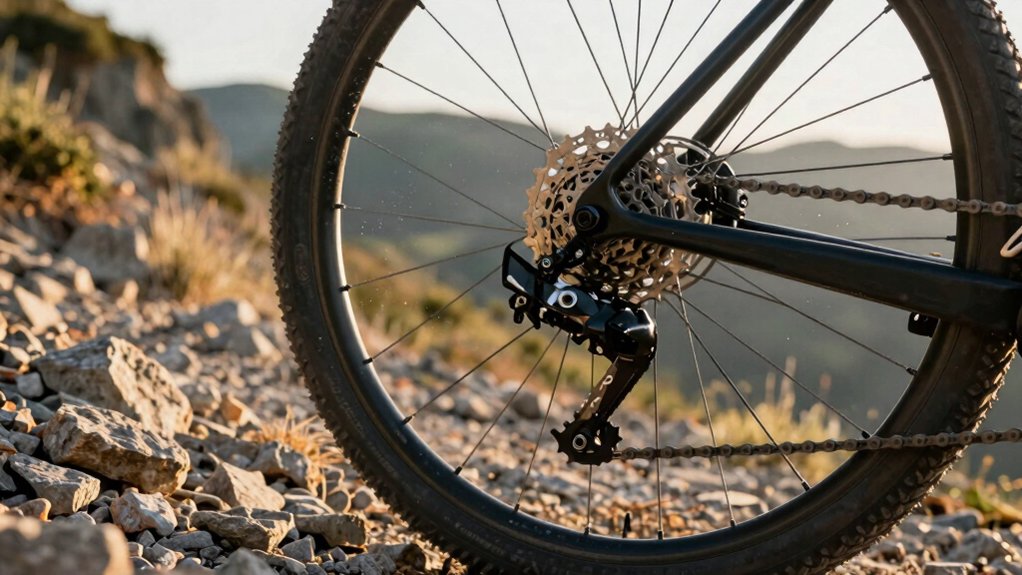
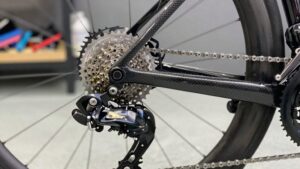
Pick a cassette that gives the lowest gear inches you need for your steepest climbs. Then confirm your derailleur and chainring combo can actually reach that large sprocket.
Match small chainrings with wider-range cassettes for low gears; or use tighter cassettes with big chainrings for speed. Observe manufacturer max sprocket and total-capacity limits, chainline, and shifting tradeoffs from large jumps.
Choose a practical tooth spread for usable steps. Keep going to learn specific checks and examples.
Quick Overview
- Calculate required lowest gear (gear inches or ratio) for your steepest climbs and choose a cassette whose largest cog achieves that low gear.
- Match cassette range to your chainring sizes so gear steps stay practical; total tooth capacity does not exceed derailleur limits.
- Prefer wider cassettes (e.g., 11–40/44T) for steep, sustained climbs; narrower ranges (11–32/34T) are better for rolling terrain and speed.
- Verify derailleur max sprocket, total capacity, hanger alignment, and chain length before installing a larger cassette.
- Expect coarser jumps, more cable tuning, and possible faster wear with extreme-range cassettes. You should balance range versus shifting smoothness.
Cassette Gear Ratios Table
The table below gives you a quick, practical reference for choosing a cassette for hills: it summarizes typical bike types, common cassette ranges, percent gear range, and the lowest gear ratio you can expect when paired with typical chainrings. You can judge climbing capability at a glance.
| Bike Type | Typical Cassette |
|---|---|
| Road (hilly) | 11–32T / 11–34T |
| Gravel | 11–40T / 11–44T |
| MTB | 11–42T / 10–50T |
| Extreme climbs | 10–51T / 9–46T |
Use this to compare lowest gear ratios and range percent quickly. You’ll prioritize low ratio for steep ascents; tighter ranges suit flats. Ignore irrelevant subtopic chatter and focus on practical two word discussion ideas: range vs. ratio.
Max Gear Inch Checklist
After you’ve scanned cassette options for hills, check your max gear inches so you know how steep a climb you can pedal without grinding. You’ll calculate gear inches from wheel diameter and effective gear ratio; then compare to the climbs you ride. Factor in bushings alignment and chainline preferences when assessing real-world efficiency. Poor alignment wastes effort and reduces usable max gear inches.
Use this quick checklist to confirm suitability:
- Verify largest cog gives low enough gear inches for your steepest sustained climb.
- Confirm derailleur capacity and bushings alignment support that largest cog without chain sag or noise.
- Check chainline preferences and wheel diameter so calculated gear inches match actual feel on climbs.
If numbers don’t match terrain, choose a wider cassette.
Chainring-Cassette Compatibility Limits
You’ll want to match chainring sizes and cassette ranges so gear ratios stay usable without overloading the derailleur. Check manufacturer limits and watch for clearance or capacity issues that force chain length or derailleur swaps, which can hurt shifting.
Also, be alert to shifting tradeoffs and wear signs: skipping, noise, or rapid sprocket wear mean the combo isn’t compatible.
Chainring And Cassette Ratios
Why match chainring size to cassette range? You want predictable gearing across climbs and flats, so start by considering chainring compatibility with the cassette’s largest and smallest sprockets.
Choose chainrings that keep gear steps usable: small chainrings plus wide cassettes give low, easy gears; large chainrings with narrow cassettes favor speed. Run simple two word discussion ideas like “low gearing” and “step spacing” when planning ratios.
Calculate gear inches or development to see real-world effort, then adjust chainring teeth to avoid huge jumps between gears. Aim for a combination that provides both an attainable climbing gear and a comfortable high gear without sacrificing cadence control.
Balance is the goal; match chainring choices to your terrain and fitness.
Manufacturer Spec Limits
How do manufacturers set the limits for which chainring and cassette combinations will work? They base manufacturer limits on derailleur capacity, cage length, pulley geometry, and tested chain wrap to ensure reliable shifting and avoid overstress. You’ll find specs listing max sprocket size, total tooth capacity, and recommended chainring differences. Obey those figures: they’re conservative but practical.
Also watch tapering considerations. Some freehub and cassette designs need specific smallest sprocket sizes or spacers to align shifts and maintain chainline. When mixing chainrings and wide-range cassettes, you’ll follow published limits or use compatible components designed for extended ranges. If you push beyond specs, you’ll risk poor shifting and faster wear. So match your cassette to the drivetrain’s rated capacity.
Drivetrain Clearance Issues
Ever wondered whether that big cassette you want will actually work with your current chainring setup? You’ll need to check chainline and drivetrain alignment first: big cassettes can push the chain outward, altering chainline and causing poor wear or rub on chainrings.
Measure rear spacing, hanger alignment, and whether your derailleur can handle the larger tooth counts without the upper pulley contacting big cogs. Also, confirm cassette placement won’t interfere with spoke clearance; some wide-range cassettes overhang and can foul spokes on narrower freehub bodies.
If clearance’s tight, consider a shorter chainring, a different spider, an adapter spacer for the freehub, or a compatible derailleur cage. Do these checks before buying so installation’s straightforward and reliable.
Shifting Performance Tradeoffs
Where will your chainring and cassette pairing compromise shifting performance? You’ll notice limits when chainline, tooth gaps, and gear steps force big jumps. Mixing very wide cassettes with large chainrings raises shifting latency and can make shifts feel slow or hesitant.
If you pair a compact chainring with an extreme-range cassette, expect uneven cadence changes and extra micro-adjustments. Cable friction magnifies these issues: sticky housing or poor routing increases actuation lag and reduces crispness, especially across big cog jumps.
To minimize problems, choose cassettes with reasonable sprocket increments for your riding. Keep cable runs short and well-lubricated, and match derailleur capacity to the largest cog. That practical balance keeps shifts predictable without sacrificing necessary low gears.
Wear And Compatibility Signs
Notice signs of incompatibility early to avoid accelerated wear and poor shifting. If your chain skips under load, grinds on certain sprockets, or the chainring teeth look shark-finned after only a few hundred miles, the cassette and chainring likely aren’t meshing well. You should watch wear signs like hooked teeth, elongated chain links, and uneven sprocket profiles.
Compatibility signs include rough engagement, repeated chain drops, or needing excessive B-tension adjustments. Check derailleur capacity and intended chainline before swapping wide-range cassettes. Mismatched chains or narrow chainrings accelerate wear. Measure chain stretch and inspect sprockets routinely; replace chain before it ruins the cassette.
If shifting feels vague after a cassette change, re-evaluate cog spacing and chain width to confirm true compatibility signs.
Frequently Asked Questions
How Do Cassette Ranges Affect Shifting Smoothness Under Load?
Cassette range affects shifting smoothness under load by changing gear jumps and derailleur demands. You’ll find narrow ranges give finer steps, so you’ll shift smoother with less cadence disturbance. Wide ranges introduce bigger jumps that can make shifts under load snappier or hang.
Ensure cassette compatibility with your derailleur and hanger. Keep drivetrain clean and adjust limit screws and B-tension to reduce shifting noise and missed shifts.
Can I Mix Brands of Cassettes and Derailleurs Safely?
Yes, you can often mix cassette and derailleur brands, but you’ve got to match speeds, freehub type, and derailleur capacity.
Discussion ideas: ensure cassette tooth range fits derailleur max cog and total capacity.
Discussion ideas: confirm shifter/cassette indexing (same number of speeds) and freehub compatibility.
Don’t mix 11-speed Shimano with SRAM 12-speed indexing. Test shifting under load and tweak B-screw and limit screws for reliable performance.
What Maintenance Increases Cassette Longevity on Hilly Routes?
You’ll extend cassette life by regular maintenance cadence: clean and degrease the drivetrain after muddy or salty rides, and lube the chain sparingly before every long climb.
Monitor chain wear prevention with a 0.5%–0.75% gauge and replace chain before it stretches the cassette. Adjust derailleur indexing and B-tension for smooth shifts; keep bolts torque-correct, and inspect teeth for sharking.
Replace cassette if skipping persists despite a fresh chain.
Will a Wider Cassette Change Bike Handling or Weight Noticeably?
A wider cassette will slightly increase weight and can alter handling minimally by shifting weight rearward. However, you won’t notice big changes unless you’re weight-obsessed.
You’ll gain versatility with wide gearing for climbs and flats. Make sure chain compatibility is correct: chain width and derailleur capacity must match the cassette. Proper setup keeps shifting crisp and prevents chain drop. This ensures performance stays stable despite the small weight and balance trade-offs.
How Do Tubeless or Tire Choices Influence Gear Selection?
Tubeless impact and tire choice influence gearing because lower-pressure, grippier tires increase rolling resistance. You’ll want easier gears for climbs. If you run tubeless with wider, higher-volume tires for gravel or loaded touring, choose a wider cassette (11-42T to 11-50T) to offset added drag and weight.
If you use slick, narrow road tires, you can stick with tighter ratios (11-25T to 11-28T) for efficient speed.
Conclusion
You’ve now got the tools to pick a cassette that matches your hills and riding style. Check gear inches and max ratio for steep climbs. Confirm chainring-cassette compatibility and manufacturer limits. Watch for clearance or shifting compromises.
Prioritize a wide range if you need lower gears, but don’t sacrifice reliable shifting or drivetrain life. Inspect wear signs regularly and adjust setup or replace components before problems slow you down. Make choices that balance climbability and durability.
Related reading: Rear Derailleur Shifting Troubleshooting — a closer look at this topic.