
1x Vs 2x Drivetrain Differences
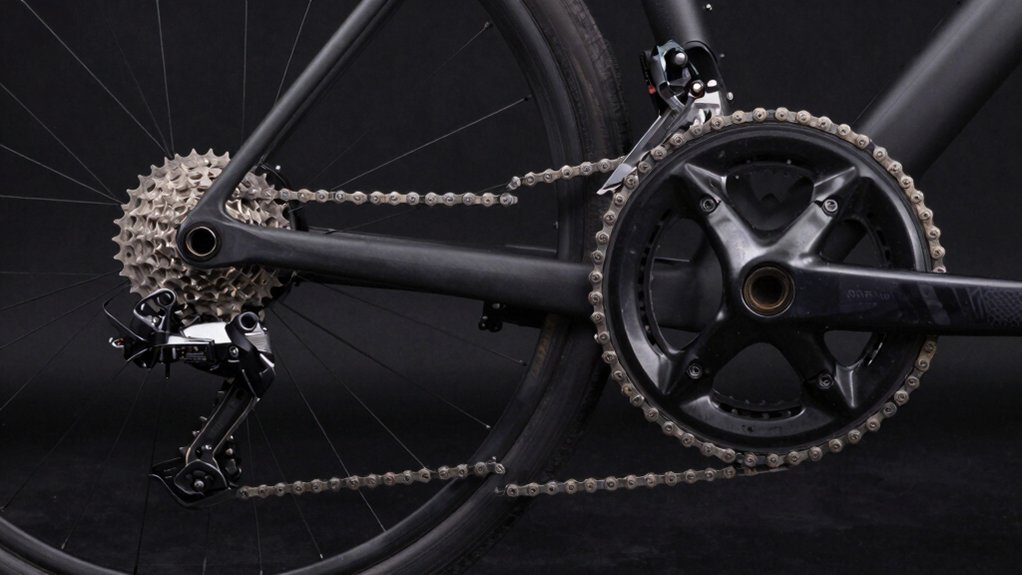
You’ll trade mechanical simplicity and lighter weight with a 1x for fewer parts, straighter mid-chainline, and larger cadence gaps. A 2x gives tighter ratio steps, smoother cadence control, and better high/low top-end efficiency.
1x suits simplicity and off-road use; 2x suits varied terrain and sustained speed. Compatibility, cassette spacing, and chainline matter with either choice. The next section explains exact gear ratios, spacing standards, and adapter considerations.
Quick Overview
- 1x simplifies shifting and reduces weight by using a single chainring, but it can create larger cadence gaps and limited high-end ratios.
- 2x provides tighter gear steps and smoother cadence across a wider usable range; this improves efficiency on varied terrain.
- 1x setups need wider-range cassettes and careful chainline management, which can increase wear and reduce peak drivetrain efficiency.
- 2x lets you maintain a straighter chainline across ratios by selecting front rings; this lowers lateral stress and improves longevity.
- Compatibility matters: cassette spacing, freehub type, and crank/BB standards must match when converting or mixing components.
Gear Range Comparison Table
Why choose one drivetrain over the other? You’ll weigh gear range, cadence consistency, and weight distribution against efficiency and serviceability.
Compare representative setups:
| 1x Example | 2x Example |
|---|---|
| 40T + 10–52T (5.2:1) | 50/34T + 11–34T (4.7:1) |
| 46T + 10–52T (5.2:1) | 50/34T + 11–36T (5.4:1) |
| 38–46T + 10–42T (4.2:1) | 2×11/2×12 varied (wide) |
| 10–50T single (5.0:1) | 22–24 gears, finer steps |
| 11–46T+ 1x modern | Tighter cassette, distributed load |
You’ll notice 2x gives tighter steps and superior cadence consistency. 1x reduces hardware and shifts weight distribution but has larger cadence gaps and limited top-end efficiency.
Chainline & Compatibility Guide
How closely aligned is your chain relative to the front and rear sprockets? What does that mean for wear, noise, and efficiency? You want a straight chainline to minimize lateral force, reduce wear, and keep frictional loss low.
1x systems often have straighter mid-range chainlines; however, they have sharper extreme angles at largest/smallest cogs, degrading efficiency and accelerating wear. 2x setups let you select chainring combinations to preserve optimal chainline across more ratios. This improves longevity and reduces noise.
Consider compatibility: crank spindle width, BB type, and cassette/profile must match to maintain intended chainline aesthetics and gearing aesthetics.
- Verify crank and BB specs for target chainline.
- Match chain width to cassette range.
- Test cross-chaining limits under load.
Manufacturer Cassette Spacing Notes
Check manufacturer cassette spacing charts before mixing cassettes and hubs, because Sram, Shimano and Campagnolo use different sprocket pitches that affect indexing and chainline. You’ll need to match freehub body type; you may require spacers or adapters for wide-range cassettes to sit correctly and preserve optimal chainline.
Small mismatches change shift quality and increase friction or wear. Therefore, verify compatibility for 1x conversions and wide-range setups.
Cassette Spacing Standards
Where do cassette spacing standards start and why they matter to you: Manufacturers define precise sprocket center-to-center distances and ramp profiles so chains shift reliably across the cassette and match specific derailleur and shifter actuation ratios. You must recognize that spacing differs between brands and speeds. 8/9/10-speed use wider pitches than modern 11/12/13-speed systems.
Freehub bodies and micro-spacing conversions aren’t an unrelated topic or random tangent; they are relevant constraints. Standards dictate cog thickness, spline indexing, and cumulative stack width. Mismatches create poor shift timing, increased wear, and noise. When you mix components, check official pitch specifications and allowed tolerances.
Accurate spacing preserves intended gear steps, reduces frictional penalties, and maintains consistent shift feel.
Hub Versus Freehub
Having covered cassette spacing and its role in reliable shifting, you should also compare hub-mounted cassettes to freehub bodies since manufacturers set different cassette stack widths, spline patterns, and spacing offsets for each system.
When evaluating hub dynamics, note that fixed hub-mounted cassettes often require bespoke spacing and can alter axle load distribution; this affects bearing preload and lateral stiffness. Freehub compatibility is broader: standardized spline interfaces and indexed spacing let you swap cassettes with fewer frame or hub changes.
You should check manufacturer tolerances—micro-spacing, lockring depth, and carrier design—to avoid chain interference or altered shift springs. In practice, choose the system whose cassette stack and spline standard matches your derailleur geometry and hub dynamics for dependable indexing and long-term durability.
Chainline Impact
How does cassette spacing from different manufacturers affect chainline and drivetrain performance? You must consider sprocket pitch, freehub body type, and AS spacing tolerances: small differences shift optimal chainline and change lateral chain angle under load.
For 1x setups that rely on wide-range cassettes, tighter or looser manufacturer spacing exacerbates chain wear and friction at extreme cogs. For 2x systems, dual-ring positioning mitigates per-cog angle but requires precise spacing to preserve the measured efficiency advantage.
Reject chainline myths that claim spacing is irrelevant; micro-tolerances matter to watts lost and wear patterns. Also, avoid compatibility myths: matching cassette, hub, and chain specification is mandatory.
Practical setup requires measuring chainline and selecting components to minimize acute angles.
Wide-Range Compatibility
Why does cassette sprocket pitch and manufacturer spacing matter for wide-range compatibility? You need exact tooth pitch, sprocket thickness, and freehub spacing to mesh a wide range cassette with your drivetrain without shifting errors.
Manufacturers vary pitch and ramp profiles; mixing brands or 12/11-speed standards can introduce indexing mismatches or increased wear. Don’t accept compatibility myths that any cassette fits any derailleur: gear spacing and derailleur cage geometry limit usable ranges.
Check specified maximum cog, total teeth capacity, and B-tension clearance. Frame spacing and hub freehub body (HG, MicroSpline, XD) also determine physical fit. When you confirm these parameters, you’ll avoid chain skip, hurried wear, and maintain predictable shift performance across the entire wide-range span.
Spacer And Adapter Options
Once you’ve confirmed cassette pitch, sprocket thickness, and derailleur limits, you’ll face the practical matter of spacers and adapters that reconcile differing freehub standards and cassette stacks. You’ll evaluate spacer compatibility for Shimano HG, Micro Spline, SRAM XD/XDR, and Bosch/DT Swiss variants. Stack height differences often require 1–3mm spacers to preserve B-tension and limit screw range.
Check adapter availability for converting Shimano HG hubs to XD or vice versa; adapters alter effective spoke flange clearance and may shift chainline. Use steel or aluminum spacers per torque and wear requirements; thin anodized parts can gall.
Verify manufacturer cassette spacing notes before purchase to avoid chain drop or poor indexing. Keep a small spacer kit and documented stack tolerances for field adjustments.
Frequently Asked Questions
How Does Drivetrain Choice Affect Bikepacking Spare Parts Weight?
You’ll carry fewer spare parts with a 1X setup, reducing overall pack weight because you drop the front derailleur and extra cable. However, you’ll need heavier Two word ideas1 cassettes and possibly extra chain links.
A 2X system adds front derailleur parts and cabling; yet it uses lighter, cheaper Two word ideas2 cassettes and spreads wear. Thus, spare chainrings and a simpler cassette spare become less frequent. Plan spares by terrain.
Can I Mix 1x Chainrings With a 2x Crankset?
Yes, you can fit a 1x chainring to a 2x crankset, but you’ll need the right chainline, narrow-wide ring, and appropriate bolts.
Idea pair one: guarantee BCD and spider compatibility; remove the outer ring or use a single-ring adaptor.
Idea pair two: adjust chain length, limit rear derailleur capacity, and check chainring offset to avoid cross-chaining.
Test shifting under load to confirm retention and clearance.
Does Shift Ergonomics Impact Long-Term Hand Fatigue?
Yes, shift ergonomics affect long-term hand fatigue. You’ll feel less ergonomics fatigue with well-placed shifters that minimize reach, require consistent light force, and avoid awkward wrist angles. Improved hand comfort comes from textured hoods, smaller lever throws, and balanced brake-shift actuation that reduce grip tension and microstrain.
Poorly matched controls force you to grip harder; this increases nerve compression and cumulative fatigue over long rides, especially under sustained cadence changes.
Are There Resale Value Differences Between 1x and 2x Bikes?
Yes, you’ll see resale perception favor 2x bikes slightly. Buyers value a wider gear range and lower component depreciation. 1x systems fetch less because wide-range cassettes wear faster, and replacement costs are higher.
You shouldn’t overestimate compatibility myths; many buyers accept modern standards. Factor maintenance costs: simpler 1x appeal to some. However, the overall market prefers 2x for perceived versatility and longer-term value retention.
How Does Drivetrain Choice Influence Torque Sensing E-Bike Systems?
Drivetrain choice affects torque sensing e-bike systems by altering drivetrain responses and required motor calibration. You’ll see smoother torque feedback with 2x setups due to narrower cadence changes and more consistent chainline.
1x systems produce sharper transient loads from larger gear jumps; this demands faster motor calibration. Check system compatibility: some torque sensing units expect steady chain angles and gear ratios.
You’ll need firmware tuning and sensor placement adjusted for reliable, predictable assist.
Conclusion
You’ve seen how 1x and 2x drivetrains differ: 1x simplifies shifting and reduces weight, while 2x gives finer gear steps and a wider total range. Consider chainline, cassette spacing, hub/freehub standards, and manufacturer notes when swapping components.
Use spacers or adapters only when they preserve chain engagement and heel clearance. Choose 1x for simplicity and off-road robustness; choose 2x when you need maximum range and precise cadence control.
Related: How to Choose Cassette Range