How to Store a Bike for Winter
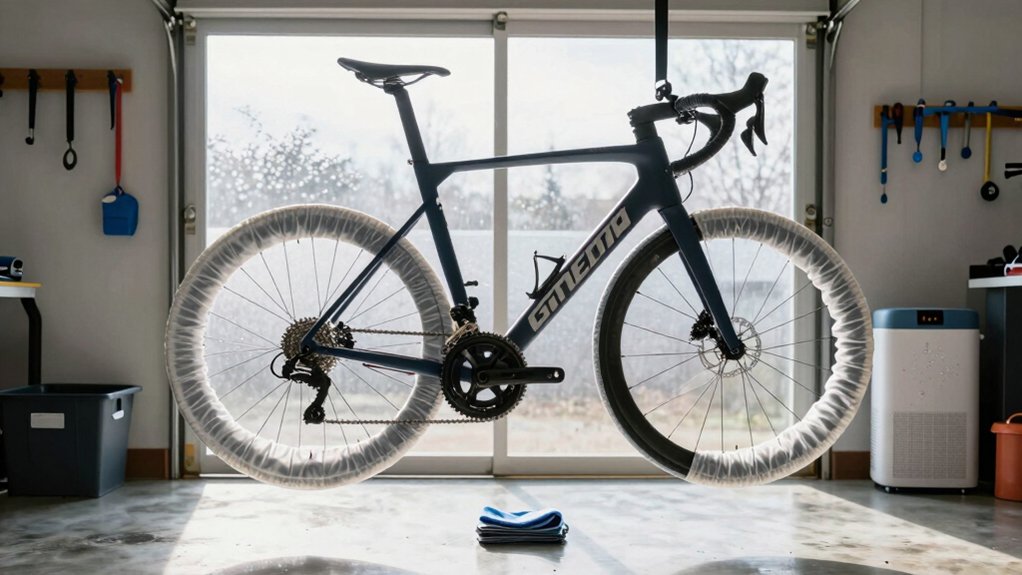
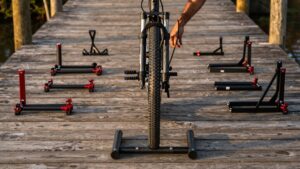
You should clean and degrease the drivetrain, inflate tires to the sidewall-recommended PSI (near max for long storage), and either hang the bike or use stands to keep wheels off the floor.
Lube the chain and exposed fasteners with a thin penetrating oil; protect the frame with a wax-based inhibitor, and inspect or service cables, bearings and suspension per manufacturer intervals.
Store in a dry, temperature-stable spot and label maintenance. More detailed steps follow if you want them.
Quick Overview
- Inflate tires to the sidewall-recommended PSI (near max for long storage) and check monthly to top up in cold weather.
- Clean drivetrain thoroughly, lube chain before storage, and relube mid-winter if humidity or condensation risk exists.
- Disconnect or secure cables. Inspect for corrosion and apply thin lubricant to housings and pivots; avoid brake surfaces.
- Remove wheels or suspend the bike to avoid flat spots. Store wheels vertically, clean hubs, and grease bearings if due.
- Store in a dry, temperature-stable place away from direct sun and dampness. Use wax-based frame protection or desiccants in sealed spaces.
Tire Pressure & Storage Temps
How should you prep tires before tucking a bike away for winter? You inflate to the sidewall-recommended tire pressure and, if storing long-term, consider higher (but not exceeding max) PSI to prevent flat spots and dry rot. Check tires periodically; cold weather accelerates air loss.
Store the bike in a dry, stable environment. Avoid damp basements, concrete floors, direct sun, and wildly fluctuating storage temps that promote condensation and rubber degradation.
| Item | Action |
|---|---|
| Inflate | Set to recommended PSI; near-max for long storage |
| Monitor | Monthly pressure check; top up as needed |
| Position | Suspend or use stand; rotate if on floor |
| Environment | Dry, stable temps; avoid concrete/damp areas |
Follow these steps to preserve tire shape and integrity.
Wheel Removal Checklist
Want to remove your wheels cleanly and safely? Follow this concise checklist to prepare wheels for winter storage without affecting maintenance schedules or storage temps.
- Inspect axle/quick-release: clean, grease bearings, torque to spec; note suspension service intervals if applicable.
- Disconnect brake cables and shifter cables where required; secure housings to avoid kinks.
- Remove chain or shift to smallest cog; tag drivetrain and record chain lubrication frequency for post-storage service.
- Clean rims, hubs, and apply protective spray options lightly. Pack wheels with products that wick moisture; store vertically.
Label wheels with bike ID and lubricant intervals. Keep wheels in a dry, stable-temp area and store spare parts separately to prevent corrosion.
Lubrication Intervals and Products
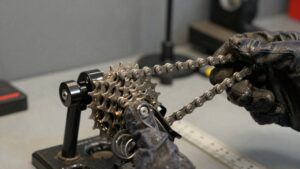
Before you store the bike, set a lubrication schedule: clean and lube the chain every 200–300 miles or immediately before long-term storage. Inspect brake and shifter cables for corrosion or fraying so you can apply light lubricant or replace as needed.
Check suspension service intervals per manufacturer recommendations and lower pressure to storage specs if required. Repack headset, hub, and bottom bracket bearings with fresh grease if service is due.
Finish with a light protective spray on exposed metal and pivot points to repel moisture. Avoid aerosol solvents on brake surfaces.
Chain Lubrication Frequency
When should you lube the chain for winter storage? You should clean and apply lubricant immediately before storing, and again mid-winter if humidity is high or storage is in a non-climate-controlled space.
For chain maintenance, use a thin, penetrating lubricant designed for long-term protection: dry wax or a synthetic light oil for dry sheds; a heavier, corrosion-inhibiting oil if condensation risk exists. Apply drop-by-drop to each roller, wipe excess, and rotate crank to distribute. If you removed the chain for cleaning, hang it to drip-dry before lubing.
Inspect monthly for surface oxidation; reapply if any dullness appears. Proper timing and product choice minimize wear and ensure rust prevention without attracting damaging grit.
Brake And Shifter Cables
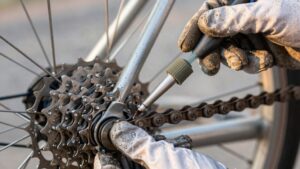
After lubing the chain, check your brake and shifter cables next, since they run in the same grime-prone environment and directly affect control. Inspect housings, ferrules, and exposed cable for wear and brake cable corrosion. Replace any pitted or rusted inner wires.
For lubrication intervals, lube exposed inner cables every 3–6 months in storage, or immediately if you stored the bike after wet riding. Use a light, low-viscosity cable lubricant or graphite-based product compatible with sealed housings; avoid heavy grease that attracts grit.
Verify shifter cable tension and set barrel adjusters to neutral before storing so tension stays stable. Cap cable ends to keep moisture out. Document dates of service so you lube and inspect on schedule.
Suspension Service Intervals
How often should you service suspension components and what lubricants should you use to keep them reliable in storage and on the trail? You’ll perform basic suspension service before storage and a full lower-leg and damper service annually or every 100 to 200 riding hours, whichever comes first.
For short winter storage, cycle the fork and shock through travel, wipe stanchions, and apply a thin film of fork-specific suspension oil to seals to prevent drying. Use manufacturer-recommended damper oils and lightweight, water-resistant oils for external pivots; avoid general-purpose penetrating oils on internals.
Consider storage temps: if below freezing, use oils with low pour points to avoid viscosity increases that stress seals. Log service dates and oil types so you’ll resume riding with known, consistent damping behavior.
Grease For Bearings
Why choose the right grease and interval for your bike’s bearings? You want minimal friction, corrosion resistance, and predictable service life. Inspect hub, headset, and bottom bracket bearings before storage. Clean old lubricant and contaminants with solvent; then pack fresh grease to manufacturer specs.
Match grease compatibility to existing grease type; don’t mix lithium, calcium, or complex thickeners without flushing. Incompatibility alters consistency and protection. Apply grease appropriate for expected bearing temperatures: low-temperature formulations remain fluid in cold garages or unheated sheds, while high-temp variants suit heated storage or long rides before storage.
Service intervals are annually for sealed bearings left idle and semiannually for older or wet-used parts. Record grease type and date so you repeat compatible service next season.
Protective Spray Options
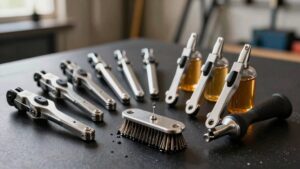
Which spray should you reach for before storing your bike for winter depends on the part you’re protecting and the storage conditions. Use a light penetrating oil for chains and exposed fasteners to displace moisture; apply, wipe off excess, and repeat every 3–4 months if storage temp cycles occur.
For cables and pivot points, use a thin, low-viscosity lubricant that won’t gum at low storage temp. For frame protection and long-term metal preservation, choose a wax-based corrosion inhibitor: it bonds and resists humidity. Avoid silicone sprays on braking surfaces. Use a dry-film spray on derailleurs to limit dirt adhesion.
In sealed, desiccated storage, reduce application frequency. Label treated parts and record the next lubrication interval for precise maintenance.
Frequently Asked Questions
Can I Store My Bike Outdoors Under a Cover?
Yes, you can store your bike outdoors under a weatherproof cover, but you shouldn’t rely on it alone for long-term protection.
Use a breathable, waterproof weatherproof cover that sheds rain and snow while allowing moisture to escape. Elevate the bike off the ground; protect drivetrain and bearings with wax or lubricant; and add desiccant packs in sealed compartments.
Inspect regularly for condensation, corrosion, and rubber degradation.
Should I Leave Electronics (Lights, GPS) on the Bike?
No, you shouldn’t leave electronics on the bike. For electronics safety and battery maintenance, remove lights, GPS, and any removable batteries before storage to prevent drainage, corrosion, and ozone exposure.
Store them indoors at moderate temperature, ideally partially charged (about 40–60%) and on a trickle charger or checked monthly. Clean contacts, use dielectric grease if needed, and keep devices in sealed bags with desiccant to control moisture.
How Do I Prevent Saddle and Handlebar Cracking?
Prevent saddle cracking and handlebar cracking by removing or shielding vulnerable materials. Store the bike off the floor in a stable, dry environment and avoid plastic sheeting that traps moisture.
Apply silicone or neoprene covers to rubber parts. Use paste wax on exposed metal and leather conditioners on saddles. Keep the bike away from ozone sources (motors).
Check periodically and rotate pressure points to prevent deformation and drying.
Is It Necessary to Lock a Bike Stored in a Shed?
Yes, you should lock a bike stored in a locked shed. You’ll reduce theft risk even if the shed seems secure. Use a robust U-lock or chain anchored to the shed’s frame, and secure quick-release wheels.
Complement security with an outdoor cover only if weatherproofing is needed; avoid sealing moisture against the bike. Inspect shed locks and hinges periodically. Consider alarmed locks or CCTV for higher-risk locations.
Can I Store Multiple Bikes Stacked Together?
Yes, you can store multiple bikes stacked together, but you’ll manage bike stack risks with a clear indoor storage strategy. Use sturdy wall or ceiling racks, padded contact points, and stable freestanding stands to prevent frame stress, scratching, and tipping.
Space bikes to avoid moisture pooling and allow airflow. Secure heavier bikes lower; hang by wheels or rafters, and keep rubber components away from electric motors to limit ozone damage.
Conclusion
You’ve prepped your bike methodically: set tire pressure to storage temps, remove wheels and follow the checklist, and apply the right greases and lubricants at recommended intervals.
Keep chain lubed at the prescribed frequency. Inspect brake and shifter cables, and service suspension per manufacturer specs. Use protective sprays selectively to repel moisture without displacing greases.
Store the bike in a stable, cool, dry spot to prevent corrosion and preserve component function for spring.
Related: Winter Bike Storage Schedule