Chain Replacement Interval Guide
You should replace chains when measurable elongation, pin wear, noise, or slack show loss of tension rather than waiting for failure. Use 3–5 spans to measure pin-to-pin pitch or a wear gauge. Act at ~0.5% elongation; replace immediately above ~0.75–2.0%.
Check sprockets, tensioner, guides and pin diameters while you’re at it. Use calibrated torque tools with the correct sequence. Keep going for specifics on tools, torque and inspection steps.
What Is Chain Replacement Interval?
- Measure chain elongation across 3–5 spans and base replacement on the most-worn section, not a single spot.
- Replace chains when measurable elongation exceeds manufacturer spec (commonly ~0.5–0.75%); act before failure.
- Inspect sprockets, tensioners, guides, and pins whenever stretch is detected. Replace worn components together.
- Use calibrated calipers, wear gauges, and torque wrenches. Verify pin diameters and fastener torque to factory values.
- Recheck critical fasteners and chain tension after initial run-in; record measurements for future interval planning.
Chain Wear Measurement Chart
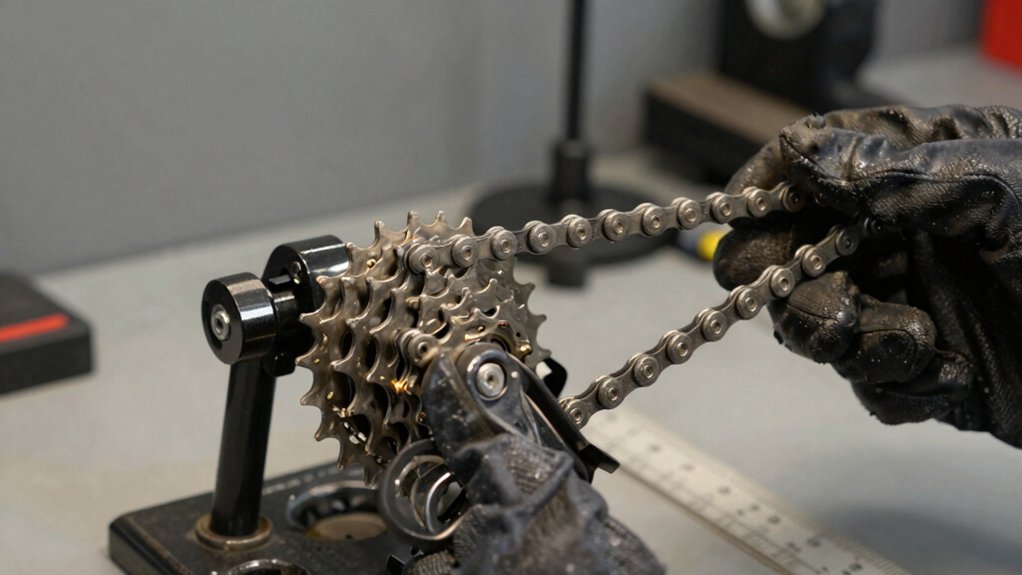
Measuring chain wear means checking for elongation and roller wear across several spans. Do not rely on a single spot. You’ll measure chain stretch by checking pitch increase and roller diameter across 3–5 spans, using calipers or a wear gauge; use the most-worn section as your guide. Tension the chain to avoid slack errors and focus on spans over rollers and pulleys.
| Tool | Use |
|---|---|
| Caliper | Pin-to-pin pitch, percent elongation |
| Wear gauge | Quick fit/step check, replacement threshold |
Interpretation: 0.75–2.0% replace immediately. Multi-strand chains tolerate different limits; follow tool-specific guidance.
0% Stretch Replacement Rule
How do you decide when chain stretch means replacement? You look for measurable elongation and symptoms, then act before failure. Use a dial gauge or manufacturer stretch spec, compare to limits, and factor age, mileage, and oil history. Two word flags like “rattle noise” or “timing slip” help prioritize service.
- Measure elongation against spec and replace if over limit.
- Inspect tensioner, guides, and sprockets for wear when stretch is detected.
- Consider mileage, oil change history, and engine design in decision.
- Replace proactively during related repairs to avoid downtime.
These discussion ideas keep choices practical and unrelated to other headers: focus on objective measurement, symptom correlation, and preventive replacement to protect the engine.
Torque Specs and Pin Size
When you service a timing chain, you’ll need the correct torque specs and pin diameters to secure links and guides without risking distortion. Use a calibrated torque wrench and follow the manufacturer’s torque sequence to tighten fasteners in the right order.
Watch pin wear; ovalized or grooved pins change fit and require replacement to maintain correct torque and chain alignment.
Recommended Torque Values
Why does torque matter for timing chain components? You need correct torque to ensure reliable chain tensioning and to protect parts from premature wear caused by vibration or loosening. Use manufacturer torque specs for guides, sprocket bolts, tensioner fasteners, and cover hardware; they’re calibrated to work with recommended oil quality and pressure.
Tighten fasteners in proper sequence and to specified values with a calibrated torque wrench. Over-torquing can deform parts; under-torquing allows movement and noise. When replacing chains, replace fasteners or follow reusable-bolt procedures called out by the OEM. If specs aren’t available, consult service manuals or dealer data rather than guessing.
Finally, recheck critical fasteners after initial run-in to confirm torque retention and consistent tensioning.
Pin Diameter Importance
Pin diameter directly affects How torque is transferred through timing chain components, so you should match pin size to the manufacturer’s specifications to prevent premature wear or failure. You’ll ensure proper load distribution across links when pins fit tolerances. Undersized pins concentrate stress, and oversized pins allow play; both increase chain wear.
When replacing links or fitting new chains, verify pin diameter with the spec sheet and use calibrated gauges rather than guesswork. Torque specs for adjacent fasteners assume correct pin sizing, so don’t substitute pins of different diameter to force fit. If you notice accelerated chain wear, measure pin and bushing clearances as part of diagnosis.
Correct pin diameter helps maintain tensioner effectiveness and extends the service life of the entire timing train.
Torque Measurement Tools
How do you ensure fasteners and pins are tightened correctly without risking distortion or premature wear? Use a calibrated torque wrench sized for the fastener and a dial or digital gauge for small pin retention bolts. Match torque specs from the manufacturer to the pin diameter. Incorrect pin size or overtightening can deform mating holes and accelerate chain wear.
Verify torque tools periodically against a master standard and use adapters only when they don’t change applied torque. For chains, monitor stretch indicators after proper torqueing. A chain that meets stretch limits but shows unusual movement may indicate hardware mis-torqued.
Record applied torques and pin sizes during service so future inspections reference correct settings and spot trends before failure.
Torque Sequence Order
Torque sequence order ensures you tighten fasteners and retention pins in a controlled pattern so components seat evenly and you avoid distortion. Follow the manufacturer’s torque specs and pin size charts exactly; work in the prescribed incremental steps (usually crisscross or center-out) and use a calibrated wrench to apply each stage of torque so you don’t exceed clamping loads or damage threads.
You’ll follow sequence tables for covers, guides, sprockets and tensioner mounts, noting pin diameter and thread engagement. Stick to specified increments and final values; rechecking after initial run-in. Proper sequence reduces uneven loading that accelerates chain wear and masks issues during tensioner inspection. If values differ from charts, stop and verify fastener grade or part number before proceeding to avoid component failure.
Pin Wear Indicators
Why should you watch pin wear closely? You rely on pins to keep chain links aligned. Worn pins let the chain elongate and change pitch. Check pin wear during inspections and note any deviations from factory pin size or torque specs.
Measure pin diameter and compare to service limits; small reductions signal accelerated wear. Use stretch indicators as a secondary check: if the chain measures beyond specified tolerance, pins are likely compromised. When replacing pins or links, fit the correct pin size, apply specified torque, and recheck alignment.
Don’t ignore subtle wear: pin wear precedes catastrophic failure. Regular oil maintenance and timely tensioner replacement slow pin degradation. However, measurable pin wear or positive stretch indicators mean it’s time to rebuild the chain assembly.
How Often Should You Check Your Chain Replacement Interval on a Bike?
You should inspect your chain replacement interval at least once a month for routine riders and before every long ride if you commute daily or ride in wet or dusty conditions. Catching wear early keeps repair costs low and prevents the cascading damage that turns a small component issue into a full drivetrain or wheelset replacement.
Frequently Asked Questions
How Does Oil Type Affect Chain Lifespan?
The oil type directly affects chain lifespan by controlling lubrication, wear, and tensioner function. If you use the wrong viscosity or dirty oil, chains wear faster; tensioners falter, and chain lifespan shortens. You should use the manufacturer-specified oil grade and change it regularly. Synthetic oils often provide better film strength and temperature stability.
That reduces metal-on-metal wear, prevents stretch, and helps the chain last longer. This approach avoids costly failures.
Can a Stretched Chain Be Safely Reused Temporarily?
No, you shouldn’t reuse a stretched chain even for temporary use. A stretched chain has reduced tension and can slip, skip teeth, or fail unpredictably; this risks severe engine damage.
If you must drive briefly to a shop, limit distance and speed. Avoid hard acceleration and monitor for noises. Ideally, replace the stretched chain and related components promptly to restore proper timing, reliability, and prevent costly repairs.
Are Aftermarket Chains as Reliable as OEM?
You can get reliable aftermarket chains, but they’re not always equal to OEM. Aftermarket reliability varies by manufacturer, materials and quality control. So check reviews and warranties. Some offer comparable chain lifespan alternatives at lower cost, while cheap parts may wear faster and risk engine damage.
If you want longevity, choose reputable brands. Insist on proper installation, replace related tensioners, and follow maintenance like timely oil changes to protect the investment.
What Are Costs for Full Chain Replacement?
Expect full chain replacement to run widely from about $800 to $4,500 depending on vehicle complexity and parts. You’ll see lower costs on simple, non-interference engines and higher on luxury or transverse-mounted V-engines.
Include chain maintenance and cost considerations: labor hours, OEM vs aftermarket parts, tensioners, guides, and possible water pump or cam work. Plan for diagnostics and factor preventive replacement during other engine repairs to save long-term.
Can Chain Failure Be Legally Prevented by Inspections?
You can’t legally guarantee chain failure prevention solely by inspections, but regular inspection frequency and proper documentation reduce legal liability by showing reasonable care. You should follow manufacturer-recommended intervals, watch for wear signs, and keep oil changes current.
If you inspect often, fix issues promptly, and record services, you’ll strengthen your defense against claims and lower the risk of catastrophic failure; however, prevention isn’t absolute.
Which Chain Replacement Interval Approach Is Right for Your Bike?
You’ve now got the essentials for spotting chain wear and knowing when to replace links or the whole chain. Use the 0% stretch rule as a strict baseline, check pin diameters and wear indicators regularly, and follow manufacturer torque specs and sequence to protect pin integrity.
Always measure torque with a calibrated tool and tighten pins in the proper order. Do this consistently, and you’ll maintain safe, reliable drivetrain performance; you will avoid premature failures.
Related reading: Rear Derailleur Shifting Troubleshooting — a closer look at this topic.