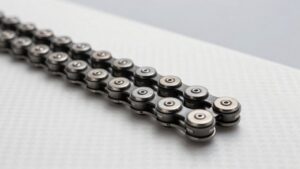
How Often to Lubricate a Bike Chain
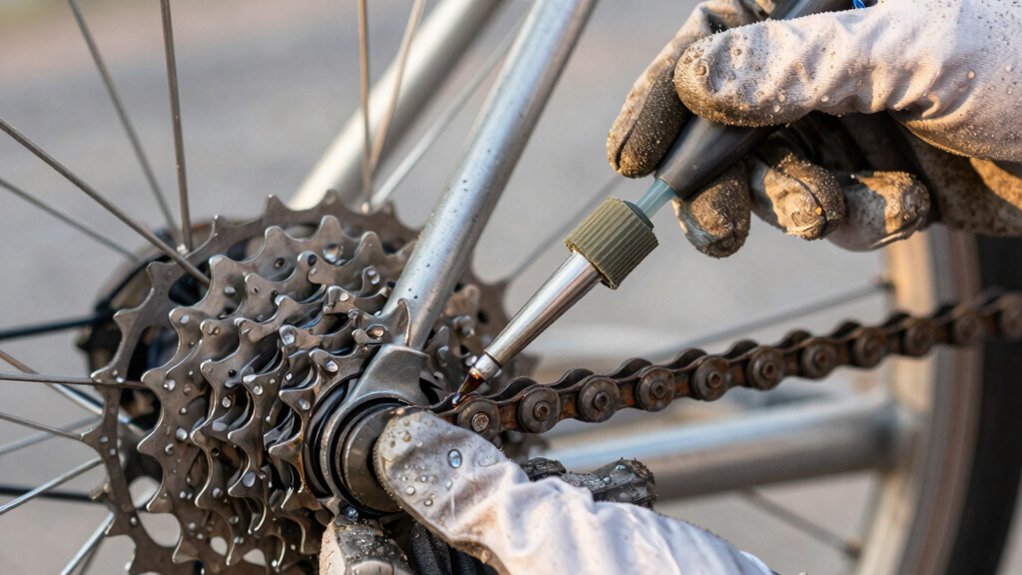
You should lube your chain based on conditions: On dry roads, do it every 200–300 km. On mixed rides, about 200 km is recommended. On wet or muddy trails, lube at or under 150 km. If you ride in salt, snow, or sand, lube and clean after every outing.
E‑bikes need about 50% more frequent attention. Clean the chain first; apply 1 drop per link (2 if old or exposed), let penetrate, and wipe excess. Keep going for tips on lube types, drop counts, and wear checks.
Quick Overview
- Lubricate every 150–300 km depending on conditions: ≤150 km for wet/muddy, ~200 km mild, 200–300 km dry.
- Reapply after any ride in salt, snow, or sand; ideally, do this immediately after cleaning and drying the chain.
- E-bikes need about 50% more frequent lubrication than non-e-bikes due to higher torque and wear.
- Apply 1 drop per link for dry/all-purpose lubes, 1–2 drops per link for Wet Lubes or older/exposed chains.
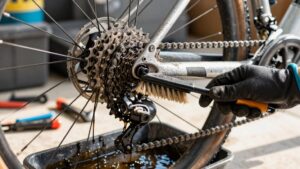
- Clean the chain before lubing. Let lube penetrate several minutes; then wipe excess to avoid attracting dirt.
Chain Lubrication Frequency Chart
Usually you should follow a simple chart: lubricate road bikes in dry conditions every 200–300 km (100–150 miles for weekly riders); treat mountain bikes in wet or muddy terrain every ~150 km or more often. Re-lube after every ride in salty, snowy, or sandy conditions. E-bikes need about 50% more frequent attention. You’ll use the chart to set intervals, adjust for seasonal humidity, and note tire compatibility only insofar as ride type affects contamination. Clean before lube; don’t overapply.
| Condition | Interval |
|---|---|
| Dry road / sunny | 200–300 km |
| Mild / mixed | ~200 km |
| Wet/muddy MTB | ≤150 km |
| Salt/snow/sand | After every ride |
Follow audible and visual cues to shorten intervals. E-bikes require stricter scheduling.
Lube Type & Drop Count
Which lubricant should you pick and how many drops should you apply to each link? Choose based on conditions: Wet Lube for mud, dry for dust, all-purpose for mixed use. Apply sparingly; aim for one drop per inner roller joint. Apply two drops if the chain is old or exposed. Avoid irrelevant topic or unrelated concept distractions; focus on lubricant chemistry and penetration.
- Wet lube: 1–2 drops per link; resists washout and attracts grime. Clean more often.
- Dry Lube: 1 drop per link; low pickup in dusty conditions. Reapply sooner.
- All-purpose/mineral oil: 1 drop per link; balanced protection for variable riding.
Let lubricant penetrate several minutes. Then wipe excess. Do not over-apply; excess attracts dirt and reduces efficiency.
Chain Wear Measurement Method
You’ll check chain wear by measuring “stretch,” the elongation between links, either with a ruler or a dedicated chain-check tool. Use a ruler to compare 12 full links against the specified length. Alternatively, insert a commercial gauge to read wear percentage directly.
Replace the chain when readings hit the manufacturer’s threshold; this is commonly 0.5%–0.75% for road bikes and 0.75%–1.0% for heavier or e-bike use. Doing so will protect sprockets and prolong drivetrain life.
Measuring Chain Stretch
Regularly measuring chain stretch helps you catch wear before it speeds cassette and chainring damage. You shouldn’t treat chain wear as an irrelevant topic or a random tangent: it is measurable and actionable. Use a chain-wear tool or measure pin-to-pin elongation with calibrated gauges; both quantify elongation as percentage over 100 links.
Inspect at intervals aligned with ride frequency: monthly for frequent riders or every 200 km as a baseline. Replace chains at about 0.5% elongation for road use and 0.75–1.0% for heavy-duty or single-speed setups to prevent accelerated cog wear. Record measurements, note conditions (wet, dusty, e-bike load), and adjust lubrication and inspection cadence when wear accelerates.
Accurate, repeatable checks prolong drivetrain life.
Using A Ruler
How do you check chain stretch with nothing but a ruler? Place the chain on the smallest chainring and hold the ruler along the chain pins. Using the ruler as a gauge, measure 12 full links (24 pins) from a fixed pin. The measurement should be exactly 12 inches (304.8 mm).
If the distance exceeds 12 1/16 inch (~306.4 mm), you’ve got noticeable wear; beyond 12 1/8 inch (~308 mm), replacement is recommended. This measurement method is simple, repeatable, and effective in the field. Keep the chain under slight tension so pins align.
Record measurements over time to track wear rate and set lubrication intervals. This quick using ruler check prevents premature cassette and chainring wear.
Measuring With Tools
Several simple tools make chain-wear measurement faster and more accurate than the ruler method. You will want to use them when precision matters. You can pick a dedicated chain checker, a pin-style gauge, or a digital caliper with a 12-link span adapter.
Place the tool per manufacturer instructions, seat it against chain plates, and read wear percentage or elongation directly. Chain checkers lock into place for repeatable readings; pin gauges reveal stretch by attempting to insert beyond a specified limit.
Digital calipers give the most granular data but require careful technique. Ignore irrelevant note-style distractions and avoid off topic comparisons to sprocket wear here. Use consistent measurement points and record values so you can decide maintenance without guessing.
Interpreting Wear Readings
Wondering what a 0.5% or 0.75% reading actually means for your chain? You’ll interpret those numbers as linear stretch indicative of pin wear. A 0.5% gauge reading shows moderate elongation; you should monitor lubrication and cleaning frequency but not rush replacement.
A 0.75% reading signals accelerated wear; plan increased maintenance and inspect sprockets for mating wear. Use measurements trend-wise: single readings aren’t definitive. Measure at several points, record values, and compare over weeks or months to spot rapid change.
Ignore irrelevant topic chatter or any off topic discussion about unrelated components. Stay focused on percent elongation, measurement consistency, and how readings inform your lubrication cadence without leaping into replacement thresholds.
Replacement Thresholds
When should you replace a chain based on wear readings? Use a calibrated chain checker or ruler to measure elongation: 0.5% wear (0.5% stretch over 12 links) is the service warning for road bikes. 0.75–1.0% indicates replacement to protect cassette and chainrings, especially on e-bikes with higher torque.
Measure under light tension, clean first, and average multiple readings. Do not confuse wear with surface grime; that’s an irrelevant topic when assessing pin-to-pin elongation. Avoid using tooth count or shifting feel alone; those are an unrelated concept for precise replacement timing.
Replace the chain when readings exceed recommended thresholds or sooner if you ride in wet or muddy conditions to prevent accelerated drivetrain wear and costly component replacement.
Frequently Asked Questions
Can I Ride Immediately After Applying Lube?
Yes, you can ride immediately after applying lube, but don’t. You’ll want to let it penetrate for several minutes so it reaches pins and rollers; otherwise, surface film won’t protect or reduce wear.
After waiting, pedal backward to distribute, then wipe excess with a clean rag to avoid dirt pickup. If you must go right away, ride gently for a few kilometers and recheck for noise or grime; then top up as needed.
Can I Mix Different Chain Lubricants?
You shouldn’t mix different chain lubricants; they’ll often clash and reduce effectiveness. If you must switch, clean the chain thoroughly first; then apply the new lube.
Use two word discussion ideas1 to compare properties and two word discussion ideas2 to evaluate compatibility. Be practical: wet with wet, dry with dry, or fully strip before changing types. That keeps lubrication performance predictable and prevents gum, shedding, or premature wear.
How Do I Dispose of Used Chain Cleaning Solvent?
You should treat used chain solvent as hazardous waste. Don’t pour it down drains or into soil. Collect spent solvent in a sealed, clearly labeled metal or HDPE container. Let solids settle, then separate reusable solvent by decanting and reuse.
For disposal, take remaining waste to a local hazardous waste facility or solvent recycling service; many bike shops accept it for solvent recycling. Keep records and follow local regulations for transport and drop-off.
Does Lubing Affect Bike Warranty?
Yes, proper lubrication won’t void most warranties, but using wrong products or neglecting maintenance can. If you use recommended lubricants and follow manufacturer service intervals, you’ll preserve warranty implications.
Conversely, contamination from improper oils, visible neglect (rust, wear), or damage tied to poor lubrication can be denied. Keep receipts, follow spec sheets, document maintenance, and consult your bike/e-bike manual to ensure lube affects warranty only positively.
Can I Lubricate a Rusted Chain Instead of Replacing It?
You can sometimes lubricate a rusted chain to slow rust repair and provide corrosion prevention, but you shouldn’t assume full recovery. First, clean and remove loose rust with a brush and degreaser. Dry thoroughly, then apply a penetrating bike lube and let it penetrate.
If links bind, rollers flake, or shifting remains poor, replace the chain; structural corrosion compromises strength and wear accelerates drivetrain damage.
Conclusion
You’ve now got the essentials to keep your chain running efficiently: pick the right lube for conditions, apply the correct drop count, and follow a regular schedule.
Check stretch with a ruler or chain tool at intervals based on mileage and riding conditions. Replace the chain once it hits the manufacturer’s wear thresholds to protect the cassette and chainrings.
Consistent lubrication and timely replacement minimize drivetrain wear and maintain smooth, safe shifting.
Related reading: How to Clean a Bike Drivetrain Properly — a closer look at this topic.