Bottom Bracket Standards Compatibility Chart
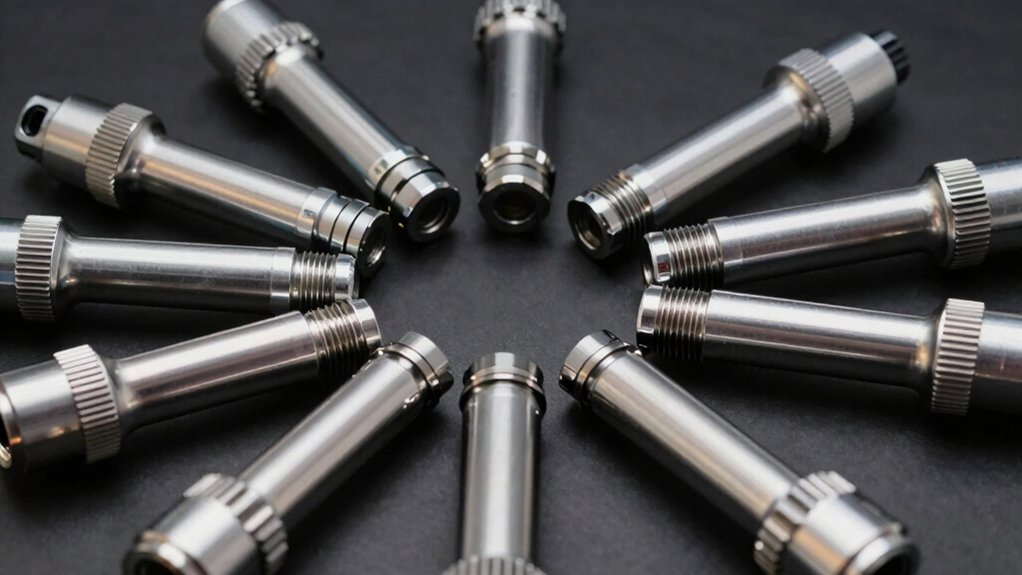
You’ll match frames, spindles and bearings quickly by mapping shell width to spindle diameter and BB standard.
68–73 mm shells usually take 24 mm spindles (Hollowtech II); while 86–104+ mm shells use 24–30 mm or 28.99 mm DUB spindles with specific cups.
Torque to manufacturer spec, maintain preload and shim for correct bearing clearance. Verify face parallelism, shell diameter and dropout alignment to limit runout. Continue for detailed tolerances, cup choices and setup steps.
What Is Bottom Bracket Standards and Compatibility?
- Match shell width to spindle diameter: Common 68–73 mm shells use 24 mm; wider shells often require 30 mm or DUB 28.99 mm options.
- Confirm shell type (threaded vs press-fit) and BB standard (BSA, BB86, PF30, BB30, BB92, BB90) before ordering cups or cranks.
- Verify shell face parallelism and diameter accuracy to prevent angular bearing loads and premature wear.
- Use correct torque and preload per manufacturer; shim or use adjustable collars to maintain proper bearing clearance.
- Measure bearing cup runout and alignment to dropouts to ensure correct chainline and long bearing life.
Shell Width × Spindle Diameter
Why does shell width matter? You use shell width to select compatible spindle diameter and bearing placement; a mismatch alters chainline and Q-factor. Road shells (68mm) commonly pair with 24mm spindles (Hollowtech II). MTB shells (73mm) accept 24mm or larger press-fit 30/30mm systems.
DUB’s 28.99mm spindle accommodates multiple shell widths (68–104.5mm) via specific BB units. BB30/PF30 systems use 30mm spindles in 73mm shells; this moves bearings outboard. T47 and PF24 expand threaded/press-fit options for 24mm spindles in wider shells.
| Shell Width (mm) | Typical Spindle Diameter (mm) |
|---|---|
| 68 | 24 |
| 73 | 24–30 |
| 86–92 | 24–30 |
| 100+ | 28.99–30 |
Torque & Bearing Clearances
How tight should your bottom bracket be, and how does that affect bearing preload and longevity? You should torque cups or preload collars to manufacturer spec: too loose yields play and premature wear; too tight increases friction, heat, and bearing failure. Spindle diameter and interface type dictate recommended torque and bearing stack height.
Maintain correct bearing clearance using shims or adjustable preload, and verify no binding across rotation.
- Follow specified torque values for your standard and spindle diameter.
- Check axial play after torqueing; adjust preload until minimal smooth play remains.
- Inspect for binding due to poor frame alignment or improper spacer stacks.
Use a calibrated torque wrench, service intervals, and simple bench checks to ensure durable, low-friction operation.
Frame Shell Alignment Tolerance
You should check shell face parallelism and shell diameter accuracy first, since small deviations change how cups or bearings seat. Measure shell width consistency and the shell alignment with the dropouts to ensure spacers and crank offsets will match intended standards.
Finally, quantify bearing cup runout to predict premature wear or creaking when fitting BSA, PF30, BB30, and DUB-compatible systems.
Shell Face Parallelism
Frame shell face parallelism determines how evenly the two bearing faces sit relative to each other and directly affects bottom bracket alignment and bearing life. You must measure parallelism to ensure the shell face planes are co-planar within specified tolerance. Misalignment introduces angular load on bearings and shortens service life.
Check parallelism against nominal shell width and note that wider shells (e.g., 86.5/92/100mm) amplify angular error effects. Verify that spindle diameter and bearing placement are centered relative to both faces; larger spindles magnify misalignment consequences.
Use a precision straightedge and feeler gauges or a dial indicator across both faces after clamping the shell. If out of tolerance, correct with facing tools or select bearings/cups designed to accommodate the measured deviation.
Shell Diameter Accuracy
Why does shell diameter accuracy matter? You rely on precise shell diameter to ensure bearings seat concentrically and preload correctly. Deviations produce misalignment, premature wear, or binding. Measure ID tolerances against the standard for your BB type: PF30, BB30, BSA; and verify roundness, not just nominal size.
If the shell diameter is oversize, bearings can cant or require adapters. If undersize, press-fit installation risks damage. Maintain spindle diameter tolerance expectations too: an out-of-spec spindle diameter combined with poor shell diameter magnifies eccentric loading. Use calibrated bore gauges and runout indicators during inspection and after facing.
For mixed-standard conversions (DUB to BB30/PF30, BSA to PF), confirm both shell diameter and spindle diameter compatibility before assembly to prevent failure.
Shell Width Consistency
After verifying shell diameter and spindle tolerances, check shell width consistency because small variations change bearing preload and chainline. You’ll measure shell width to specified nominal values (e.g., 68/73/86.5/92/100mm) and confirm shell face parallelism to control bearing cup runout.
Combine those checks with shell diameter accuracy and spindle diameter spec to predict bearing clearances under load. Use calibrated calipers and a straightedge; document deviations and adjust spacers or cups to restore correct torque and preload. Maintain frame shell alignment tolerance within manufacturer limits to prevent asymmetric loading.
Don’t ignore inspection of shell alignment with dropouts during fixture checks. However, address that in the next section; here focus on width, faces, runout, and their direct effect on torque and bearing life.
Shell Alignment With Dropouts
How closely do the shell faces line up with the dropouts, and how does that alignment affect bearing preload and drivetrain geometry? You need to measure shell alignment relative to dropout planes because misalignment shifts chainline and alters bearing load.
Shell alignment affects dropout interaction at axle interfaces and through-axle seating; small angular errors translate to lateral preload on bearings, especially with external cups that preload against the shell face. With square taper spindles and older external-cup systems, uneven shell-to-dropout alignment can induce asymmetrical cup seating and change spindle centering.
You should check alignment with a straightedge and feeler gauges. Ensure faces are parallel within manufacturer tolerances, and correct with shell facing or dropout shims. Proper alignment preserves bearing life and consistent drivetrain geometry.
Bearing Cup Runout
Shell-face alignment to the dropouts sets the baseline for how cups and bearings seat. However, you also need to quantify bearing cup runout: the radial and axial deviation of the pressed or threaded cup relative to the shell bore axis. You should measure runout because even small deviations cause runout issues that affect diameter accuracy and face parallelism. This reduction in clearances increases preload on bearings for a given spindle diameter.
Check shell width and width consistency to ensure cups sit square. Inconsistent shells amplify alignment tolerance failures. When installing, control torque to avoid deforming cups and recheck axial runout after tightening. Maintain alignment with dropouts as the reference plane and specify acceptable runout limits based on bearing type and required clearances.
How Often Should You Check Your Bottom Bracket Standards and Compatibility on a Bike?
You should inspect your bottom bracket standards and compatibility at least once a month for routine riders and before every long ride if you commute daily or ride in wet or dusty conditions. Catching wear early keeps repair costs low and prevents the cascading damage that turns a small component issue into a full drivetrain or wheelset replacement.
Frequently Asked Questions
Can I Use a DUB Crank on a BB30 Frame Without Adapters?
Yes, you can fit a DUB crank on a BB30 73mm shell without adapters if the crank is DUB-compatible for BB30/PF30 73. You’ll need correct spacers (2.0/3.0/4.5mm as applicable) and proper bearing fitment.
Be aware this is a two word discussion about an unsupported conversion when using non-DUB-specific parts. Measure shell width, confirm axle diameter, and install per torque specs to avoid creak or premature bearing wear.
Are There Ceramic Bearing Upgrades Worth the Cost?
Yes, ceramic bearings can be worth the cost if you prioritize lower friction and longevity. You’ll get measurable reduction in rotational resistance, smoother spin, and often longer life under clean, well-maintained conditions.
The upgrade value depends on riding style, budget, and bearing load; racers and long-distance riders benefit most. Casual riders benefit less so. Expect higher upfront cost and sensitivity to contamination. Pair with proper seals and maintenance for best results.
How Do I Clean/Preserve Press-Fit Bearings Long-Term?
You clean/preserve press-fit bearings by removing the crank, extracting bearings or cups, and flushing with solvent. Then dry, inspect races for pitting, and relubricate with high-quality grease or light oil for long-term preservation. Use corrosion inhibitors if bikes store wet.
Repress bearings to correct depth with proper tools and torque. Service intervals depend on conditions; however, inspect and repeat cleaning maintenance every 6–12 months or after heavy exposure.
Can I Convert T47 to Threaded BSA Easily?
Yes, you can convert T47 to threaded BSA with the right adapter kit, and you’ll avoid irrelevant topics. You’ll remove T47 cups, install a BSA-to-T47 adapter or threaded sleeve, and torque per spec. Fit bearings and cranks matching spindle type. Two word ideas: precise torque.
Use quality seals and grease. Check shell face and width, and verify axle and spacing with spacers. Installation’s straightforward if you follow manufacturer instructions and tooling.
What Spacers Are Needed for BB30 to DUB Conversion?
You need BB30 to DUB conversion bearings plus spacers matching shell width and crank spec. For a BB30 73mm shell, you’ll typically use DUB BB30 bearings and 3.0/4.5mm spacers; the manufacturer lists 3.0mm right-side stack and 4.5mm if using specific MTB cranksets.
For PF30/BB30 68mm variants, use 2.0/3.0mm combos. Check BB30 compatibility and spacer requirements for your crank model. Follow supplier torque and sealing instructions.
Which Bottom Bracket Standard Approach Is Right for Your Bike?
You’ve now seen how shell width and spindle diameter interact with torque and bearing clearances to determine bottom bracket fitment. Keep frame shell alignment, face parallelism, and diameter accuracy within tight tolerances to avoid preload and premature wear.
Guarantee shell width consistency and alignment with dropouts to maintain chainline and drivetrain efficiency. Minimize bearing cup runout and verify torque specs during installation to preserve bearing life and reliable, repeatable performance.