Disc Brakes Vs Rim Brakes Explained
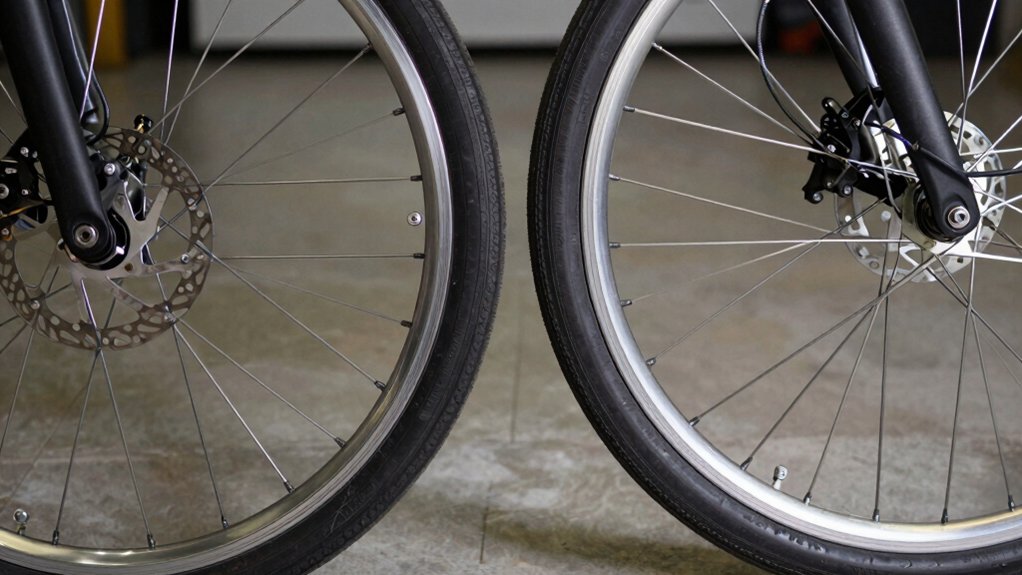
You’ll get stronger, more consistent stopping with disc brakes, especially in wet or steep conditions, because they give linear power, finer modulation, and move heat and wear off the rim.
Rim brakes stay lighter, simpler, and suit dry-road racing where minimal mass and easy adjustments matter.
Rotor size, pad material, and cooling determine fade resistance and service intervals; so choose based on terrain and maintenance preferences.
Keep going to see specific trade-offs and setup tips.
What Is Disc Brakes vs Rim Brakes?
- Disc brakes deliver stronger, more linear stopping power with better modulation and less lever force than rim brakes.
- Rim brakes are lighter and simpler, offering a sharp, responsive feel favored for dry-road racing and minimal maintenance.
- Disc brakes maintain consistent performance in wet or muddy conditions. Rim braking degrades significantly when wet.
- Larger rotors improve leverage, heat capacity, and reduce pad wear; they prevent fade on long or technical descents.
- Proper heat management: rotor size, pad material, and intermittent braking prevent fade and protect rims or rotors from damage.
Stopping Power Comparison Chart
How do disc and rim brakes actually compare when you need to stop fast? You’ll feel disc brakes deliver higher, more linear stopping power with less lever force and finer modulation. This is perfect if you value disc braking aesthetics and precise control on descents. Rim braking ergonomics still suit lightweight, dry-road racing where minimal mass and simple adjustments matter; however, wet conditions and heavy loads expose their limits.
| Attribute | Quick Contrast |
|---|---|
| Peak power & modulation | Disc: stronger, smoother; Rim: adequate, sharper feel |
| Wet consistency & maintenance | Disc: predictable, rotor preserves rim; Rim: degraded wet, simpler upkeep |
Choose discs for all-weather performance and control. Choose rims only if weight and simplicity trump braking consistency.
Rotor Size & Pad Wear
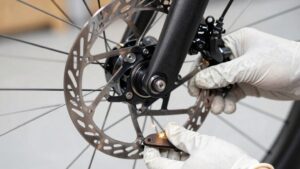
Why choose a larger or smaller rotor for your bike? You’ll pick rotor size to match braking demands: larger rotors increase leverage and heat capacity, giving stronger, more consistent stopping on long descents. Smaller rotors save weight and suit flatter terrain.
Rotor size directly affects pad wear; bigger rotors spread load, reducing abrasive stress on pads and slowing wear.
- You’ll feel confidence when larger rotors resist fade on technical descents.
- You’ll love lighter handling with smaller rotors during fast flats.
- You’ll appreciate reduced pad wear with appropriately sized rotors under heavy use.
- You’ll avoid unnecessary maintenance by matching rotor size to your riding style.
Choose deliberately: rotor size influences performance, maintenance frequency, and pad wear rates.
Heat Dissipation Guidelines
You’ll want to monitor heat build-up closely, since repeated heavy braking concentrates energy in rotors or rims and pushes materials toward their thermal limits. Compare how rotors shed heat versus rims: rotor vents, mass and alloy composition cool differently than rim braking surfaces. Riding conditions, such as long descents, heavy loads, and hot ambient temps, greatly amplify the risk of brake fade.
We’ll cover practical prevention: correct rotor size and pad choice, cooling intervals, and operational techniques to keep braking performance stable.
Heat Build-Up Causes
Curious what actually heats your brakes under sustained use? You convert kinetic energy into thermal energy at the pad-rotor or pad-rim interface. Braking frequency, force, and speed determine total heat input. You’ll see higher temperatures during long descents, heavy loads, or repeated emergency stops.
Friction couplets, pad material, and contact area control local heat flux, while thermal mass and conduction paths set how quickly components warm. Small pads and rotors raise peak temperatures faster; larger rims store more heat but can suffer concentrated heating where pads contact. Brake system stiffness, modulation behavior, and contamination influence uneven heating and hot spots.
Use two word discussion ideas like “load duration” and “contact pressure” to frame heat buildup causes.
Rotors And Rims Cooling
Heat management matters: rotors and rims dissipate braking heat through conduction, convection, and radiation. You should design and use components to maximize thermal pathways and airflow while avoiding localized hot spots. You’ll choose rotor material with high thermal conductivity and specific heat to spread energy quickly. Thin, ventilated rotor profiles and drilled patterns increase surface area and convective cooling without compromising stiffness.
For rims, rim surface finish affects emissivity and convective flow. Matte or textured finishes can radiate heat more effectively than glossy coatings. Mounting, pad contact patterns, and caliper alignment must avoid concentrated heating. You’ll monitor temperatures on long descents, use staggered braking techniques, and prefer components engineered to channel airflow across braking surfaces for predictable dissipation.
Material Thermal Limits
Why does material thermal limit matter when you push brakes hard on long descents? You need to manage peak temperatures: rotors, rims, pads and calipers each have specific heat capacity and thermal conductivity limits. Exceeding them degrades friction material, warps metal, and alters sound design cues you rely on to sense fade.
You’ll monitor lever feedback and temperature rather than guessing. Choose materials with higher thermal mass or better dissipation for repeated heavy use; pair them with pads rated for elevated temps. Consider rider ergonomics: lever feel changes as components heat, so set reach and modulation to compensate before fatigue sets in.
Follow manufacturer temperature guidelines and inspect hotspots after hard rides to prevent sudden failure.
Riding Conditions Impact
When you ride long, steep descents or tackle repeated braking zones, managing how your brakes shed heat becomes as important as choosing the right pads and rotors. Effective heat dissipation prevents fade, preserves materials, and keeps lever feel predictable. You will prioritize rotor mass, venting, and pad compound selection to move energy away from contact surfaces quickly.
Monitor hub and rim temperatures during extended braking. Excess heat raises your risk of component glazing, accelerated wear, and compromised grip tape durability on bars due to increased cockpit heat transfer. Efficient cooling reduces required input force; thus, you delay rider fatigue and maintain modulation.
Design choices—such as larger rotors, directional vanes, and heat-sinking adapters—let you sustain braking performance without firefighting thermal buildup.
Brake Fade Prevention
How do you keep your brakes working at peak performance on long descents? You manage heat proactively: use intermittent braking to shed energy, favor engine-braking gear choices, and monitor pad and wheel temperature.
Brake fade prevention is about controlling cumulative heat so friction materials and fluids stay in their designed ranges. Disc systems concentrate heat on rotors and calipers that ventilate better. Rim brakes dump heat into rims, risking higher rim versus rotor temperatures and structural concerns on carbon rims.
You should choose rotors with cooling vanes, use larger-diameter rotors for sustained descents, and select pads rated for high-temperature stability. Inspect hydraulic fluid and replace per manufacturer schedules. Bleed systems that overheat more reliably than neglected cables.
How Often Should You Check Your Disc Brakes vs Rim Brakes on a Bike?
You should inspect your disc brakes vs rim brakes at least once a month for routine riders and before every long ride if you commute daily or ride in wet or dusty conditions. Catching wear early keeps repair costs low and prevents the cascading damage that turns a small component issue into a full drivetrain or wheelset replacement.
Frequently Asked Questions
Can I Convert My Rim-Brake Bike to Disc Brakes?
Yes, you can convert rim to disc on some frames; however, compatibility matters. You’ll need a disc-compatible frame or fork, or adapters, wheel hubs, rotors, calipers, and new brake levers (mechanical or hydraulic).
Check brake compatibility with dropout spacing, axle type, and frame mounts. Many road frames aren’t designed for safe conversion. It’s often cheaper and safer to buy a disc-ready bike than force a retrofit on an incompatible frame.
Are Disc Brakes Compatible With All Wheel Hubs?
No, wheel hub compatibility varies. You’ll need to check brake rotor standards and hub mounts. Many hubs support centerlock or 6-bolt rotor attachments; adapters exist but must match axle spacing, thru-axle or QR type, and disc-specific hub shell strength.
You’ll also verify rotor diameter limits and frame/fork tab standards. If your hub/frame don’t align, you’ll need new hubs, wheels, or adapters to ensure safe, reliable braking.
Do Disc Brakes Affect Bike Resale Value?
Yes, disc brakes usually raise disc brakes resale appeal and can improve disc brake value impact. You’ll attract buyers seeking modern performance, weather reliability, and wider tire compatibility.
Higher-end hydraulic systems boost resale most; mechanical discs help modestly. Expect a price premium for well-maintained rotors, calipers, and compatible frames. However, increased weight and maintenance needs slightly temper value for weight-conscious buyers. Overall, discs generally help resale.
Can I Use Rim Brake Wheels on a Disc-Frame Bike?
No, you can’t safely use rim brake wheels on a disc-frame bike unless the frame and fork are explicitly designed for rim braking. Frame compatibility matters. Rim brake wheels require caliper bosses, appropriate brake track clearance, and cable routing that disc frames usually lack.
Fitment risks poor braking geometry, interference, and damage. If you need rim braking, choose wheels and a frame engineered for rim brakes or swap to a rim-compatible fork or frame.
How Do Disc Brakes Impact Frame Warranty and Insurance?
Disc brakes can affect warranty terms and insurance if improper installation or rotor-induced frame damage causes issues. You’ll need to prove correct mounting, torque specs, and that disc wear didn’t contaminate mounting surfaces.
Manufacturers may void warranty for misuse, crash damage, or non-approved conversions; insurers may flag modifications. Keep receipts, service records, and use authorized shops to ensure warranty terms stay valid and claims remain smooth.
Which Disc-vs-Rim Brake Setup Approach Is Right for Your Bike?
You’ve seen how disc and rim brakes differ in stopping power, heat management, and wear. Choose rotor size and pad compound to match your riding conditions. Monitor pad and rim/rotor temperatures to avoid material limits.
Reduce sustained braking; use intermittent modulation. Favor larger rotors or ventilated rims to control heat build-up. With proper setup and maintenance, you’ll minimize fade, maximize lifespan, and enjoy consistent, confident braking performance.