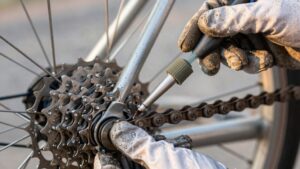
How to Choose the Right Chain Lubricant for Any Weather
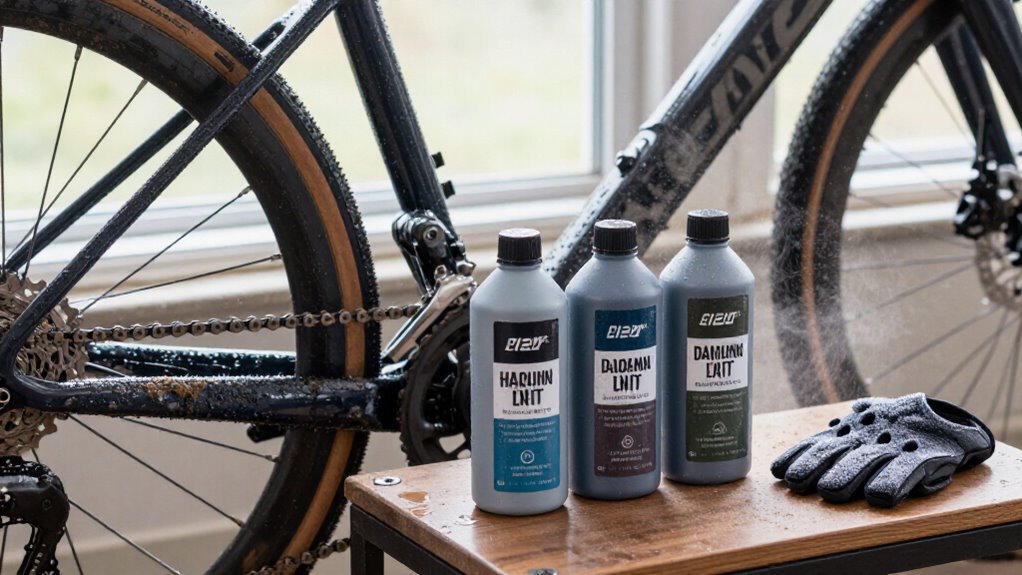
Choose dry or wax lube for dusty, dry routes because its low-residue film limits grit adhesion. Choose wet lube for rain, mud, and salted winter roads because it resists wash-off and corrosion. Use all-weather lube for mixed conditions, especially on high-load e-bikes.
In cold weather, check pour point and film behavior. Apply to clean, dry rollers, let it cure, and wipe excess away from rotors. The details below help you match maintenance intervals and compatibility.
Wet, Dry, or All-Weather?
Choose chain lube by matching its film characteristics to the conditions you ride most often. Dry formulations such as Finish Line Teflon Plus Dry Lube create a low-residue film that repels dust and limits particulate abrasion. You gain a cleaner drivetrain, but water and grit can remove this thin layer.
Wet products, including Muc-Off Wet Lube, use a more persistent protective film to resist wash-off and corrosion. That protection carries a trade-off: its tackier surface can retain contaminants. All-weather formulations aim between mechanisms.
Fenwicks All Conditions penetrates quickly while avoiding an excessively claggy residue after rain. Peaty’s Linklube All-Weather uses a shaken two-part formula to dislodge muck and reach rollers. Select dry for dust, wet for rain and mud, or all-weather for mixed conditions.
Consider Terrain and Ride Frequency
Match lube durability and residue control to the terrain you cover and how often you ride. Muddy trails, wet gravel, and boggy routes expose the chain to water, abrasive particles, and corrosion risk, so use a durable all-weather or wet product, such as Fenwicks All Conditions or Muc-Off Wet Lube. On dry roads or dusty tracks, choose a wax or dry formula, including Finish Line Teflon Plus Dry or Smoove Universal, to limit grit adhesion; Smoove can last roughly 100 miles on a clean chain in road-like conditions.
For road-gravel riding with occasional rain, Peaty’s LinkLube provides balanced penetration and grime handling, although dedicated formulas perform better at environmental extremes. If you ride frequently, favor longer-lasting options to reduce service intervals. Wipe wet-lube excess.
Account for Winter Temperatures
Winter temperatures require you to reassess both lubricant flow and corrosion protection, even if your usual terrain calls for a dry or all-weather product. Below 5°C, viscosity rises and some wax films can stiffen or become brittle. Select a wet or specialty low-temperature lubricant with anti-rust additives and a pour point at or below your coldest ride temperature.
| Condition | Primary risk | Your choice |
|---|---|---|
| Salted slush | Corrosion | Inhibited wet lube |
| Dry hard freeze | Stiff film | Low-temp specialty lube |
Check manufacturer data for viscosity at 40°C and pour point; a value of −20°C or lower suits very cold regions. For e-bikes, choose a high-film-strength formula rated for motor torque. Apply it dropwise to rollers, shift through gears, and wipe excess. Salt and slush shorten service intervals; inspect and relubricate promptly.
Wax Needs a Degreased Chain
Remove all old lubricant and deep-clean the chain, because residual oil prevents wax from bonding and penetrating the rollers consistently. You must eliminate degreaser and oil residue completely, then let the chain dry fully before application.
Applying wax to clean, dry metal produces a more durable, quieter film that attracts less abrasive grit.
Remove Old Lubricant
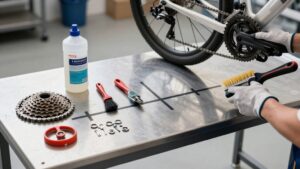
Wax lubrication starts with a fully degreased, dry chain: fresh wax must reach the rollers, pins, and link interfaces without an oily or contaminated film blocking adhesion. First, wipe away the old lubricant. Inspect the chain, jockey wheels, and cassette for black residue of oil, spent wax, and road grime.
Degrease until runoff or cleaner no longer carries a black, oily slurry and the chain appears sparkling clean. If it remains dark or gritty, repeat the degreasing step; residual wax-grime mixtures prevent fresh wax from bonding in link clearances. Finish with a dry wipe and let the chain dry. Moisture dilutes or disrupts wax adhesion. This preparation improves wax penetration, extends its service life, and supports quieter operation. Skipping it commonly makes wax seem short-lived.
Deep Clean The Chain
A clean-looking chain isn’t sufficient for waxing: you need to remove oil and grease from the rollers, pins, and inner link plates so the wax can adhere and penetrate. Use a dedicated chain degreaser to flush contamination from these moving interfaces, then rinse thoroughly and dry the chain completely. Water can interfere with wax adhesion, reducing film continuity and service life.
This preparation matters because residual lubricant blocks wax from reaching the internal bearing surfaces where friction and wear occur. Remaining grime also combines with fresh wax, darkening the chain rapidly and undermining wax’s low dirt-attraction advantage. Allow extra maintenance time compared with oil-based lubrication; wax systems depend on this preparation for predictable performance. Degreasing helps wax last longer, run smoother, and stay quieter.
Eliminate Residue Completely
Complete residue removal determines whether a wax lubricant can form a durable, low-friction film inside the chain’s pins, rollers, and inner plates. Old wet lube, road grit, and cleaner residue create a barrier that prevents wax from reaching these loaded interfaces. Instead, the wax mixes with contamination, forming abrasive sludge that raises friction and can make the drivetrain noisier.
After deep cleaning, inspect the chain closely: its outer surfaces and articulation points shouldn’t retain any oily film, black paste, or cleaner residue. This preparation matters more for wax than for many wet lubricants, which can tolerate a less-perfect baseline.
A fully degreased chain lets wax occupy the roller-and-pin contacts intended for load control and limits the muck it could otherwise lock into the drivetrain.
Apply Wax To Dry Chain
Apply wax only after the chain is fully dry and thoroughly degreased, because residual oil, grit, or cleaner prevents the wax from reaching the pin-and-roller interfaces where it controls friction. Use a dedicated chain degreaser, then wipe repeatedly until every outer plate and roller area appears sparkling clean.
Dry it completely before application; trapped moisture dilutes or disrupts the wax film. Apply wax link by link and allow the specified penetration and cure time before riding. Correct preparation lets wax occupy internal clearances, producing a smoother, drier-running drivetrain that attracts less dust than oil-based lube.
In wet, gritty conditions, inspect it after each ride and re-wax when water strips protection. This maintenance prevents abrasive contamination and preserves wax’s low-tack advantage for longer.
Choose E-Bike-Specific Lube
Your e-bike’s motor torque increases chain load, so choose an e-bike-specific wet or all-weather lube that maintains a durable protective film. Match viscosity and water resistance to your usual weather: use robust wet lube for rain and mud, or a cleaner all-weather formula for mixed conditions.
Apply it link by link, let it penetrate, wipe away excess, and relubricate after wet or dirty rides.
Handle Higher Motor Torque
Because an e-bike’s motor adds sustained torque to every chain articulation, choose an e-bike-specific lubricant that maintains a durable, water-resistant film under higher loads. For wet commuting or trail riding, Muc-Off Wet Lube offers a long-life formulation without acids, CFCs, or solvents, supporting corrosion control during repeated loaded shifts. For mixed weather, Fenwicks All Conditions penetrates quickly, resists rain wash-off, and avoids a claggy residue.
These characteristics matter because motor-assisted starts and climbs raise pin-and-roller contact stress beyond light-road cycling duty. Avoid dry-only lubes when dampness or grit is likely; they can strip away quickly during torque spikes. A waxier product such as Squirt can suit a meticulously cleaned drivetrain, but monitor cassette buildup; its e-bike formula may form “fatbergs.” Select accordingly for conditions.
Prioritize Durable Film Protection
Higher motor torque makes film retention—not initial slipperiness—the main criterion when selecting an e-bike chain lube. You need a formulation that maintains a load-bearing boundary between pins, rollers, and plates rather than one that merely feels fast after application. Extreme-pressure additives and adhesive base oils help the lubricant resist squeeze-out, limiting metal-to-metal contact, noise, and accelerated wear.
Choose an e-bike-specific or high-load product when service life matters. Muc-Off Wet Lube combines longevity with extreme-pressure additives and biodegradable, acid-, CFC-, and solvent-free chemistry. Tests reported Fenwicks All Conditions kept a chain rust-free and smooth through 100 winter miles.
Evaluate residues too: Squirt E-Bike Chain Lube lasts ages but can accumulate cassette deposits. Apply sparingly to each link, allow penetration, then wipe exterior surplus thoroughly.
Match Lube To Weather
Although an e-bike’s higher chain load demands durable lubrication, weather determines which film will remain effective between rides. For dry, dusty routes, select a wax or Teflon-style dry lube: its thin, low-residue film limits grit adhesion, though it can strip quickly under motor-assisted torque. A purpose-built option such as Squirt E-Bike Chain Lube is formulated for durable wet-and-dry performance, making it preferable to standard dry products when conditions vary.
In persistent winter rain, White Lightning Wet Ride Synthetic provides a thicker, water-resistant synthetic film that helps prevent corrosion. For broadly variable commuting or trail conditions, Peaty’s Link Lube All Weather offers an all-condition formulation; shake it first to distribute its components. Ceramic or synthetic wet formulas also suit rain and grime, but their tackier films may cling to cassettes.
Apply And Maintain Regularly
Regularly choose an e-bike-specific chain lube and apply it before the drivetrain sounds or feels dry: motor torque accelerates chain wear and can shorten the effective life of standard road lubricants. Clean the chain first, dry it, and dose each roller, not the outer plates. Let the product penetrate and cure for its labeled interval, then wipe surplus; excess oil traps abrasive dirt and can form cassette “fatberg” deposits.
In wet winter conditions, use an all-weather wet formula and remove contamination. For dry, dusty routes, use dry or wax lube, but reapply sooner after grime or rain strips its film. Track mileage, noise, and shifting quality rather than waiting for dryness. It preserves corrosion protection, limits roller-pin friction, and extends chain and cassette longevity.
Protect Disc Brake Rotors
Disc brake rotors require deliberate lube control because even a small amount of oil on the braking track can reduce bite and trigger squeal. Apply lube drop-by-drop to the inner chain links, not the outer plates, then wipe surplus after one to two minutes. This limits migration from chain motion, runoff, or overspray.
For dry riding, choose a cleaner wax system, such as Squirt’s waxy formulas or Smoove Universal Chain Lube; their drier films reduce dust attraction and the residue available to reach the rotor. In rain or winter, use a wash-resistant all-weather product such as Fenwicks All Conditions, but don’t overapply: wet-lube residue can become claggy.
Before riding, inspect the braking track for a smear. If you find residue, clean the rotor before braking.
Compare Cost Per 100 Miles
A 60-ml Finish Line Teflon Plus Dry bottle is commonly benchmarked at roughly 100 miles in dry conditions, but rain or grit shortens that interval. Compare 100-ml Fenwicks All Conditions and 120-ml Muc-Off Wet or Peaty’s Linklube using your logged interval, not their larger bottles.
Wet formulations can cost more per 100 miles, despite rain resistance, because continuous wet, gravel, or boggy riding requires renewed coverage. Linklube may need more top-ups at weather extremes. Choose accordingly.
Avoid Automotive Oils
Skip automotive oils for a bicycle chain: engine oils target enclosed, high-temperature systems, not an exposed drivetrain that collects road dust, water, and grit. Their additive packages and viscosity can leave a persistent outer film, accelerating abrasive contamination on the chain and cassette.
- For dry, dusty rides, use wax-based or dedicated dry lube; it dries into a dirt-repellent film.
- In rain or mud, select wet lube that resists wash-off and limits corrosion.
- Choose all-weather bicycle lube when conditions regularly change during your rides.
- Degrease prior automotive-oil residue before relubricating; residue blocks penetration into pins and rollers.
This condition-specific approach minimizes contaminant retention while maintaining lubrication where it’s needed: inside the chain’s moving interfaces, rather than across exterior surfaces during use.
Check Chain Compatibility
Verify chain and drivetrain compatibility before choosing a lubricant: standard road and MTB chains generally tolerate most bicycle-specific formulas, while e-bike and high-load systems benefit from lubricants designed to retain a protective film under greater torque. Then assess four variables:
- Confirm whether your e-bike’s motor torque warrants a high-load, adhesive formulation and shorter inspection intervals.
- Check that derailleur pulleys and cassette gaps won’t accumulate claggy wet-lube residue.
- Match dry wax to dust; use wet or all-weather blends for rain and winter riding.
- Verify specialty systems’ preparation: wax requires a sparkling-clean chain, and two-part formulas require shaking.
These checks matter because contamination increases abrasive wear, whereas unsuitable dry lube washes off quickly. Follow the maker’s application and reapplication guidance to preserve efficient, quiet shifting performance.
Conclusion
Choose lubricant by matching its film behavior to your conditions: dry lube limits dust adhesion, wet lube resists wash-off, and all-weather formulas trade cleanliness for durability. You’ll extend drivetrain life by considering terrain, mileage, winter viscosity, and chain compatibility before buying.
Start wax only on a fully degreased chain, use e-bike-rated products when torque is high, and keep lube off rotors. Compare cost per 100 miles, not bottle price, and avoid automotive oils for bicycles.