Wet Lube vs Dry Lube: Which Chain Lube Fits Your Riding?
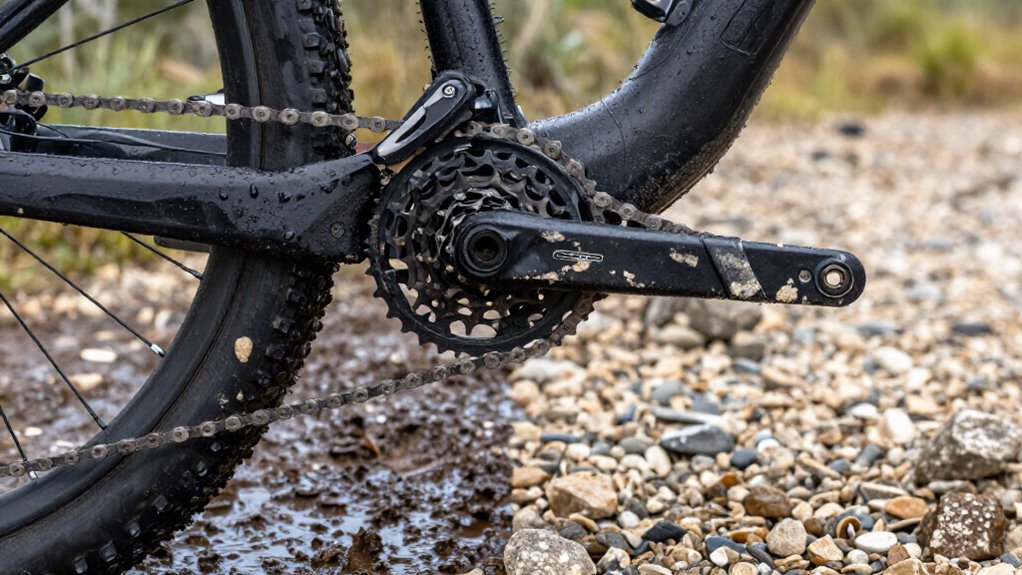
Choose dry lube when you ride in clean, dusty conditions: its volatile carrier leaves a low-tack film that sheds grit and keeps your chain cleaner. Choose wet lube for rain, mud, winter commuting, or coastal storage, because its persistent oil film resists washout, supports loaded pins and rollers, and limits corrosion.
Wipe excess wet lube from outer plates to prevent abrasive paste, jockey-wheel buildup, and rotor contamination. What follows shows how terrain and maintenance decide.
Clean Chain Versus Quiet Chain
Choosing between a clean chain and a quiet chain largely comes down to riding conditions. You’ll keep a visibly cleaner drivetrain with dry lube: its cured film has low surface tack, so dust and grit are less likely to cling to rollers and plates. In clean, dry riding, that limits abrasive wear and can lower friction.
Wet lube stays quieter in rain, mud, and winter because its persistent film cushions moving metal surfaces and resists washout. Yet on dry roads or trails, it holds grit; the resulting paste eventually raises noise, drag, and wear.
| Priority | What you’ll feel |
|---|---|
| Dry lube | Clean, efficient drivetrain |
| Wet lube | Reassuring quiet in rain |
| Dry conditions | Choose dry; reapply regularly |
| Wet conditions | Choose wet; degrease accumulated grime |
Match exposure.
Carrier Fluids and Additives
That clean-versus-quiet trade-off starts with what carries the lubricant into the chain. Wet formulas use an oil-based carrier that flows between pins, rollers, and plates, then leaves a persistent protective film. Higher-quality oils hold that film more reliably and keep their friction-modifying and extreme-pressure additives in place longer.
Dry formulas use a volatile carrier, commonly naphtha or mineral spirits, to deliver PTFE or other dry friction modifiers. Once it evaporates, those solids remain as a non-tacky coating. You gain a cleaner exterior, but the coating depends on careful preparation and reapplication.
Choose oil when you need durable protection; choose dry lube when you need to limit contamination. Remove excess wet lube: otherwise its oil traps grit and forms abrasive paste on your drivetrain quickly.
Friction Watts Under Load
Under sustained torque, friction watts depend on whether the lubricant maintains a protective film inside the chain’s rollers and pins. Wet lube generally holds an oil film and friction modifiers at these loaded interfaces, so you get stable losses under high torque, especially in rain. A dry formula leaves lubricating solids after its carrier evaporates, but its thinner film can lose effectiveness sooner under load.
Contamination can reverse that advantage. If wet oil collects road grit, the contamination becomes abrasive paste and raises drag. Dry lube attracts less dirt, helping preserve low losses on dry roads. For either type, place drops on the bottom chain run as you backpedal so every roller receives coverage. Uniform coverage—not an outer coating—keeps drivetrain transmitting power efficiently.
Reapplication Frequency and Cleanup Time
Wet lube usually needs reapplication less often because its persistent oil film resists washout and evaporation; Muc-Off Wet Weather Lube, for example, can last roughly three to four rides. That longer interval doesn’t eliminate maintenance: wipe the chain after application to remove surplus oil. Otherwise, the wet surface holds contaminants and builds abrasive paste, making eventual degreasing slower.
Dry lube dries to a cleaner film, so routine cleanup is quicker; you can usually wipe or brush the chain before topping it up. However, its coating wears or strips away sooner, particularly when contamination strips it away, so you’ll reapply it more often. Plan service around chain noise, visible residue, and shifting quality rather than a rigid calendar. Use inspection instead, not a calendar alone.
Rainy Commutes vs Dusty Trails
For rainy commutes, use a wet lube: its persistent, water-resistant film stays in the rollers and pins when road spray would quickly wash away a dry coating. It keeps lubrication present through puddles, slush, and repeated spray, helping your chain run smoothly rather than squeak or corrode.
Apply sparingly to a clean, dry chain; don’t leave excess oil, which gathers road grit. An all-conditions formula offers a practical choice when forecasts change.
On dusty trails, choose dry lube. Its cured wax-like film sheds dust instead of holding it against the chain as abrasive paste. Your drivetrain stays cleaner and better suited to dry, loose surfaces.
Expect about 100 dry miles, then inspect and reapply. For mixed routes, use an all-weather lube in changing weather.
Bottle Cost Versus Chain Replacement
Although a dry-lube bottle may cost less upfront, its real value depends on cost per mile—not price per milliliter. If your dry-lube routine allows abrasive contamination or insufficient protection to wear a chain by roughly 1,000 miles, the apparent saving disappears quickly. Regular riders could then replace chains every month or two.
A wet lube typically stays effective longer, and its durable film can help you postpone chain replacement when conditions suit it. That matters because chain wear can cascade through the drivetrain: you may need a cassette every two chains and chainrings every four. Those follow-on purchases can dwarf any bottle-price difference and potentially reach thousands annually. Compare systems by miles per application, cleaning demands, conditions, and measured component life. Pay for protection.
Wax Buildup in Jockey Wheels
Jockey wheels often reveal lubricant problems before the chain does: persistent wet lube combines with fine grit into a black, paste-like residue that collects in pulley teeth and cage channels. This contamination increases drag and makes shifting feel gummy. Wax-heavy formulas can also soften and migrate during wet, dirty rides, then harden in tooth pockets and pulley channels.
Left unchecked, this layer raises resistance, wears pulley teeth, and shortens derailleur component life considerably over time.
- Inspect jockey wheels after dirty rides; blackened thickening signals a cleaning need.
- Wipe outer cage surfaces before residue cakes.
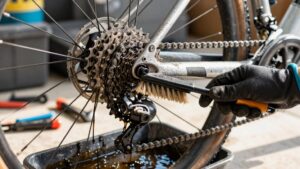
- Brush pulley teeth and channels, then degrease thoroughly.
- Match lube to conditions and fully clean before switching formulas.
Brake Rotor Contamination Risk
Wet-lube overspray and chain fling can deposit oil on your brake rotors, causing noise and reduced braking bite. Apply lube sparingly to the bottom chain run, keep it away from calipers and rotors, and wipe excess from the outer links.
Afterward, inspect rotor faces and clean them with isopropyl alcohol or brake cleaner before you ride.
Overspray and Rotor Exposure
With disc brakes, apply wet lube with surgical control: place a single drop on each roller along the chain’s bottom run, then wipe the outer plates thoroughly. That limits free oil that can creep toward a rotor.
Drip-on wet lube remains wet, so contamination persists longer than with faster-drying formulas. This exposure matters because a lubricant film lowers friction at the braking track, undermining the rotor-and-pad interface that produces predictable stopping force when you need it most on descents.
- A wet sheen on the rotor signals possible oil transfer.
- Overspray can reach either rotor although the chain appears correctly lubricated.
- Squeal or reduced bite indicates compromised braking, not normal bedding.
- Stop riding if symptoms appear; clean the rotor promptly before oil contaminates the pads.
Safe Application Practices
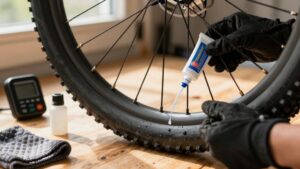
Protect your disc brakes by keeping every drop of wet chain lube confined to the chain, not the rotors or pads. Apply it only to the bottom run with a dropper or nozzle, then turn the cranks slowly and wipe excess from the chain with a clean rag. Focus on rollers, pins, and the jockey area; the outer plates shouldn’t remain visibly wet or gunky.
Tacky residue collects grit and can fling or migrate toward the rotor. When working outdoors or in wet weather, shield the caliper and rotor area and inspect again after one pedal revolution. If you suspect contamination, clean the rotor and pads immediately using an appropriate brake-cleaning method. Don’t ride hoping heat will safely burn it off; address it first.
Coastal Winter Storage
Salt air accelerates corrosion, so you’ll protect a stored chain best with an oil-based wet lube rather than a dry formula that can wash away. Clean the drivetrain, apply wet lube along the bottom chain run, allow it to penetrate, and wipe away excess before storage.
When spring arrives, clean off the salt-contaminated film and relubricate before riding.
Salt Air Corrosion Protection
Coastal winter storage calls for a wet chain lube, since its tenacious, water-resistant film protects rollers, pins, and inner links from humid, salt-laden air. Unlike dry formulas, which can lose protection as moisture strips their film, wet lube maintains a corrosion-resistant barrier.
Prepare the drivetrain precisely:
- Degrease the chain thoroughly, then dry it completely; trapped moisture accelerates corrosion.
- Apply wet lube along the bottom run, targeting each roller and inner link.
- Wipe exterior plates until nearly dry; this limits salt and dirt adhesion without removing internal protection.
- Cover your bike to reduce direct salt-water exposure and inspect the chain periodically.
A tenacious all-conditions wet formula is the practical choice near the sea. It resists wash-off and maintains smooth, quiet articulation when coastal humidity persists.
Wet Lube For Storage
For coastal winter storage, use a wet chain lube: its persistent oil-based film resists damp air, salt exposure, and rust far better than a dry formula that can wash or evaporate away. Before you put the bike aside, apply wet lube along the bottom run, turning the cranks backward to carry it into the rollers and pins. Wipe the outer plates thoroughly, leaving protection inside the chain rather than pooled oil that collects gritty salt-laden dust.
Fenwicks All Conditions is a useful benchmark: it soaks in rapidly and remained rust-free and smooth after about 100 winter miles in testing. Dry lube suits dry riding, not humid storage; moisture can strip its coverage quickly, exposing steel surfaces. A properly applied wet film remains through coastal condensation.
Spring Chain Cleaning
Start spring by stripping winter salt, moisture residue, and road grit from the chain before adding fresh lubricant. Coastal storage leaves contaminants that can corrode pins and rollers or form abrasive paste under fresh oil. Don’t trust the protective film applied before layup; clean, dry, and relube immediately before your first wet rides.
- Degrease the chain thoroughly, then rinse or wipe away all cleaner and salt residue.
- Dry it completely, paying attention to rollers, side plates, and the cassette.
- Apply wet lube along the bottom chain run while backpedaling, so it reaches each roller.
- Let it soak for the specified time, sometimes hours or overnight, then wipe exterior excess.
Choose wet lube for coastal rain resistance. Removing surplus prevents claggy grime buildup and preserves smooth, rust-resistant operation.
Dry for Racing, Wet Touring
Match the lube to the event: run a dry, wax-based formula such as Smoove Universal on dry, dusty race courses, where its low-tack film keeps the chain clean, quiet, and efficient. Deep-clean the chain before application, let carrier cure, and reapply before film wears thin.
Don’t rely on it through puddles or mud; water strips wax, causing noise and accelerated wear.
For rain-heavy touring, use an oil-based all-weather lube such as Fenwicks All Conditions. It penetrates quickly, resists clagging, and maintains smooth running across multi-day mileage. Wipe away excess after application.
The remaining oil will collect grit eventually, creating abrasive paste, so inspect and clean the drivetrain regularly. You trade a spotless chain for dependable lubrication when weather won’t stay clean on tour.
Conclusion
Choose lubricant by exposure, not marketing. You’ll get the cleanest drivetrain in dry, dusty conditions with a dry or wax-based lube, applied sparingly to a fully degreased chain.
For persistent rain, road spray, loaded touring, or coastal winter storage, use wet lube and wipe excess immediately. Check chain noise, contamination, and roller feel after every wet ride. Don’t lubricate a dirty chain: clean, dry, apply, and backpedal. Keep all lubricant away from rotors and calipers.