How to Choose the Right Bike Brake Pads for Your Ride
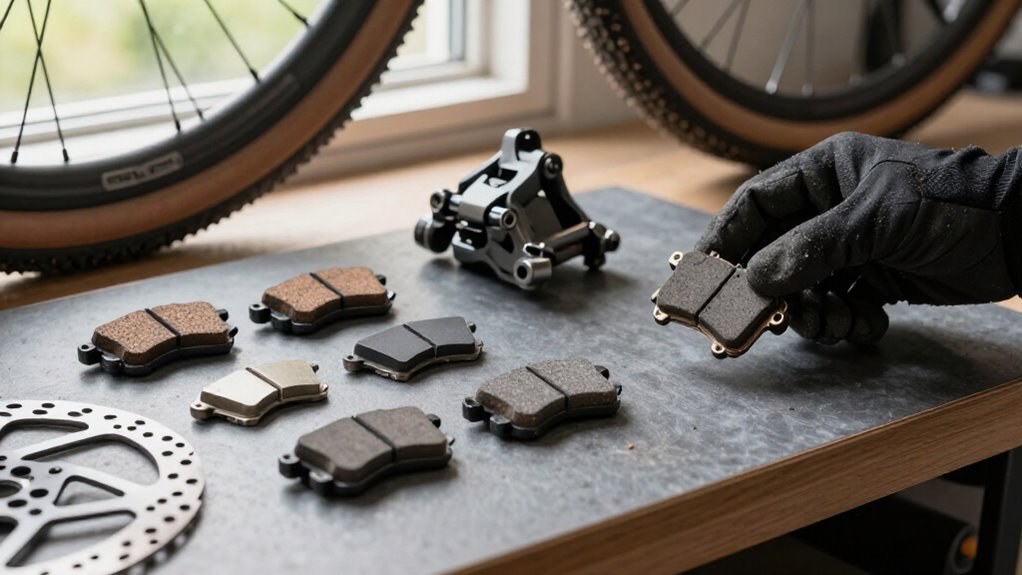
Choose pads that match your caliper’s shape, backing plate, retention hardware, and rotor-approved compound. Use organic resin pads for quiet, quick-biting dry commuting; choose semi-metallic for balanced wear and modulation; use sintered metallic pads for wet, muddy, loaded, or long downhill rides if your rotors allow them.
Consider total heat capacity, not pads alone: rotor size, load, and descent length matter.
Bed new pads correctly, inspect thickness and glazing, and continue for maintenance details.
Start With Rotor Material Limits
Start by checking your rotor manufacturer’s pad-compound guidance and heat limits, because pad material directly affects braking temperature, fade resistance, and rotor wear. For long, steep descents or repeated high-speed stops, choose a compound that remains stable within the rotor’s approved temperature range. Sintered metallic pads tolerate higher heat and resist glazing longer, helping reduce fade and limiting heat transmitted toward the caliper fluid.
They can increase noise and rotor abrasion, so inspect rotor thickness and replace worn components promptly. For shorter, lighter braking, organic resin pads bed in quickly and deliver quiet, sharp initial bite, but they can glaze sooner under sustained heat. Ceramic-infused compounds may provide modulation and strong heat resistance. If you’re experiencing fade downhill, move from organic to approved sintered.
Account for Wet-Weather Riding
If you ride regularly in rain, mud, or grit, fit sintered/metallic pads when your rotor manufacturer approves them: they maintain more consistent friction at a contaminated rotor interface, resist glazing, and retain braking power as temperatures rise.
Choose them for wet commutes, winter trail use, or muddy events rather than relying on resin pads, which can lose effectiveness and glaze more readily when saturated. Check the pad shape and backing plate against your caliper specification, then bed in the new compound according to the brake maker’s procedure.
Until bedding-in stabilizes performance, test braking at low speed in a controlled area. Expect firmer lever feel and greater noise than with resin; keep rotors clean and inspect pads for contamination or abnormal wear before wet rides.
Evaluate Heat Fade Resistance
On long descents and under repeated hard stops, assess heat-fade resistance as a complete brake-system property, not a pad-only feature. Overheating can reduce friction, lengthen stopping distance, soften hydraulic lever feel, and accelerate wear. Match thermal capacity to your rider-plus-bike load, terrain, and braking frequency.
| Check | What you should verify |
|---|---|
| Heat capacity | Larger, thicker rotors absorb more energy; vented designs shed it faster. |
| Warning signs | Rising lever force, sponginess, squeal, glazing, or blue rotors demand inspection. |
Confirm rotor, caliper, backing plate, and pad compatibility. For sustained steep riding, prioritize heat-management features: heat shields, finned components, or a larger rotor if your bike permits. Bed brakes and keep surfaces clean; poor bedding or contamination concentrates heat. If lever feel goes spongy, stop: fluid be overheating.
Organic, Sintered, Semi-Metallic
Organic pads give you quiet operation, strong initial bite, and precise low-temperature control, but they wear faster and can fade or glaze in sustained wet or high-heat use. Choose sintered pads when you need durable, consistent braking on long descents or in mud, while accepting greater noise and rotor wear.
Semi-metallic pads balance modulation, warm-up, and durability; match the compound to your usual weather, terrain, heat load, and rotor specification.
Organic Pad Characteristics
For quiet, responsive braking in everyday dry conditions, organic (resin) pads use a soft resin-bound blend, often including Kevlar, rubber, or silica, to deliver strong initial bite and smooth modulation with little warm-up. You’ll notice a lever feel that helps you meter braking precisely during stop-start commuting, road riding, or low-temperature starts. Their softer compound also beds into a compatible rotor quickly and generally runs quietly.
You must inspect organic pads regularly: they wear faster than harder alternatives, especially when water or grit contaminates the braking surface. Under sustained heavy braking, their lower heat limit can cause glazing and reduced friction. Keep rotors oil-free, bed new pads correctly, and replace pads when friction material becomes thin or performance changes. Use them within their operating limits.
Sintered Pad Performance
Sintered (metallic) pads suit riders who need sustained braking performance beyond an organic pad’s heat range. Their pressed metal particles form a dense compound that delivers long service life, resists high temperatures, and avoids glazing under demanding use. Choose them for repeated heavy braking, wet or dirty routes, and loaded riding, but verify that your rotors are approved for metallic compounds.
Expect longer bed-in period and less bite until pad surface mates correctly with rotor. Follow manufacturer’s bedding procedure before riding steep terrain.
Although pad itself tolerates heat, it can transfer more heat into caliper and fluid. On very long descents, heat buildup can cause fade, particularly in mineral-oil systems. Control speed early, avoid dragging brakes, and stop if lever feel changes during descent.
Semi-Metallic Pad Balance
Between organic and sintered pads, semi-metallic compounds blend resin-based material with metal particles to give you a practical balance of bite, modulation, and service life. You’ll generally get longer pad life than organic resin, with stronger braking, while retaining immediate lever feel and faster warm-up than sintered material. They won’t match sintered pads’ highest-temperature stability during severe braking, so keep your system within thermal limits.
Choose a manufacturer-approved semi-metallic pad after confirming shape, backing plate, retention hardware, and rotor compatibility. Bed-in is essential: it establishes a transfer layer and reliable predictable friction. Semi-metallic pads are noisier than organic pads and may glaze after use followed by braking. Inspect pad thickness and rotor condition; replace contaminated or glazed pads to avoid inconsistent stopping power.
Choosing By Riding Conditions
Choose brake-pad compound around your typical weather, terrain, and braking heat load—not just price or advertised stopping power.
For dry commuting, short rides, and lower temperatures, choose organic resin pads: they bed in quickly, run quietly, and provide predictable initial response.
Choose semi-metallic pads when you need a middle ground; they warm faster than sintered pads, outlast organic material, and supply dependable power on extended descents.
For wet, muddy routes, loaded touring, or repeated long downhill braking, fit sintered pads. They tolerate higher temperatures, resist glazing, and maintain more consistent friction when contamination rises. Expect more noise and a longer bed-in period.
Check that the compound matches your rotor specification, then bed pads correctly and safely for demanding rides through changing weather conditions.
Organic Pads for Commuting
For urban commuting, you’ll get quiet braking, quick bite, and controlled modulation from organic pads in routine stop-start traffic. Their rotor-friendly compound suits dry to moderately wet roads, but you should inspect them more often because grit, saturation, and glazing accelerate wear.
Confirm the pad shape matches your caliper, and choose sintered pads instead if your daily route stays consistently wet or dirty.
Quiet Braking Performance
Organic (resin) pads suit quiet commuting because they typically run with less squeal and vibration while providing smooth, progressive lever feel in stop-start traffic. Their compound develops usable friction quickly, so you don’t need an extended warm-up before controlled braking. They usually bed in faster than sintered pads, provided you follow the brake maker’s procedure and use a clean, compatible rotor.
Resin also transfers comparatively less heat into the caliper and hydraulic fluid during routine urban stops, helping preserve consistent lever operation. However, inspect pad thickness regularly: organic material wears sooner, and repeated hard braking can glaze its surface, reducing bite and increasing noise. Replace glazed or contaminated pads rather than relying on unpredictable stopping force. Confirm pad shape and caliper model before purchase.
Everyday Weather Considerations
When your commute is mostly dry, resin pads offer quiet operation, quick initial bite, and predictable modulation from cold stops. They bed in quickly, allowing careful, controlled stops to establish reliable friction. Their responsive lever feel helps you meter braking force precisely rather than grab the brake abruptly. However, rain and grit accelerate wear and can reduce their consistency.
Saturated resin material may feel less effective, while wet braking raises the chance of glazing. Inspect pads, keep surfaces clean, and increase following distance in wet conditions. If you ride through rain or muddy routes, don’t assume organic pads will provide dry-weather durability or performance. For occasional showers and lighter commuting, they’re a practical choice, provided you monitor wear and adjust speed early to stay safe.
Rotor-Friendly Pad Material
Resin (organic) pads suit most commuting brakes because they run quietly, bed in quickly, and deliver strong cold initial bite for frequent stop-start riding. Their softer compound is generally gentler on rotors than metallic alternatives, helping you limit abrasion and preserve rotor service life. It also insulates heat more effectively, reducing heat transfer toward the caliper and brake fluid during repeated stops.
Confirm that the pad shape, backing plate, and retention hardware match your caliper, and fit the specified pad size; incorrect contact can wear a rotor unevenly. Check pad thickness regularly, because resin compounds wear faster and may glaze after repeated hard braking. Replace contaminated or glazed pads rather than relying on reduced braking force. Bed pads as specified; clean rotors before installation.
Ideal Urban Riding Conditions
For stop-and-go urban commuting, choose organic (resin) pads for their quiet operation, quick bed-in, and strong cold initial bite. Their smooth lever feel lets you modulate speed precisely around traffic, while their insulation limits heat transfer toward the caliper and fluid during normal city braking.
Expect faster wear and weaker wet or dirty performance than metallic compounds. Inspect pad thickness and rotor condition more often after rain, and replace pads before the friction material approaches its minimum service limit.
Keep rotors and pads free of oil and grease; contamination can reduce stopping power and may require replacement. Confirm the caliper’s brand and model number, then match the specified pad shape, backing plate, retention spring, and pin arrangement before purchase. This prevents unsafe fitment errors.
Match Pad Retention Pin
Before fitting new pads, identify the retention system your caliper uses: typically a pin, clip, screw, or spring that locks the pad ears in place.
Compare the old pad, its retaining hardware, and the new set before installation. Verify that the pin diameter, clip profile, and hole or groove in each backing plate align precisely. A mismatched part can prevent the pads from seating fully, causing drag, uneven rotor wear, or unreliable braking.
Remove the existing spring clip or metal pin entirely before withdrawing the pads. After fitting the replacements, reinstall the original approved pin or clip and confirm it goes through the correct pad ears and fully engages the caliper. For cartridge holders, ensure the retention screw or clip occupies its specified groove; don’t substitute a different design. Tug the hardware gently, check for rattle, then operate the lever and spin the wheel to confirm secure, clearance-free movement afterward.
Compare Pad Life Per Dollar
Calculate pad life per dollar from the compound’s expected wear rate in your actual riding conditions, not its purchase price alone. Track replacement intervals and divide each pad set’s cost by the miles or hours it safely delivers. Sintered or metallic compounds usually last longest, making them economical for frequent riding despite a higher initial cost.
Organic or resin pads can cost less initially yet wear faster, especially in wet, dirty conditions where they may glaze. For sustained descents, metallic pads tolerate heat and resist glazing longer, reducing replacement frequency and fade-related service costs. Include bedding-in time: sintered pads may take longer to bed in, so frequent changes can add downtime. Confirm the correct pad shape for your caliper; incorrect fit promotes uneven wear.
Inspect Backing Plate Thickness
Pad value also depends on fit, so inspect backing plate thickness whenever you replace disc pads. Remove the existing pads, then measure each backing plate with calipers; a ruler works for a rough comparison. A difference near 1 mm can reduce rotor clearance, alter pad position, and create drag.
- Compare new and old backing thicknesses, including the listed product specification when available.
- Choose alloy or steel consistently when your caliper pocket has little spare clearance.
- Check that the plate clears hardware and engages every retention clip securely.
- Re-measure after changing brands or compounds; don’t assume similar-looking pads share dimensions.
A plate that sits unevenly can accelerate rotor wear and compromise reliable braking. If dimensions differ, use the pad specified by your brake manufacturer instead.
Confirm Caliper Pad Shape
Match the replacement pad’s outline exactly to your caliper: brake pads aren’t universal. Check the old pad’s profile against the listing before you buy. Confirm every edge, notch, mounting hole, and retaining-pin position.
- Find the caliper model number, often engraved on its body, and match it to the specified pad shape.
- Compare old and replacement images directly; verify overall length, width, and backing-plate seating.
- Remove the old pads and measure critical length and width; roughly 1 mm can affect fit.
- Reject any pad whose outline or mounting features differ, even if the brand matches.
Incorrect fit can prevent pads from seating, obstruct retention hardware, or leave unsafe clearance. Don’t force a near-match into the caliper; verify model compatibility, then install and test braking before riding.
Conclusion
Choose pads only after you confirm your rotor’s approved compound, caliper shape, retention-pin fit, and backing-plate thickness. For wet rides, favor compounds that maintain predictable bite; for long descents or heavy loads, prioritize heat-fade resistance.
Organic pads suit quiet commuting, while sintered or semi-metallic options trade rotor wear, noise, and cost for durability. Compare service life per dollar, inspect pads regularly, and replace them before friction material reaches the manufacturer’s minimum thickness for safe braking.