How Often Should You Clean Your Bike Drivetrain? Here’s the Answer
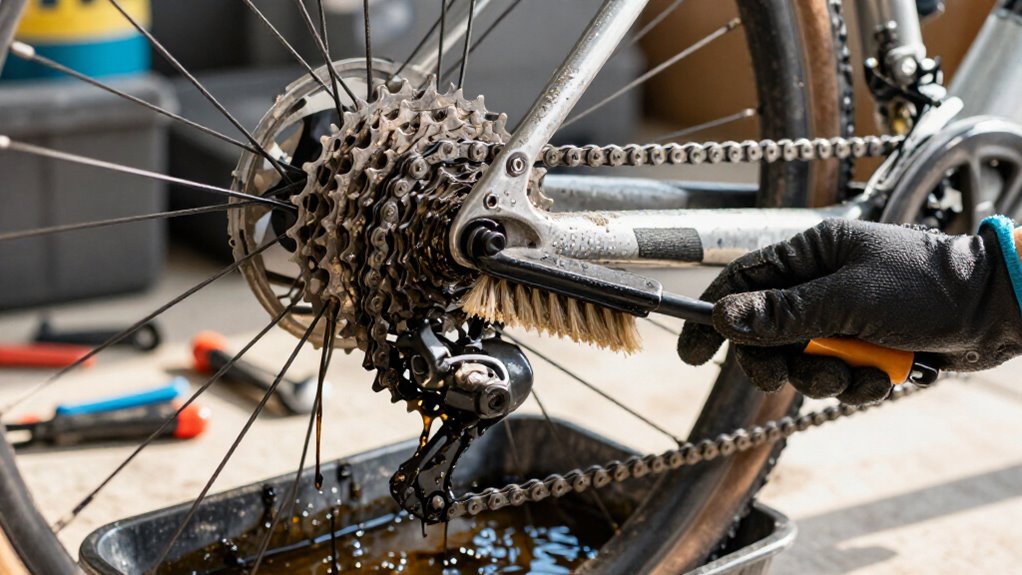
Clean your bike drivetrain every one to two weeks in dry, clean conditions, and complete a full wash every 150 to 200 miles.
Wipe and inspect it after any ride that leaves dust, water, grit, mud, or road salt.
During winter or salted-road months, service it about weekly and relube promptly.
Use a dry rag while backpedaling, and don’t wait if shifting gets noisy or sluggish.
The steps below help keep it quiet, clean, protected.
Quiet Shifting for Weekly Commuters
For quiet, crisp shifting on a commuter bike, clean the drivetrain lightly every week—or every other week when you ride only in dry, clean conditions. Don’t wait for your regular full-bike wash: wipe it after any ride that leaves dust, water, or grit on the chain, cassette, chainrings, and jockey wheels. These short sessions stop contamination packing into tooth valleys and pulley grooves, where it causes grinding, delayed shifts, and accelerated wear.
Schedule a complete wash every 150 to 200 miles, or every two to three weeks in fair weather; treat either interval as an upper limit if you ride infrequently. Inspect as you wipe: persistent noise, dark buildup, or sluggish shifting means you should clean sooner. This routine keeps commuter shifts consistently precise.
Degreaser, Brushes, and Chain Lube
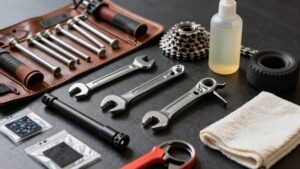
A clean, correctly lubricated chain is what preserves the quiet shifting your weekly routine is designed to maintain. Use a bike-specific, water-based degreaser for routine work; choose a solvent formula only for stubborn grease, after checking compatibility with seals, paint, and plastics. Work outdoors, wear nitrile gloves and eye protection, and keep spray away from rotors.
1. Apply degreaser while you backpedal, let it dwell briefly, then scrub both chain runs, cassette, chainrings, and jockey wheels.
2. Rinse lightly or wipe away residue with clean rags; pressure can drive contamination into bearings.
3. Dry completely, add one drop of bicycle-chain lube per roller, backpedal, then wipe every outer surface.
Choose dry lube for dust and wet lube for persistent rain; never rely on WD-40 as lubricant alone.
Clean After Every Muddy Ride
Write the text again, word for word, but:
- If the text contains an em dash (—) or en dash (–) used as a sentence break, replace it based on grammatical function:
- Use a comma (,) only for soft pauses or non-essential clarifications
- Use a semicolon (;) for closely related independent clauses
- Use a colon (:) for cause, explanation, or emphasis
- Split into two sentences if the dash separates complete thoughts
- Do NOT remove or change any formatting: keep ALL Markdown/HTML exactly (, , , links, tables, lists).
- Do NOT modify any shortcodes or blocks (e.g., [shortcode], AAWP, AFFI, WP blocks, zw).
- Do NOT change product names, brand names, model numbers, prices, units, or numbers.
- Do NOT remove bold text or move bold markers.
Do not use — or – in the output.
2. If any line starts with a lowercase letter, make it uppercase.
3. If any paragraph has 4 sentences or more, split it into two or more paragraphs for easier reading.
4. Do not add facts. Do not rewrite wording unless required to follow these rules.
CRITICAL PRESERVATION RULES (must follow):
Backpedal Chain Through Dry Rag
Use a clean, dry rag and lightly pinch the lower chain run as you backpedal slowly and steadily. Move the rag along successive chain sections so it lifts grit from the links without forcing residue into the rollers. Check the rag for dark buildup and switch to a clean area when it’s saturated.
Choose A Dry Rag
Start with a clean, dry, lint-free rag, then slowly backpedal the chain through it to lift loose grit and old surface lubricant without flooding bearings or derailleur pivots. Use a separate rag reserved for drivetrain work, never one that has touched the frame, brake rotors, or pads. A dry cloth matters: on a wet chain, it smears contamination rather than collecting particles.
Fold the rag into a pad and reposition it as residue loads the fabric. This wipe works whenever the chain looks dirty or sounds gritty. Regular wiping limits abrasive road, gravel, and trail debris, extending the interval between degreasing washes.
Afterward, let the chain dry completely before choosing dry-condition or wet-condition lubricant. Apply lube sparingly, then remove excess from the plates.
Backpedal Slowly And Steadily
With the chain held in the dry rag, backpedal slowly and steadily to draw every link through the cloth without pushing grit deeper into the cassette or derailleur. Keep pedal speed controlled; rapid rotations can fling loosened contamination onto adjacent parts. Backpedal enough to move the full chain run through the rag, then reposition the crank to catch missed sections.
Watch cloth as you work. Black residue and grit show it’s still lifting contamination, so expose a clean rag area or replace it and continue. This pass also clears remaining grime around cassette and chain before lubrication. Stop when chain feels cleaner and looks dry rather than wet.
Then select dry lube for clean, dry riding; use wet lube instead in persistently damp conditions.
Pinch Chain Lightly
Pinch the chain lightly through a clean, dry rag while you backpedal slowly, drawing the full length through the cloth to lift surface grit from the outer plates and roller gaps.
This maintenance wipe doesn’t replace a deep degrease. Keep your grip gentle: rag should contact both sides without squeezing enough to snag or pull fibers into links. Start with an unused area of cloth; a dirty rag redistributes abrasive particles and accelerates wear.
Use it whenever drivetrain looks dark, feels gritty, or makes noise, even if you aren’t doing a full wash. Check rag afterward. If chain runs quietly and retains lubricant, don’t add more. If it feels dry, apply suitable chain lube sparingly, then wipe off all excess to limit fresh dirt buildup.
Move Along Chain Sections
As you backpedal slowly, move a clean, dry rag along successive chain sections, wiping both the upper and lower runs to lift dust and grit from the links without spreading degreaser. Keep light, even pressure on the chain rather than gripping it hard; the rag should contact the outer plates, rollers, and exposed link edges as they pass.
Advance the rag gradually toward each section, maintaining control of the cranks and keeping fingers clear of chainrings and jockey wheels. You’ll use this quick wipe between rides when you ride on roads and want to limit abrasive friction before it accumulates. It dislodges dust around the run and jockey-wheel path. Then dry it fully; apply dry lube for dry rides, wet lube for wet conditions.
Check Rag Buildup
How do you know whether the chain needs a full clean or only a quick wipe? Hold a clean dry rag lightly around the lower chain run, then backpedal the crank several revolutions. Don’t pinch the chain or place fingers near the chainring. Inspect the rag as each section passes through.
Heavy dark smears, especially gritty or sandy particles, mean contamination exceeds a surface wipe: clean the chain, cassette, chainrings, and pulleys now. Minimal gray residue suggests a quick wipe is enough if shifting remains quiet and smooth. Use this test with sound and feel, not mileage alone.
Do it after mud, dust, or stream crossings, when abrasive dirt accumulates rapidly. It indicates whether to relube or degrease the drivetrain before you ride again.
Shorten Intervals During Road Salt
Road salt accelerates corrosion on your chain, cassette, and derailleur, so don’t follow a normal mileage interval. Wipe down and inspect the drivetrain after every salted-road ride, then clean and relube it promptly when grit or moisture remains.
Use wet-condition chain lube sparingly and wipe off the excess to protect components without creating an abrasive paste.
Salt Speeds Up Corrosion
Winter salt demands a shorter drivetrain-cleaning interval because salty meltwater accelerates corrosion on the chain, cassette, and derailleur hardware.
Salt-contaminated spray deposits dissolved chlorides in rollers, sprocket gaps, and pivot hardware, where moisture keeps electrochemical corrosion active. You shouldn’t judge the risk by appearance alone: a drivetrain can look only lightly soiled while salt remains in contact with steel surfaces.
During salted-road months, move well ahead of your dry-weather maintenance schedule. Rinse residue with low-pressure water when practical, then dry the drivetrain thoroughly. Apply a suitable wet-condition chain lubricant and wipe away surplus; excess lubricant traps abrasive contamination.
Check for orange staining, stiff links, rough jockey wheels, or noisy shifting, which indicate that corrosion or contamination has begun damaging components and shortening service life.
Clean After Every Ride
Clean the drivetrain after every ride with a quick wipe and inspection, and don’t wait for a mileage target if the chain looks gritty or sounds dry. On your ordinary road rides, this routine removes surface contamination before it becomes abrasive paste on the chain, cassette, and chainrings. Rotate the cranks, wipe the chain, and check for dark deposits, noisy shifts, or stiff jockey wheels.
Road salt demands a shorter schedule. Clean after each salted or slushy ride rather than waiting for the usual 150 to 200 miles or two to three weeks. Wash the drivetrain, rinse it thoroughly, and let it dry completely. Then apply the lubricant: dry lube for clean, dry conditions, or wet lube when moisture or salt persists. Wipe excess.
Protect Drivetrain Components
Salted roads call for a tighter drivetrain-maintenance schedule because salt and grit rapidly accelerate corrosion and abrasive wear on the chain, cassette, derailleur, and jockey wheels.
If you ride through winter rain or treated streets, clean the drivetrain about weekly, then shorten that interval whenever it looks or sounds dirty. Visible residue, backpedalling, or altered shifting signals contamination.
After every salty or muddy ride, wipe the chain, cassette, and jockey wheels before grit can grind into contact surfaces. Rinse with low-pressure water only; don’t drive water or sand into bearings and derailleur pivots. Dry everything, apply wet-condition chain lubricant, and wipe away excess. This leaves a protective film without creating a dirt-catching paste. Check shifting afterward and repeat the wipe-down between cleans as needed.
Cassette Teeth Stay Debris-Free
Regular post-ride attention keeps cassette teeth from packing with abrasive grit that degrades shifting and accelerates chain and cog wear. Wipe the chain and cassette after every ride, particularly on the road, before dry dust works into the gaps between cogs.
In fair weather, perform a complete wash every 150 to 200 miles or every two to three weeks. Use a drivetrain-safe degreaser and a dedicated brush to clear lodged material, then rinse gently and dry everything completely.
Gravel, mountain-bike, muddy, dusty, and stream-crossing rides demand cleaning after each outing; at minimum, wipe the drivetrain between rides. Don’t wait for a schedule when the cassette looks dirty or the drivetrain sounds rough or creaky. Use dry lube in clean conditions or wet lube for moisture-heavy rides.
Stop Riding if Chain Skips
A debris-free cassette won’t prevent every problem: if the chain skips, jumps under load, or refuses to shift cleanly, stop riding rather than trying to finish the ride. Skipping indicates contamination, inadequate lubrication, or wear, and continued pedaling can damage the chain, cassette, and chainrings.
This risk rises after wet, muddy, or dusty rides, when abrasive grit accelerates wear. Clean the chain, cassette, and chainrings, dry them, then use dry lube for clean, dry conditions or wet lube for sustained moisture. Wipe off excess lubricant so it doesn’t collect grit.
Test shifting without heavy force. If the chain still skips after cleaning and correct lubrication, inspect chain wear, cassette teeth, chainrings, and derailleur adjustment. Don’t resume riding until you identify and correct the fault.
Avoid Over-Lubing Derailleur Pulleys
Keep derailleur pulley lubrication to a minimum: once you’ve cleaned and dried the drivetrain, apply chain lube to the chain, not generously to the jockey wheels. A heavy coating attracts road dust and gravel powder, raising friction and making shifts feel rough even when your chain is correctly lubricated.
- Wipe both pulley wheels with a clean shop towel after lubricating; remove any visible film.
- If they sound gritty, spot-clean them with degreaser and a brush instead of adding lube.
- After wet or muddy rides, use wet lubricant only on the chain, then wipe away excess.
Extra lubricant flings from the upper and lower wheels, collects contamination, and forms an abrasive paste. Keep the pulleys clean, lightly filmed, and free-moving. This preserves consistent shifting under load.
Measure Chain Wear Monthly
Measure chain wear once a month with a dedicated chain-wear gauge, even when your mileage doesn’t seem high. Grit trapped between the rollers and links accelerates elongation, so a chain can wear faster than its distance suggests.
If the drivetrain looks dusty or sounds noisy, clean, dry, and relube it before testing. Heavy contamination can interfere with an accurate reading. Use the gauge as a replacement trigger: follow your drivetrain manufacturer’s limit, often about 0.5 percent for 10-speed systems and 0.75 percent for 11-speed systems, though specifications vary.
During the check, inspect cassette and chainring teeth for hooked profiles and test for skipping under load. Replacing a stretched chain promptly protects the mating cogs. Between rides, wipe the chain to limit abrasive buildup and friction.
Conclusion
Keep your drivetrain clean enough to shift quietly, not obsessively spotless. For weekly commuting, wipe and lube the chain regularly, then deep-clean it after mud, grit, or salted roads. Brush the cassette and jockey wheels, use degreaser sparingly, and wipe away excess lubricant.
If shifting skips or the chain looks gritty, service it before riding farther. Check chain wear monthly so you can replace it before it damages expensive drivetrain parts and preserves smooth pedaling.