Presta vs Schrader Valves: Which One Does Your Bike Need?
Choose the valve your rim accepts: Presta fits a roughly 6 mm hole, while Schrader needs about 8 mm, so don’t force or enlarge a rim.
Presta suits road bikes, narrow rims, and pressures near 100 psi; open its locknut before pumping.
Schrader suits many kids’ and utility bikes, uses a spring-loaded core, and works directly with gas-station pumps. Both seal 100 psi when maintained.
Details ahead clarify pump fit, stem length, and leak checks.
Valve Stem Diameter Comparison
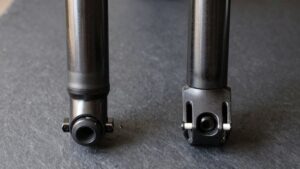
The key physical difference is stem diameter: a Presta valve uses a roughly 6 mm rim hole, while a Schrader valve needs about 8 mm (often drilled closer to 8.5 mm for clearance). You must match the rim’s drilling to the valve stem; diameter determines compatibility before pressure, pump, or tube choice.
| Valve | Rim hole | Practical result |
|---|---|---|
| Presta | ~6 mm | Fits narrow, high-pressure rims |
| Schrader | ~8–8.5 mm | Fits wider utility rims |
Don’t enlarge a Presta-drilled rim: removing material can reduce strength around the hole, especially on lightweight, narrow rims. You can fit a Presta valve in a Schrader-sized hole with a grommet or adapter, but check stability and tubeless sealing.
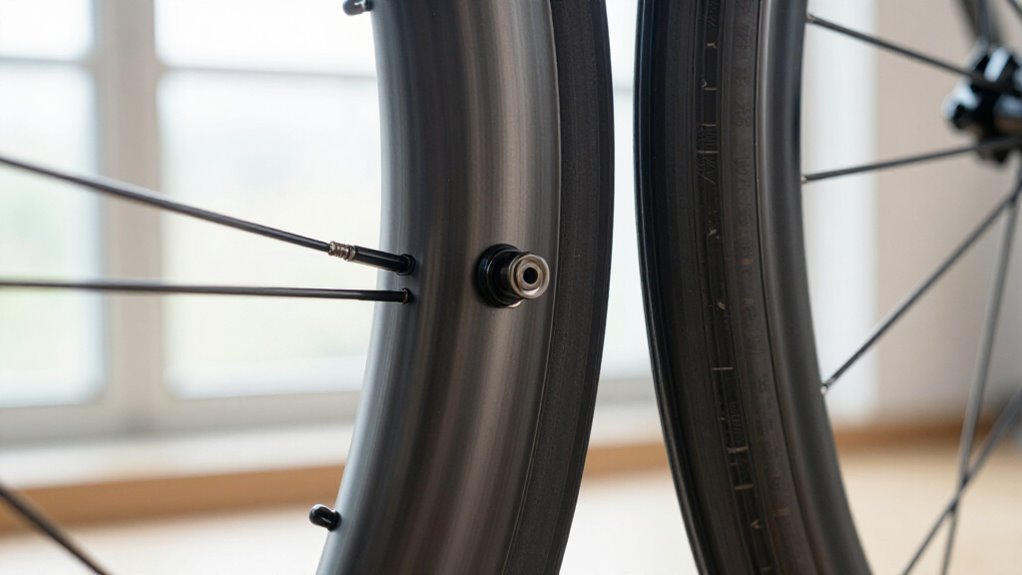
For deep-section wheels, choose stem length from rim depth; diameter doesn’t determine usable reach.
Presta Locknut vs. Schrader Core
Unlike a Schrader valve’s self-sealing spring-loaded core, a Presta valve requires you to unscrew its small tip locknut before inflation and retighten it afterward. Open the Presta locknut only far enough to free the internal mechanism; don’t remove it, since its small size makes loss likely. Attach a compatible pump head without bending the exposed stem.
After inflation, tighten the tip gently with your fingers, not pliers, to close the valve.
A Schrader pump chuck instead depresses the center pin, opening its internal check valve automatically. You don’t need to operate an external nut before or after pumping. When diagnosing a Presta leak, inspect the locknut position first, then replace a leaking or sealant-clogged removable core where applicable. Schrader cores need specialized service tools.
Pressure Retention at 100 PSI
At 100 psi, either valve can retain air reliably when the core, rim interface, and valve hardware seal correctly. Presta is commonly favored for high-pressure use because its pressure-tight design can maintain roughly 125 psi without depending on a spring-loaded check valve. However, a properly maintained Schrader can also hold 100 psi.
If your tyre loses pressure gradually, inspect the entire sealing system rather than blaming the valve type. On Presta, confirm the core and locknut are secure; contamination or sealant can compromise the removable core, which you can often replace. On Schrader, check that the spring-loaded pin and internal check valve are clean, undamaged, and fully sealed. Also confirm that the stem seats squarely in the correctly sized rim hole. Leaks show quickly.
Pump-Head Attachment Complexity
Pump attachment is generally simpler with Schrader: press a compatible pump head onto the valve so its connector depresses the spring-loaded center pin, then inflate. You don’t need to unscrew a sealing nut first. Make sure the head fully engages the pin; a partial connection can restrict airflow or leak.
With Presta, first loosen the small knurled tip nut anticlockwise, then fit a Presta-compatible head. After inflation, remove the head and retighten the nut. A Schrader-only pump needs a Presta-to-Schrader adapter, which you screw onto the opened valve and remove afterward.
Dual-head pumps provide dedicated ports, while adjustable bicycle pumps switch formats directly. Either option reduces tool changes, incorrect attachment, and avoidable air loss. Check your pump’s setting before locking its lever when inflating.
6mm Vs 8mm Rim Holes
Your rim’s valve hole sets the valve standard: Presta stems measure about 6 mm and fit smaller holes, while Schrader stems need roughly 8 mm holes. A 6 mm Presta hole accepts its slim stem securely; an 8 mm Schrader hole provides clearance for the wider stem.
Don’t force a Schrader valve through a Presta-drilled rim. Enlarging the hole is a poor modification on lightweight rims, because removing material can reduce local strength.
Conversely, a Presta tube in an 8 mm Schrader hole can shift under load. That movement may stress the tube at its base, compromise seating, and cause damage.
Use a reducer grommet only if its maker specifies it for your rim. For a replacement wheel, confirm drilling standard before ordering tubes.
Replaceable Schrader Cores Save Money
A replaceable Schrader core can fix a valve-center leak without forcing you to replace an otherwise sound inner tube. If air escapes through the center around the spring-loaded pin, first confirm the tube and tire aren’t leaking elsewhere.
Use a Schrader core tool to remove the faulty core only if your valve stem has a serviceable core. Install a compatible replacement, tighten it carefully, and inflate the tire to verify the seal. The new core restores the internal check mechanism when its seal or pin has failed.
Keep spare compatible cores at home if you encounter recurring valve-center slow leaks. You can repair the tube quickly and avoid the cost and waste of discarding a tube whose body remains sound and reliable in service.
Schrader Cores Collect Road Grit
Schrader valves can collect road grit around their spring-loaded center pin, especially on bikes ridden in dust, mud, or loose gravel. The pin must move inward to open the check valve, so particles can lodge around its spring and sealing surfaces. This contamination may prevent the core from closing completely, causing a slow leak, or it can restrict airflow while you inflate the tyre.
Inspect the valve before attaching a pump, and fit a valve cap whenever you ride off-road. If grit persists, remove the Schrader core with the correct core tool, clean or replace it, and check for leakage. Presta valves don’t use this pin-and-spring pathway, so they avoid this specific contamination point.
On repeatedly gritty routes, core maintenance becomes a practical consideration.
Schrader Gas-Station Pump Compatibility
You can connect a Schrader valve directly to most US gas-station air chucks, just as you would a car tyre. Set the compressor cautiously and inflate in short bursts, since high-output pumps can overshoot bicycle pressures quickly.
Verify the station gauge against a reliable bike gauge, as public gauges may not read accurately at typical bicycle pressure ranges.
Using Gas-Station Air Pumps
Gas-station air pumps connect directly to Schrader valves: the car-style valves with a spring-loaded center pin, so they’re a convenient option for bikes with Schrader tubes.
Their chuck depresses the valve pin automatically, so you can attach it and inflate without a bicycle-specific fitting. Hold the chuck squarely on the stem to maintain a seal, and use short bursts:
- Confirm your tube uses a Schrader valve before attaching the pump.
- Keep the chuck aligned; side-loading can allow air to escape.
- Stop at your tire’s recommended PSI, not an automotive default.
With a Presta valve, first unscrew its small locking nut. Thread a Presta-to-Schrader adapter firmly onto the stem, attach the station chuck, and inflate.
Remove the adapter afterward and retighten the nut. Worn adapters can leak.
Checking Pressure Gauge Accuracy
Although gas-station pumps fit Schrader valves directly, their gauges read accurately only when the chuck fully depresses the valve’s center pin and seals tightly around the stem. If the head seats poorly, a worn chuck or partial pin contact can cause a slow leak, making the reading low or unstable.
Confirm whether the display uses psi or bar, then follow the pressure range on your tire’s sidewall. Schrader-equipped bikes often use lower-pressure tires than road bikes, so don’t rely on a pump’s default setting.
Inflate in small increments, remove and reseat the chuck, and check again. If you use a Presta-to-Schrader adapter, tighten it fully; added connections can leak and skew the gauge. Verify doubtful results with a known-good bike floor-pump gauge first.
Road Bikes vs. Kids’ Bikes
For a road bike, you’ll usually use a narrow Presta valve, which suits smaller rim holes and high tyre pressures. On a kids’ bike, a Schrader valve offers simpler operation and direct access to car-style pumps.
Match the valve to the rim’s drilled hole; don’t force a wider Schrader stem into a Presta-sized rim.
Road Bike Presta Benefits
Road bikes typically use Presta valves because their roughly 6 mm metal stems need a smaller rim hole than Schrader valves, helping preserve strength in narrow, stiff, and deep-section aero rims. If you ride high-pressure tyres, Presta’s pressure-actuated seal supports dependable inflation up to about 125 psi. Its narrow profile lets wheelmakers retain material around the valve opening, where road rims face substantial loads.
- Choose a 40–48 mm stem for standard-depth road rims.
- Use a longer stem when your aero rim requires accessible pump engagement.
- Loosen the knurled nut before inflating; tighten it afterward for controlled pressure checks.
Presta’s non-spring design seals with air pressure, while the threaded metal stem suits performance wheels. Carry a compatible pump head or adapter, and select stem length carefully.
Kids’ Bike Schrader Benefits
Kids’ bikes usually benefit from Schrader valves because their wider, spring-loaded design makes routine inflation simpler for young riders and parents. At about 8 mm wide, a Schrader valve uses a center pin check valve: you attach the pump head, and it depresses the pin to admit air. You don’t need to loosen or retighten Presta’s small locking nut, so children face fewer steps and fewer chances to mishandle the valve.
Schrader compatibility also makes practical maintenance easier. Most car-tire inflators, service-station air hoses, and many affordable household pumps fit directly. That convenience helps you check pressure regularly rather than postponing inflation for lack of an adapter. Kids’ tires use lower pressures than road tires, making Schrader a robust, convenient choice for young riders.
Matching Valves To Rims
Match the valve to the rim’s drilled hole before considering convenience: most road-bike rims take slim Presta valves, while many kids’ bike rims take wider Schrader valves.
Presta’s approximately 6 mm stem preserves material around a narrow road rim’s hole, supporting lightweight, high-pressure wheel designs. On deep aero rims, choose a Presta stem long enough to clear the rim; often 40–48 mm, and sometimes 80–100 mm.
- Use the valve size the rim specifies.
- Fit Schrader to its roughly 8 mm kids’ rim hole.
- Don’t force a swap: adapters suit pump heads, not mismatched holes; redrilling isn’t recommended.
Schrader’s car-style operation simplifies inflation for children, whereas Presta uses a small nut and seals reliably for road pressures. Check rim specifications before buying tubes or tubeless valves.
Choose Based on Rim Depth
Rim depth determines valve-stem length, regardless of the tyre or bike category you ride. Measure your rim’s depth, then select a stem that extends several centimetres beyond the rim. This exposed length lets your pump head clamp securely without removing the wheel or compromising the connection.
On deep-section or aero rims, use a long Presta valve; 80–100 mm options commonly provide sufficient reach. Aero-flared profiles may require length because valve sits recessed below rim’s outer surface. Fit a compatible Presta extender when a long stem isn’t available. Don’t assume Schrader solves this: it lacks the range of long stems and extender options. Valve length matters even more, especially on race-day wheels: too-short valves can prevent inflation entirely or make pump connection unreliable when travelling.
Conclusion
Choose the valve that matches your rim, riding pressure, and service conditions. You’ll usually want Presta for narrow 6 mm holes, deep rims, and high-pressure road tires because its slimmer stem and locknut seal efficiently. You’ll prefer Schrader for 8 mm rims, kids’ bikes, utility bikes, and easy gas-station inflation.
Don’t force either valve into the wrong rim hole. Check pump-head compatibility, keep cores clean, and match tube valve length to rim depth as needed.