How to Read Bike Tire Size Markings
Look for the ISO/ETRTO code like 37-622 (width × bead-seat diameter); the second number (BSD) must match your rim (e.g., 622mm for 700C/29er).
Other markings show traditional sizes (700x35C), max pressure, and intended use.
Also note valve type (Presta, Schrader, Dunlop) and required stem length for deep rims.
Use rim width specs to confirm safe tire widths.
Keep going and you’ll get fit, pressure and valve details next.
Quick Overview
- Find the ISO/ETRTO number (e.g., 37-622); the second number (622) is the bead seat diameter (BSD) in millimeters.
- The first ISO number (e.g., 37) is the tire section width in millimeters when mounted and inflated on a recommended rim.
- Familiarize yourself with common nominal sizes: “700C” and “29er” both often mean BSD 622, while 26″ variants can be 559 or 584.
- Check rim internal width recommendations to match tire width range for safe seating and handling.
- Note valve type and required stem length (Presta/Schrader/Dunlop) for pump compatibility and deep-section rims.
00C Vs 29ER Comparison
Wondering if your 700C Tires will work on a 29er rim? You can often swap them because c vs 29er share ISO 622mm BSD. Tire sizing depends on width, rim internal width, and frame clearance. Match tire width to rim profile: road rims (15–21mm) suit 23–45mm tires; MTB rims (25–35mm) suit 56–76mm tires.
Check pressure/volume: wider 29er tires run lower psi. Test clearance before riding.
| Rim Type | Recommended Tire Width |
|---|---|
| Road (narrow) | 23–45mm |
| MTB (wide) | 56–76mm |
| Gravel/Hybrid (mid) | 35–50mm |
Use ISO/ETRTO markings to confirm compatibility; narrow 29er variants (≈40–50mm) can work on wider road/gravel rims.
Tire Bead Seat Diameter (BSD)
Tire bead seat diameter (BSD) is the precise inner diameter of the rim where the tire bead sits. It determines which tires will safely mount to a wheel. You should always match the tire’s ISO/ETRTO bead diameter number (the three-digit code, e.g., 622, 584, 559) to the rim’s BSD to ensure proper seating and avoid blow-offs or leaks.
You’ll use diameter theory to understand that a mismatch, even by a millimetre, prevents correct bead engagement. The ISO/ETRTO three-digit code is the authoritative spec; manufacturers may list imperial equivalents, but trust the BSD.
- Verify the rim BSD against the tire’s ISO bead seat number.
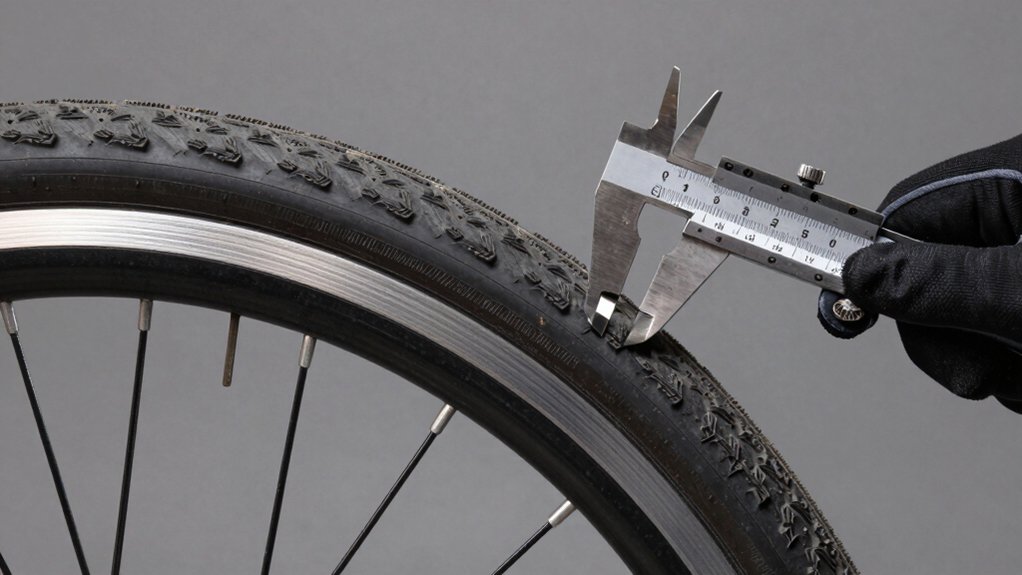
- Use calipers or rim spec sheet for accurate measurement.
- Match BSD prevents leaks and failure modes.
- Record BSD when buying replacement tires.
Valve Types and Compatibility
When you’re matching tubes to rims, check the valve stem type first: Schrader, Presta, or Dunlop. The stem diameter and head design determine rim hole fit and pump compatibility.
Note valve length: deep-section rims need long stems or extenders. Adapters can convert Presta to Schrader for pumps or filling stations.
I’ll cover each valve’s construction, pros/cons, and practical adapter and length solutions. This way, you can pick the right tube.
Valve Stem Types
Which valve type fits your rim and tube depends on a few precise measurements and standards: Presta, Schrader, and Dunlop are the common stem types, each having specific diameters, thread styles, and rim hole requirements. You’ll check rim hole diameter and valve length. Presta uses a small-diameter hole and often requires a removable valve core for sealant access in a tubeless setup. Schrader fits larger factory holes and uses a spring-loaded core common on car valves. Dunlop is similar to Presta externally but differs internally and is regionally common.
Measure stem length to clear deep-section rims. Confirm valve diameter against rim spec and verify whether the tube or valve core is removable if you plan sealant or high-pressure inflation.
Schrader Versus Presta
Curious which valve type you should use? You’ll choose between schrader and presta based on rim hole size, intended pressure, and accessory compatibility.
Schrader valves match car-style pumps, use a larger 8mm hole, and suit wider rims and lower-pressure mountain or hybrid tires. Presta valves require a smaller hole, have a threaded locknut, and handle higher pressures for narrow road and gravel tires; they’re lighter and more aerodynamic.
Adapters let you inflate presta with schrader pumps, but adapters don’t change rim compatibility or valve stiffness. When replacing tubes, match the valve type to the rim’s drilled diameter and the tire’s pressure range.
Keep a valve core tool and compatible pump head to maintain reliable inflation.
Dunlop Valve Overview
Dunlop valves (also called Woods valves) are a middle-ground valve type used widely on commuter, city, and some touring bikes. They fit rim holes similar to Schrader but have a narrower stem and a removable core like Presta. This allows you to use common pumps and sealants while retaining easy serviceability.
You’ll find Dunlop in regions where Dunlop history favored local manufacture and repairability. They rose as a practical compromise between robust Schrader and slim Presta designs. For compatibility, check rim hole diameter and valve core type: many Dunlop cores accept standard pump adapters and tubeless sealant.
Be aware of standardization differences: thread pitch and stem length vary by market. Therefore, verify measurements before buying replacements or adapters.
Valve Length Matters
If you’ve been working with Dunlop valves, you’ve already seen how stem diameter, removable cores, and adapter compatibility matter; valve length matters just as much. You need the correct valve length to reach pump heads and fit through rim holes without bending or stretching inner tubes.
Short stems suit shallow rims; deep-section rims require longer stems. Measure rim diameter and rim depth to select a valve long enough to clear the rim and allow tool access for cores or caps. Too-short valves can strip threads or cause leaks. Overly long valves add weight and risk impact damage.
Match valve length to planned rim diameter and intended use. Verify clearance before final installation.
Valve Adapter Use
How do you know which valve adapter you need? Match valve type (Presta, Schrader, Dunlop) to pump or accessory. A valve adapter converts Presta to Schrader or allows presta tubes in Schrader-sized holes. Check stem diameter and threaded lengths; short stems may need an extension plus valve adapter for secure sealing.
Compatibility considerations include rim hole size, core type (removable vs fixed), and valve length: deep rims often require long stems or extenders. Use brass or aluminum adapters for durability; plastic ones can deform under torque.
When using tubeless valves, ensure the adapter doesn’t compromise the valve core seal or thread pitch. Always test inflation and inspect for leaks after installing any valve adapter to confirm proper fit.
Frequently Asked Questions
Can I Mix Tires With Different Tread Patterns on One Bike?
Yes, you can mix tires with different tread patterns, but you should be careful. You’ll keep stability by matching tire width and checking how tire width changes with rim widths; wider rims make tires sit flatter and affect handling.
Ensure inner air pressure compatibility between tires and rims to avoid blowouts or poor traction. For best performance, use similar compound and knob size front-to-rear and monitor wear and cornering feel.
How Does Tire Age Affect Sidewall Markings Readability?
Tire aging reduces contrast and embossing depth, so you’ll find sidewall markings become faint, cracked, or missing over time. UV, heat, and ozone break down rubber, flattening letters and numbers and causing delamination that obscures ISO/ETRTO codes and pressure info.
Inspect older tires under raking light. If markings aren’t legible or rubber shows brittleness, replace the tire. Don’t rely on worn sidewall markings for safe fitment or inflation.
Do Tubeless Tires Use Different ISO Markings?
No: tubeless tires don’t use different ISO markings. You’ll still see the same ISO numbers (bead diameter like 622, 584, 559) and width codes. ISO marking differences aren’t used to indicate tubeless.
Instead, look for explicit “tubeless,” “TL,” “TUBELESS READY,” or “TUBELESS COMPATIBLE” on the sidewall and manufacturer specs for tubeless compatibility. Check rim compatibility and recommended sealant/pressure for safe tubeless setup.
Will Tire Width Change With Different Rim Inner Widths?
Yes, your tire width will change with different rim inner widths. Narrow rims squeeze the tire, reducing measured width and raising pressure. Wider rims let the tire expand, increasing contact patch and stability.
For rim compatibility, follow manufacturer charts (ETRTO/ISO) to match tire width to rim inner width ranges. That guarantees safe bead seating, proper handling, and accurate inflation pressure recommendations for optimal performance.
Can Tire Stickers or Paint Hide Important Size Codes?
Yes, tire stickering or paint concealment can hide ISO/ETRTO codes and pressure ratings on the sidewall. You should remove stickers and inspect painted areas. Gently clean with isopropyl alcohol to reveal embossed markings. If codes remain obscured, match rim diameter and nominal width against manufacturer specs or photograph the bead area for clarity.
Never assume concealed markings. Verify ISO numbers before fitting tubes or replacements.
Conclusion
You’ve now got the basics to decode tire markings and match valves properly. Remember that 700C/29er refer to the same 622 mm BSD; so focus on BSD when fitting rims and tires.
Check valve type and stem length against rim hole and pump or adapter needs. Use adapters only when safe and avoid forcing incompatible valves. When in doubt, measure BSD and valve stem length: it’s the surest way to ensure fitment and reliable performance.