Bike Saddle Height Calculator
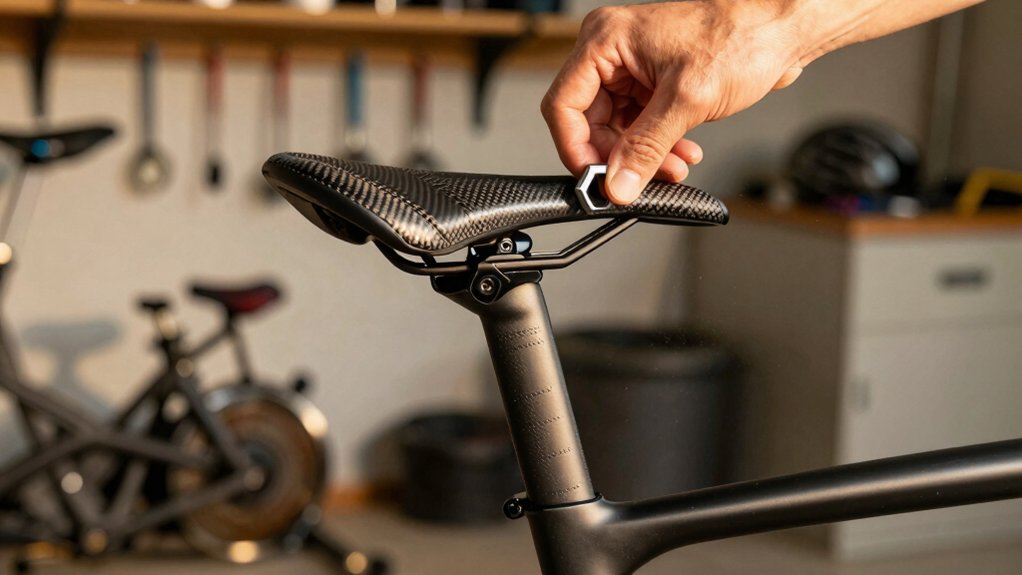
Use a reliable inseam measured while wearing your riding shoes and any insoles. Average three readings, then convert that value with a chosen formula: LeMond for quick BB-centered estimate; Hamley or BikeDynamics for crank-to-pedal and anatomical accuracy.
Enter actual crank length, shoe stack height and cleat fore‑aft offsets to get saddle height that targets your knee angle. Small cleat moves change knee angle noticeably, so verify seated with shoes on. Keep going to learn adjustment details.
Quick Overview
- Measure inseam (three book-method repeats) wearing your riding shoes; average results, and record measurement method and variability.
- Choose a formula: LeMond for quick BB-centered estimate; Hamley or BikeDynamics for crank/pedal and anatomical accuracy.
- Enter actual crank length, shoe stack/cleat fore-aft offsets, and desired knee angle into the calculator for accurate saddle height.
- Verify heel-to-pedal alignment and measure saddle-to-pedal distance at bottom stroke. Iterate cleat/saddle moves in 5–10 mm steps.
- Document all shoe, insole, cleat, and crank details. Re-measure after any equipment or position change.
Leg Inseam to Saddle Height
How do you turn a raw inseam measurement into a reliable starting saddle height? You perform inseam calibration: take three book-method readings, average them, and input mm/cm into a chosen formula (LeMond, Hamley, BikeDynamics). Account for crank length, cleat position, and pedal clearance when selecting method; Hamley includes crank-to-pedal distance. LeMond gives a quick bottom-bracket estimate.
| Method | Input | Output |
|---|---|---|
| LeMond | Inseam | BB center → saddle |
| Hamley | Inseam | Pedal → saddle |
| BikeDynamics | Inseam (+trochanter) | Refined BB → saddle |
Use BikeDynamics or CS methods for better anatomical fit. Adjust ±20mm and verify target knee angle (20–35°) on-bike; then fine-tune for comfort and pedal clearance.
0% Inseam Rule
Why measure inseam carefully? You’ll base primary saddle height formulas on that single metric, so small errors propagate. Account for inseam variability between standing methods and body posture. Repeat measurements and record the method.
- Visualize a book clamped high against the perineum; mark wall.
- Picture hip bone to floor measurement, straight spine, consistent foot placement.
- Imagine a tape measure from mark to floor; convert to mm/cm precisely.
Use the inseam value as input to LeMond or Hamley formulas. Then adjust for crank length and cleat position. Don’t forget shoe thickness: outsole and insole stack alter effective leg length. Document measurement method and shoe assumptions so calculator outputs remain reproducible and comparable.
Measure While Wearing Shoes
When you measure inseam and foot stack for the calculator, wear the shoes and insoles you plan to ride in so shoe type and added thickness are included. Stand fully upright with your heel aligned over the pedal spindle, or simulate that alignment to capture true heel-to-pedal and cleat offsets.
Note cleat position and any removable insoles separately. This way, you can add precise stack and fore-aft adjustments in the calculator.
Shoe Type Matters
One key detail: measure inseam and foot stack while wearing the shoes you’ll ride in because shoe sole thickness, cleat position, and heel-to-toe drop change effective foot length and stack height. These factors directly alter saddle height calculations.
Shoe type affects measured foot length, vertical stack, and fore-aft cleat offset; road, MTB, and casual shoes produce distinct offsets. You should record shoe type in the calculator and repeat inseam measurements with those shoes to guarantee inseam accuracy.
Measure foot stack (heel elevation relative to pedal plane) and note cleat fore-aft distance from shoe toe. Enter actual crank length and desired knee angle so the calculator can combine leg and foot stack correctly. Small millimeter errors in shoe stack produce meaningful saddle shifts; document shoes used for repeatability.
Measure Standing Straight
You should measure inseam and foot stack while wearing the shoes you’ll use on the bike. Stand straight with weight evenly distributed on both feet. Stand barefoot inside those shoes or wear thin socks; ensure pelvis level and spine neutral.
Use a rigid bookmark or caliper at pubic ramus level (book method) and mark wall. Measure to floor for inseam. Measure foot stack as vertical distance from shoe sole contact to ankle joint axis; record in millimeters or centimeters.
Repeat inseam three times and average for accuracy. Note: don’t confuse this procedure with heel-to-pedal alignment; it’s an unrelated concept to that dynamic check. Ignore irrelevant topic variations that alter static reference points.
These static measures feed LeMond, Hamley, CS and calculator inputs.
Heel-To-Pedal Alignment
How should your heel align over the pedal axle when you’re standing in your cycling shoes? Stand on the bike or pedal with shoes on, place the pedal at bottom dead center, and align the heel vertically over the pedal axle so the lower leg is essentially straight.
This heel to pedal check verifies leg extension used in inseam calibration and captures shoe stack and sole thickness. Measure the vertical and fore-aft offset from heel to axle; record values in millimeters for calculator input. Use consistent footwear and repeat three times to reduce error.
If the heel sits significantly aft or forward, adjust saddle height or fore-aft position and re-run inseam calibration until the heel-to-pedal alignment yields the intended knee angle at bottom stroke.
Account For Cleats
Having verified heel-to-pedal alignment, put on your cycling shoes with cleats mounted and sit on the bike to measure. Cleat position and shoe stack change effective leg length and knee angle. With shoes on, ensure your foot rests naturally on the pedal spindle. Note how cleat fore aft shifts the center of pressure relative to the crank.
Measure saddle-to-pedal distance at bottom stroke while maintaining normal pedal stroke alignment to capture operational leg extension. Record vertical and axial offsets introduced by the shoe stack and cleat placement. Convert these to saddle height correction for your chosen formula (Hamley, LeMond, CS).
Small fore-aft cleat moves (5–10 mm) materially affect knee angle; iterate until pedal stroke alignment and measured knee flexion match your target.
Adjust For Insoles
Why measure with your cycling shoes and insoles on? You must capture real foot stack height and how insoles impact saddle-to-pedal geometry. Measure seated with shoes and any orthotic fit installed so the calculator uses true foot thickness, not barefoot estimates.
Put shoes on, insert orthotics, and fasten as you ride. Record pedal axle to saddle top or inseam-derived values while seated and pedaling to bottom stroke; this reflects combined foot stack, cleat position, and sole rigidity. Note any heel lift from insoles or arch support that increases effective crank-to-saddle distance. Enter adjusted foot stack height into the calculator and account for cleat offset.
If you change insoles later, remeasure. Small orthotic fit differences can alter knee angle and required saddle height.
Frequently Asked Questions
Should Crank Length Change Recommended Saddle Height?
Yes, crank length should change recommended saddle height. Longer crank length increases required saddle-pedal distance; you’ll raise saddle height slightly. Shorter cranks reduce it.
Use crank length as an input when computing saddle height. Adjust proportionally, commonly a few millimeters per 5–10 mm crank change, and verify with desired knee angle and pedal stroke. Fine-tune on-bike for comfort and power. Consult a fitter for exact calibration.
How to Adjust for Clipless Vs Flat Pedals?
You raise it: Adjust saddle height slightly lower for clipless versus flat pedals because clipless moves your effective foot pivot closer to the pedal spindle and allows fuller extension. Reduce 5–10 mm if switching to clipless; increase similarly for flats.
Also factor cleat/pedal stack height in the calculator. Measure foot stack and recheck knee angle at 30°±5°. Fine-tune after a short ride for comfort and power.
Does Saddle Tilt Affect Measured Saddle Height?
Yes, saddle angle affects measured saddle height. When you change saddle angle, the contact point shifts. Therefore, your chosen measurement method (seat-tube axis, BB-to-saddle top, or pedal-axle reference) yields a different numeric height.
Use a consistent measurement method and record saddle tilt. Small angular changes (a few degrees) alter effective saddle-pedal distance and knee angle. For repeatable fits, lock saddle angle; then measure and fine-tune while noting angle adjustments.
What About Differences for Mountain Vs Road Bikes?
Yes, you’ll set mountain and road saddle heights differently. Mountain bikes use shorter effective leg extension because suspension, rough terrain and tire width differences change pedal timing and support. You’ll often lower the saddle a few millimeters for control.
Road bikes favor maximum power and a more extended leg, aided by road grip and narrower tires; so you’ll sit higher. Adjust for crank length, cleat position and ride style. Then, fine-tune on rides.
Can Temporary Injuries Require a Different Saddle Height?
Yes. Temporary injury adjustments should change saddle height for recovery and pain avoidance. You’ll make temporary injury adjustments by lowering or raising the saddle a few millimeters to reduce joint strain, alter knee angle, or accommodate swelling.
Prioritize comfort-focused tweaks: reduce pedaling load, shorten crank reach mentally via saddle setback, and ride with a higher cadence. Reassess as healing progresses and revert toward performance settings gradually or consult a fitter.
Conclusion
Use your inseam to set a precise starting saddle height, then refine it on the bike. Measure standing straight with shoes on, accounting for shoe type, cleats, and any insoles; they change effective leg length. Align your heel over the pedal spindle for the 0% inseam reference. Then switch to normal pedaling and test range of motion and comfort.
Make small incremental adjustments and recheck power, knee tracking, and comfort until the fit is consistent and repeatable.
Related reading: How to Set Saddle Fore-Aft Position — a closer look at this topic.