
Bike Size Calculator
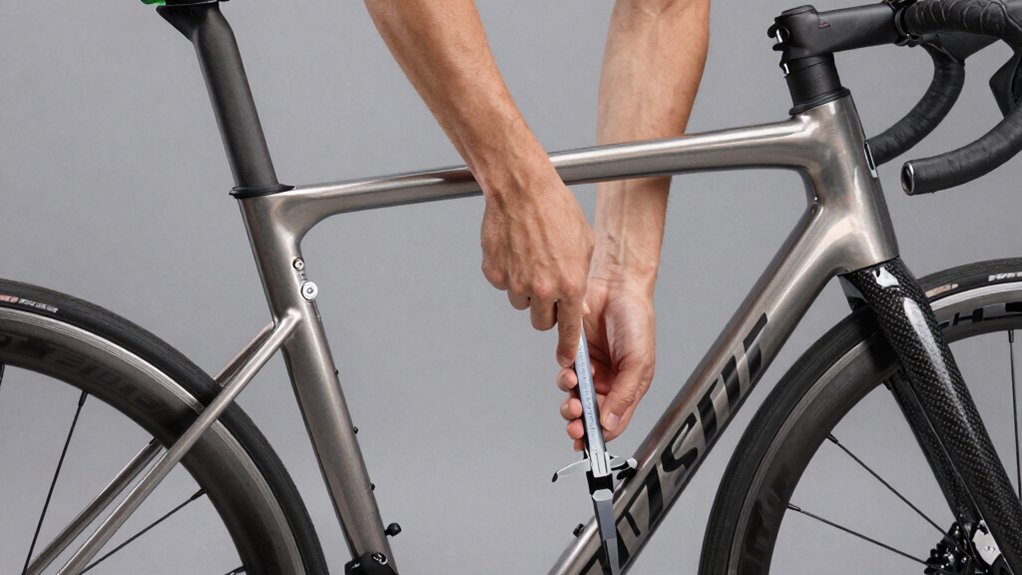
Use your inseam, reach and preferred handling to pick a frame with the right wheelbase and a saddle height that gives a ~25–35° knee angle. For nimble steering, choose a shorter wheelbase for smaller riders; mid-range for balanced control; longer wheelbase for taller riders or high-speed stability.
Set saddle height from inseam baselines (e.g., 75 cm → 843 mm) and fine-tune in small increments. Follow housing and port standards for clean cable routing. Continue for component-level specs.
Quick Overview
- Use inseam-first sizing: Measure inseam and consult standover and saddle-height baselines before frame size selection.
- Convert inseam to saddle height using established baselines; then adjust for a 25–35° knee angle at bottom stroke.
- Match wheelbase to rider height: Shorter for 148–152 cm, mid for 152–173 cm, longer for 185–195 cm.
- Fine-tune handling with reach and stack once inseam and wheelbase category are set.
- Include cable-routing and frame-penetration needs when finalizing frame choice for ergonomics and serviceability.
Wheelbase vs Rider Height
Although wheelbase doesn’t change with your height, it directly affects how a bike handles for different rider sizes. You evaluate wheelbase comparison to understand stability versus agility: longer wheelbase increases straight-line stability for taller riders; shorter wheelbase yields quicker steering for smaller riders.
Use inseam-first sizing; then consider reach and stack to fine-tune handling.
| Rider Height | Typical Wheelbase Use | Handling Effect |
|---|---|---|
| 148–152 cm | shorter wheelbase | quicker steering, nimble |
| 152–173 cm | mid wheelbase | balanced stability/control |
| 185–195 cm | longer wheelbase | improved straight-line stability |
Measure reach, stack, and standover; prioritize inseam. Rider height influence guides frame choice; however, wheelbase tuning delivers ergonomic handling.
Saddle Height Quick-Fit Chart
Want a fast way to set your saddle to an efficient starting height? Use this saddle height quick fit chart to get you riding with ergonomic leg extension and power. Measure your inseam in cm, then apply the multiplier for a starting saddle setback and height. Adjust in small increments (5–10 mm) until your knee angle at bottom stroke is ~25–35°.
Quick-fit targets (inseam → saddle height from center of bottom bracket to saddle top):
- 65 cm inseam → 730 mm saddle height
- 75 cm inseam → 843 mm saddle height
- 85 cm inseam → 956 mm saddle height
These values are measurement-driven baselines; confirm with pedal stroke and comfort. Use them for a repeatable, precise setup before fine-tuning.
Cable Routing Standards
When you size a bike, check its cable routing standards: internal vs external layout, brake cable paths, and Di2/electronic integration points. Note housing length best practices (trim to ±5 mm at stops) and frame penetration standards (seal diameter, grommet depth) so shifting and braking remain precise.
These specs affect ergonomics, serviceability, and final fit. Measure and document them before final setup.
Internal Versus External
Why choose internal or external cable routing? You’ll decide based on fit, maintenance time, and aero/ergonomic trade-offs. Internal sizing affects frame tube diameters and port placement; plan 5–8 mm extra tube wall clearance for housings and ferrules. External sizing keeps ports minimal and adds 10–20 g per exposed housing; however, it reduces internal friction by measurable 0.2–0.5 N at typical lever pull.
Ergonomically, internal routing shortens exposed lengths by 30–50 mm, cleaning cockpit sweep and lowering snag risk. If you value quick adjustments, external routing gives 1–2 minute brake or derailleur swaps. Internal routing adds 5–15 minutes and needs guided liners.
Measure cable path radii; keep bends >20 mm radius to limit wear and friction.
Brake Cable Routing
How should you route brake cables to maximize safety, serviceability, and braking feel? You’ll position lines to minimize length, bends, and friction: keep housing run under 60 cm for rear calipers and under 40 cm per side for dual-pivot fronts. Aim for radii >30 mm at bend points; sharper bends add measurable friction and sponginess.
Choose internal vs external based on trade-offs: internal routing reduces stretch and snag risk but adds 5–10 minutes of maintenance per service and may require ferrules sized to 4.5–5.0 mm. External routing simplifies inspection and lets you replace housing segments in 2–3 minutes.
Secure cables at 5–7 cm intervals with low-profile ties to prevent chafing. Check stops and anchor bolts torque to manufacturer specs for consistent lever feel.
Di2 And Electronic Integration
Curious about fitting Di2 and other electronic systems cleanly into a bike’s cable architecture? You’ll route Di2 integration along defined entry points: measure 5–10 mm internal port clearance at the headtube and allow 120–200 mm straight run before first bend to prevent connector stress.
Specify 4–6 mm port diameters for junction boxes and battery housings; maintain 30–45 mm spacing from hydraulic brake lines to reduce interference. For electronic shifting compatibility, position the main junction near the down tube at 150–300 mm from the BB shell for balance and accessibility.
Use gentle bends (radius ≥25 mm) and label cable lengths to ±5 mm. These standards give predictable ergonomics, simplify installation, and ensure repeatable serviceability across frames.
Housing Length Best Practices
Following the Di2 integration points, you’ll apply the same precision to housing lengths: cut cable and electronic housings to leave 5–10 mm slack at connectors, maintain 120–200 mm straight runs before the first bend, and ensure bend radii stay ≥25 mm.
You’ll measure housing length so lever-to-brake and shifter-to-derailleur runs sit without tension; trim in 5 mm increments. For internal cable routing, plan entry and exit gaps, keep housing segments under 400 mm between stops, and route housings to avoid sharp transitions.
Use labelled test lengths, cycle steering through full lock, and confirm no binding. Accurate cable routing and housing length improve shifting consistency, reduce wear, and make maintenance predictable.
Frame Penetration Standards
Why should you care about frame penetration standards? They define exact entry/exit points, hole diameters (typically 6–14 mm), and grommet depths so cable housing aligns with frame geometry and doesn’t rub or kink.
You’ll measure center-to-center distances from head tube and down tube to ensure internal routing clears BB shells and chainstays. Consistent penetration placement preserves sizing compatibility across models; this lets you swap stems, handlebars, or forks without re-drilling.
Ergonomic routing keeps bend radii ≥25–30 mm for shift cables and ≥40 mm for hydraulic hoses to maintain smooth actuation. Specify penetration angles (±5° tolerance) and shield offsets (2–3 mm) to prevent paint wear.
Use these standards when checking manufacture specs or customizing a frame to guarantee reliable, repeatable installation.
Frequently Asked Questions
How Do I Measure Inseam Correctly at Home?
Measure your inseam at home by standing with your back against a wall, feet 15–20 cm apart. Place a book snugly between your legs to mimic a saddle. Mark the book spine on the wall. Then measure from that mark to the floor in centimeters.
Repeat twice and average. This home fitting yields an accurate inseam for bike sizing; record the value to use with frame formulas for road, MTB, or hybrid bikes.
Can I Use Road Frame Sizes for Gravel Bikes?
Yes, you can generally use road frame sizes for gravel bikes, but you’ll adjust ergonomics and clearance. Use your measured inseam × 0.665 as a starting point. Then check railroad grip reach and handlebar position for off-road control.
Ensure disc brake compatibility and adequate tire clearance. Consider a 1–2 cm longer top tube or shorter stem for stability. Measure stack and reach; test fit with pedals and gravel tires before buying.
How Does Stem Length Affect Reach and Fit?
Stem length directly changes reach impact: A longer stem increases horizontal reach; a shorter one reduces it. You’ll alter body position and weight distribution measurably. Each 10 mm adds about 10 mm to reach.
Adjusting stem length without changing saddle height can force you to lower or raise the saddle later for optimal leg extension. Use millimeter increments, test posture on short rides, and aim for balanced torso angle and comfort.
What Tire Width Best Matches Frame Clearance?
You should pick a tire width that leaves at least 4–6 mm clearance per side and 6–8 mm above the tire to ensure tire clearance and frame compatibility. Measure your current fork and chainstay spacing. Then choose a tire whose inflated width plus 8–12 mm fits that gap.
For example, a 28 mm inflated tire usually needs a 36–40 mm internal fork/stay clearance; wider tires demand proportional frame checks.
Should Saddle Tilt Be Perfectly Horizontal?
No, saddle tilt shouldn’t be perfectly horizontal for everyone. You should set a neutral, slight nose-down tilt (about 1–3°) and test comfort. Use precise adjustments in small increments, noting pelvic pressure and fore/aft sit bone contact.
If you feel slipping or numbness, level it toward horizontal. Re-check your inseam measurement at home to confirm saddle height; small height errors change tilt needs and pelvic angle.
Conclusion
You’ve now got the key measurements and routing rules to dial in a bike that fits and functions. Use wheelbase-to-height ratios to balance handling. Set saddle height per the quick-fit chart to hit efficient leg extension. Follow cable routing standards: choose internal or external based on weight, maintenance, and stiffness targets.
Keep brake and Di2 pathways minimal and straight. Use specified housing lengths and seal frame penetrations to manufacturer tolerances for predictable, repeatable performance.
Related reading: How to Set Saddle Fore-Aft Position — a closer look at this topic.