How to Clean a Bike Drivetrain Properly
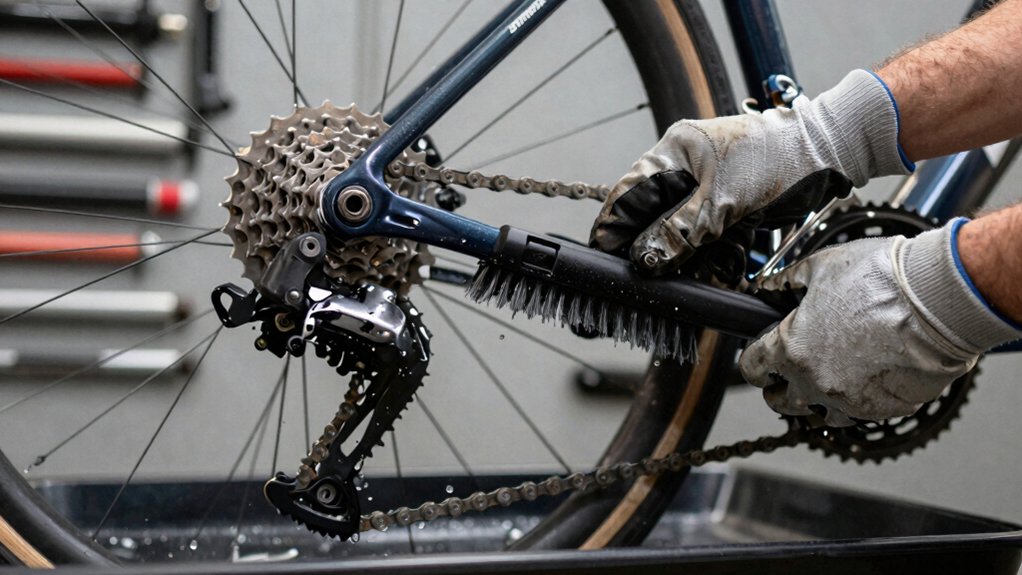
You should degrease the chain regularly, either weekly or monthly on-bike. Remove it once or twice a year. Scrub the cassette and jockey wheels with a degreaser, rinse, and dry. Then, apply lube to the rollers only and wipe off the excess.
Backpedal to work the lube into the links and check for smooth, quiet running. Torque the cassette lockring to manufacturer specs using the correct technique. Use light grease or blue threadlocker sparingly, as directed. Keep going and you’ll get detailed steps and torque values.
Quick Overview
- Degrease chain and cassette on-bike weekly, monthly, or after approximately 150 km (MTB wet) or 200–300 km (road) for routine cleaning.
- Apply chain degreaser, backpedal to run it through rollers, then rinse or wipe thoroughly before drying.
- Remove chain occasionally for off-bike deep clean. Re-grease bearings once or twice yearly to remove factory grease.
- After drying, apply lube to rollers only, backpedal several revolutions, then wipe excess from outer plates.
- Reinstall cassette components cleanly. Use correct torque and light grease or threadlocker as specified to prevent slippage and corrosion.
Chain Degrease Times
How often should you degrease your chain? You’ll base intervals on mileage, conditions, bike type, and lubricant. Use on-bike degreasing weekly to monthly for regular maintenance. Off-bike removal should occur once or twice yearly for factory grease removal.
Mountain bikes in wet or muddy terrain need degreasing after approximately 150 km or more often. Road bikes in mild conditions can wait 200 to 300 km. Choose frequency to prevent tight links and drivetrain wear.
| Condition | Frequency | Notes |
|---|---|---|
| Regular | Weekly–Monthly | Varies with mileage |
| Thorough | 1–2×/yr | Off-bike, full removal |
| MTB wet | ≥150 km | More often in mud |
| Road mild | 200–300 km | Longer lube life |
Don’t apply non bike topics or unrelated equipment methods. Follow bike-specific solvents and procedures.
0–30% Chain Lube Rate
Curious what “0% chain lube rate” means? It’s the state you avoid: a chain that has no effective chain lubrication after cleaning and drying. You’ll recognize it by dry rollers, noise, accelerated wear, and poor shifting.
Prevent 0% lube rate with a measured, targeted approach during drivetrain maintenance.
- Apply lube to rollers only, working from the joining link around the chain.
- Backpedal several revolutions so lubricant penetrates roller interfaces.
- Wipe excess from outer plates to avoid attracting grit and premature wear.
- Verify lubrication by listening for smooth, quiet operation and checking roller sheen.
If you ride with 0% chain lube rate, you’ll shorten component life. Follow the lubrication steps to restore proper function.
Torque Specs for Cassettes
When you’re reinstalling a cassette after cleaning, follow the manufacturer’s torque range for the lockring and carrier to prevent loosening or damage. Use the correct torque wrench technique, apply threadlocker where specified or a thin film of grease on aluminum-steel interfaces, and match torque values to material combinations (aluminum, steel, titanium).
Check cassette lockring specs for your model and record the torque so you can repeat the procedure accurately next time.
Correct Torque Range
Why does torque matter for your cassette? You need correct torque to keep the freehub engagement accurate, prevent slippage, and avoid damage to splines or hub bearings. Use manufacturer torque range values for the lockring: typically 40–50 Nm for Shimano/SRAM road cassettes; lower for aluminum micro-spline variants. Never guess.
When reinstalling, clean mating surfaces, run the lockring down by hand, then use a calibrated torque wrench to the specified number. Apply two word discussion ideas like “spline wear” and “bearing preload” when checking specs. If you lack the exact spec, consult the cassette or hub manual; err on the lower side within the torque range rather than over-tightening.
Correct torque preserves component life and drivetrain performance.
Threadlocker And Grease
After you’ve torqued the lockring to spec to protect splines and bearings, decide whether to use threadlocker or grease on the lockring threads and hub interface. Apply a medium-strength (blue) threadlocker sparingly if you’ve seen recurring loosening. Alternatively, use a light smear of anti-seize/grease where manufacturers specify to prevent galling and corrosion. Never mix heavy anaerobic compounds with aluminum micro-splines unless the hub maker approves.
Choose based on material pairing and service interval: steel-on-steel benefits from light grease compatibility to avoid corrosion. Meanwhile, steel lockrings on aluminum cassettes sometimes need controlled threadlocker usage to keep preload. Clean threads fully before application, torque to the specified value, and recheck after initial rides. Document your choice for future maintenance.
Cassette Lockring Specs
Curious how tight that cassette lockring should be? You want it secure enough to prevent movement, but not so tight you damage threads or bearings. Typical lockring torque ranges from 40 to 50 Nm for steel cassettes and from 30 to 40 Nm for lighter alloy or road cassettes; always check the manufacturer’s spec for your hub/cassette.
Use a proper lockring tool and verify splines are clean and dry before installation. After torquing, spin the wheel and inspect for play or rubbing. Avoid contaminating the cassette lockring with excess chain lube. Lubricant belongs on the chain, not threads or splines, because it alters torque readings and can loosen fittings. If you used threadlocker earlier, confirm its class and cure time before final torque.
Torque Wrench Technique
How do you assure your cassette is torqued correctly without risking damaged threads or sticky bearings? Use a calibrated torque wrench technique: set the wrench to the manufacturer’s lockring value, seat the lockring squarely, and tighten steadily until the wrench clicks.
Don’t use impact tools or sudden bursts; they can overload threads and transmit shock into freehub bearings. Verify torque after a short test ride and recheck if you removed the hub axle or bearings.
Clean, dry threads before assembly and apply light grease only where specified to avoid binding. Track chain degrease times during service so solvent residues have fully evaporated before final torque. Moisture or solvent film can alter friction and give false torque readings.
Torque Values By Material
Which torque value you use depends on the cassette material and lockring type; always match the spec to the manufacturer and material grade. Aluminum cassettes and alloy lockrings typically call for lower torque (10–30 Nm) to avoid thread stripping. Steel cassettes and steel lockrings tolerate higher values (40–50 Nm).
Titanium or carbon carriers may have specific limits: check the part sheet. Use a calibrated torque wrench and clean threads. Apply a light lubricant or anti-seize only if manufacturer permits.
Include torque checks in your maintenance checklist and note values on the bike record. This topic ideas note helps debunk maintenance myths like “more torque equals safer,” which can lead to damaged freehub bodies or warped cassettes.
Frequently Asked Questions
How Often Should I Replace My Chain Instead of Just Cleaning It?
You should replace the chain when chain wear reaches 0.5%–0.75% (0.5% for 10/11/12-speed); do not just keep cleaning. For replacement frequency, expect 1,000–3,000 miles depending on riding, conditions, and maintenance.
Use a chain checker to monitor wear and tie replacement frequency to your drivetrain cleaning cadence: check every few cleanings or monthly if you ride often. Replace sooner in wet or gritty conditions to protect the cassette and chainrings.
Can I Use Household Degreasers Like Dish Soap on the Drivetrain?
You can use mild dish soap or a household degreaser in a pinch, but pick a gentle, water-soluble formula and dilute it. Avoid strong solvents that strip grease from bearings or attack seals.
Degreaser works on caked oil if you rinse thoroughly, repeat scrubs, and dry completely before lube. Don’t substitute for bike-specific degreasers long-term; they’re formulated to remove grime without harming components or finishes.
Is Ultrasonic Cleaning Safe for Bike Drivetrain Components?
Yes, ultrasonic cleaning can be safe for drivetrain components if you follow precautions. You’ll use appropriate ultrasonic safety by limiting time, using the correct solvent (mild degreaser or water with bike-safe detergent), and maintaining low temperature to avoid damaging seals or heat-sensitive coatings.
Remove bearings and delicate parts. Avoid long cycles for sealed hubs or ceramic bearings. Rinse thoroughly, dry completely, then relubricate. Test on a spare part first to confirm compatibility.
How Do I Clean Inside Sealed Cartridge Bottom Brackets?
You don’t clean inside cartridge bottom brackets; they’re sealed. Instead, remove the cartridge, inspect seals for damage, and wipe the exterior with degreaser and a brush.
If play or roughness exists, replace the cartridge unit. Re-grease the shell threads and install new threadlocker where specified. Torque to spec.
Periodically check seals and replace the cartridge when contamination or wear appears. Sealed units aren’t serviceable internally.
Can I Ride Immediately After Applying Chain Lube?
You shouldn’t ride immediately; wait for proper drying time to avoid fling-off and ineffective penetration. After lubrication technique: applying drops to rollers and backpedaling, you’ll need a few minutes to let lube sink in. Then wipe excess.
For ride safety and maintenance planning, ride briefly nearby to bed the lube and recheck grime transfer. If you used wet lube, wait longer; for light lubes, three to five minutes usually suffices.
Conclusion
You’ve cleaned and degreased the drivetrain, measured lube application, and torqued the cassette correctly. Now verify everything. Spin the cranks, shift through all gears, and check for chain chatter or skipping. Re-torque the lockring to spec after a short test ride; inspect fasteners for correct threadlocker or grease use.
Keep records of torque values and lube rates so future maintenance is faster and consistent. A tidy drivetrain equals safer, more efficient rides.
Related reading: Rear Derailleur Shifting Troubleshooting — a closer look at this topic.