
How to Choose the Right Bike Wheelset for Your Riding Style
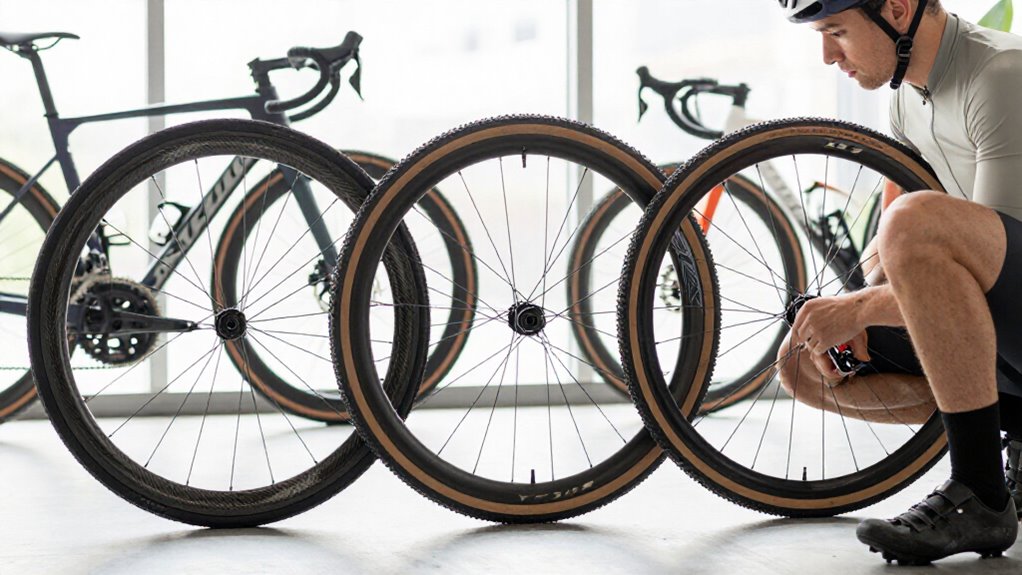
Choose wheels around your terrain, speed, weight, and tyre volume.
Use 20–30 mm rims for sustained climbing.
Use 30–45 mm for versatile roads and gravel.
Deeper profiles only for consistently fast, calmer conditions.
Heavier or rough-road riders need durable rims, reliable hubs, and higher spoke counts.
Match internal width to tyres, confirm axle and cassette standards, and favor fast engagement for technical riding.
Next, compare materials, lacing, bearings, and budget trade-offs in the sections ahead.
Match Rim Depth to Terrain
Match rim depth to the speeds, terrain, and wind conditions you ride most often. Choose shallow, 20–30mm rims for climbing, training, and general riding when routes include sustained gradients above 6% or climbs longer than one kilometre. They suit situations where low mass and predictable handling matter more than aerodynamic drag reduction.
Use 30–45mm rims for all-round roads and mixed terrain. This range reduces drag while remaining calmer in crosswinds and generally feels less harsh than deeper profiles. Choose 50–80mm rims for fast criteriums, time trials, or triathlons, where you’ll hold speed long enough to realize their aerodynamic advantage. In gusty conditions, deep rims demand more steering correction; shallow rims inspire greater confidence. Select depth according to your prevailing terrain, average speed, and wind.
Account for Rider Weight
Your weight and riding forces should guide wheel strength before you focus on low gram counts. If you’re a heavier rider, choose robust rims, reliable hubs, and higher spoke counts to manage repeated loads and reduce premature rim or spoke problems. For road use, prioritize a stiff, durable build with accurate spoke tension over an ultra-light wheelset below 1,400 g.
On mountain bikes, light XC wheels may use about 24 spokes, whereas trail and downhill builds commonly use 32 to 36 for greater load tolerance. With 2.25–2.5-inch tyres, a modern rim around 30 mm wide better supports tyre volume, improving traction and comfort.
Don’t simply choose maximum stiffness: your weight, terrain impacts, and riding aggression require enough compliance for control without sacrificing structural support.
Prioritize Hub Engagement Speed
Prioritize hub engagement when your riding includes rapid accelerations, technical climbs, or frequent stop-start efforts. A hub’s pawls, ratchet, or clutch transfers pedal torque after a small freehub rotation. Choose lower engagement degrees when you need immediate corrections; engagement-point counts aren’t standardized across designs.
| Engagement | Best use |
|---|---|
| 18–36 points / 10–20° | Steady road cruising |
| 36–54 points / 6–10° | Mixed riding |
| >54 points / | Technical, explosive efforts |
High engagement lets you apply torque sooner after coasting, improving balance and line control on rough climbs. It can add noise, wear, and service needs; it doesn’t automatically make a hub faster everywhere. Verify the freehub body matches your cassette, and confirm axle spacing and rotor mount.
For steady endurance rides, a quieter, lower-engagement hub may deliver sufficient response with less complexity and reduced drag overall.
Carbon vs. Aluminum Rims
Carbon rims reduce weight and increase stiffness, giving you quicker acceleration and more precise handling, while aluminum adds compliance and often absorbs hard impacts better.
You’ll pay more for carbon and may face specialized repair or replacement costs, whereas aluminum offers lower upfront cost and simpler serviceability. Match carbon to XC, racing, or speed-focused riding, and consider aluminum for trail use, rough terrain, and value-focused builds.
Weight and Ride Feel
Material choice shapes how a wheelset accelerates, tracks through corners, and filters trail or road feedback. Carbon rims usually deliver lower mass and higher stiffness, so your bike responds sharply to repeated accelerations and steering inputs. Many light carbon pairs weigh below 1,400 g, although total wheel weight, tyre mass, and rim depth still matter.
For the same depth, aluminium generally adds modest compliance. It softens high-frequency feedback, whereas carbon often feels more immediate or snappy. Don’t treat material as the only comfort variable: deeper, stiffer rims can feel harsher regardless of construction, while tyre volume and pressure remain major controls.
On a rim-brake road bike, aluminium gives more consistent wet braking and better heat management on sustained descents. Choose carbon for low weight and crisp response; choose aluminium for smoother feedback and predictable braking.
Strength and Impact Resistance
Impact resistance matters most when your wheels regularly meet rocks, roots, drops, or square-edged potholes. Aluminum rims generally absorb hard hits more forgivingly: they can deform rather than crack, and their added compliance softens harsh trail feedback. That makes them a practical choice for downhill and all-mountain riding, where repeated rim strikes can outweigh a weight advantage.
Carbon rims deliver lower mass and greater stiffness, but sharp impacts demand better line choice and pressure control. At low tubeless pressures, repeated bottom-outs increase the risk from rock strikes, so don’t treat stiffness as impact immunity. Choose aluminum when you prioritize dent and crack resistance on rough terrain. Choose carbon for XC when faster response and reduced weight justify their impact trade-off, and you ride.
Cost and Long-Term Value
Your budget should reflect the performance you’ll actually use: carbon wheelsets command a premium for lower weight and higher stiffness, while aluminum delivers stronger durability per dollar. You’ll usually find carbon at the high end of the market, whereas aluminum dominates many entry and intermediate wheelsets.
To judge ownership cost, weigh serviceability against performance gains. Aluminum brake tracks generally manage wet conditions and rim braking loads better, and aluminum rims tolerate hard impacts more readily. They’re also simpler to repair or replace.
Carbon earns its price when its lower mass and greater stiffness produce benefits you’ll use consistently. A carbon rim with an aluminum braking surface can improve braking, but its added layer increases weight. Choose the option whose replacement and performance costs fit.
Terrain and Riding Style
Match rim material to the terrain and braking demands you ride most often. If you regularly descend long, steep roads, ride in rain, or brake hard, choose aluminum rims or a carbon rim with an aluminum brake track. Aluminum manages braking heat more effectively and delivers reliable wet-weather rim-brake performance. It also tolerates hard impacts better, making it practical for rougher routes.
Choose carbon when fast, dry road riding, low mass, and lateral stiffness matter most. Carbon’s stiffness-to-weight advantage sharpens acceleration and steering, but impacts are less forgiving. For speeds, carbon aero rims deeper than 40 50 mm reduce drag; however, crosswinds require handling. Shallow 20 30 mm wheels keep weight, improve versatility, and suit climbing. Hybrid rims improve braking confidence but add weight.
Gravel Wheels for Mixed Surfaces
For mixed-surface gravel, match a 20 mm-plus internal rim to your tyre volume so you can run lower pressures with stable handling and reliable bead support. Choose a durable 28–32-spoke build with sealed, quick-engagement hubs to withstand impacts, mud, and abrupt climbs.
You’ll balance low weight against aerodynamics best with a robust, mid-depth rim rather than an ultra-light or very deep design.
Rim Width and Tire Volume
Rim width determines how securely a gravel tire supports its volume at the lower pressures used on mixed surfaces. Compare internal rim width, not external width, because only the internal dimension defines the tire’s supported profile. For fast pavement and dirt riding, pair 35–45 mm tires with 19–22 mm internal rims. This combination preserves useful air volume and compliance without making the tire unnecessarily draggy on smoother sections.
If you ride looser tracks or prioritize comfort, choose a true gravel rim with 20 mm or more internal width and a wider tire. Correct support lets you lower pressure for traction and ride quality while limiting excessive casing collapse in corners. Gravel tires commonly span 32–50 mm; options may reach 2.25–2.5 inches, with 2.8-inch tires for comfort.
Durability for Rough Roads
Rough roads demand a wheelset that absorbs repeated impacts without sacrificing control: choose a tubeless-ready rim with at least 20 mm internal width and pair it with 32–50 mm tyres. The larger air volume lets you lower pressure, so tyres deform over rocks and washboard rather than transmitting sharp impacts to the rim. Tubeless construction further reduces pinch-flat risk while preserving grip on loose corners.
Choose shallow-to-mid-depth rims, roughly 20–45 mm, for a stable mixed-surface build. Very deep rims add crosswind sensitivity and face greater demands under repeated impacts. Aluminium rims are a practical durability choice: they tolerate impacts, manage wet-braking heat on long descents, and are easier to repair. For rim brakes, choose an aluminium braking track rather than carbon. Use robust lacing.
Hub Engagement and Sealing
A durable gravel rim needs an equally capable hub: fast freehub engagement makes power delivery more immediate when you accelerate out of loose corners or restart on short, choppy climbs.
Choose a freehub with a high ratchet or pawl count, which reduces pedal pickup before the hub drives. This helps when traction changes quickly: you can apply controlled power sooner rather than waiting through crank rotation.
Prioritize effective end-cap and bearing seals. Dust, silt, and water enter gravel hubs readily, accelerating bearing wear and contaminating the freehub mechanism.
For muddy routes, select a robust, serviceable hub designed for wet exposure. Confirm axle, rotor, and freehub-body compatibility with your frame, brakes, and drivetrain. Use tubeless-compatible rims for lower pressures, puncture resistance, and compliance on gravel.
Weight Versus Aerodynamics
For mixed-surface gravel, prioritize tyre support and durability before chasing the lowest wheel weight or the deepest aero profile. Choose a gravel-focused rim with roughly 20 mm or greater internal width to stabilize 32–50 mm tyres and support lower tubeless pressures. This setup improves traction, comfort, and rolling control, benefits that often exceed aero gains on uneven terrain.
Lighter wheelsets improve acceleration and climbing response, but ultra-light builds can compromise impact robustness. For routes with sustained fast pavement or hardpack, select an all-round 30–45 mm rim depth: it rolls faster than a shallow rim without the crosswind sensitivity of a 40 mm-plus aero wheel. Reserve deeper sections for consistently high-speed riding. Match tyre size, rim compatibility, and pressure before comparing grams or drag claims.
Confirm Thru-Axle Dimensions
Start by identifying your frame and fork’s exact thru-axle standard, not just the wheel diameter. Measure both dropout interfaces and record the axle diameter, spacing, and overall axle length for each end.
Many modern road and gravel bikes use 12×100 mm front and 12×142 mm rear, but you must verify your frame’s specification.
Check that the hub’s endcaps match the required front and rear widths and that the wheel seats fully before you tighten the axle. An incorrect axle length can’t clamp the dropouts correctly or reach proper torque. Also match the hub format and dish to the dropout design.
Confirm disc-brake hubs provide the correct rotor mount, or choose a rim-brake wheel for rim brakes. Finally, verify axle clearance around calipers, rotors, and frame.
Budget for Replacement Bearings
Set aside part of your wheelset budget for bearing service: hub bearings and, on many rear hubs, freehub internals wear from water, dust, mileage, and drivetrain loads. Inspect sealed bearings when you feel axle play, grinding, or rough rotation; don’t wait for complete failure.
Rear hubs usually need attention first because chain torque loads both their bearings and the freehub mechanism. Wet or muddy riding accelerates contamination, so choose well-sealed hubs and plan shorter service intervals. Tubeless setup may reduce punctures, but it won’t prevent bearing wear.
Price replacement cartridges, freehub servicing, and workshop labor or the correct extraction and press tools. Poor installation can damage end caps or preload bearings incorrectly, shortening their life. Check your manufacturer’s bearing sizes before ordering replacement parts.
Ignoring Spoke Lacing Patterns
Don’t judge a wheel solely by its spoke count: its lacing pattern, radial, 2-cross, or 3-cross, determines how the hub transfers pedaling, braking, and side loads into the rim. The pattern controls torque transmission, lateral stiffness, and spoke fatigue.
It matters especially at the rear, where drive torque can wind spokes and loosen poorly chosen crossings.
- Use the rim’s specified drilling and crossing pattern; mismatches can accelerate fatigue and loss of true.
- For disc brakes, choose a torque-capable pattern: braking loads originate at the hub, not the rim.
- Don’t rebuild factory wheels casually; hub, rim, spokes, and lacing form one engineered structure.
Your build stays truer, resists wind-up, and delivers predictable steering when you sprint, corner, or brake hard on roads and trails.
Verify Cassette Compatibility
A well-built wheel still won’t work if its rear hub uses the wrong cassette interface. Before ordering, identify the freehub standard, not just the wheel size or axle type. Shimano and Campagnolo bodies use different spline patterns; a Campagnolo cassette cannot mount on a Shimano freehub, or vice versa.
- Confirm your drivetrain brand and cassette speed. Most current wheelsets support 11-speed cassettes, but you should verify the manufacturer’s stated range.
- Check SRAM requirements: many SRAM cassettes fit Shimano freehub bodies, yet they don’t fit Campagnolo splines.
- Inspect the hub label or measure the freehub before purchase. Record its model and cassette range. If you’re building a fixed-gear bike, confirm you have a fixed hub, not a coasting freehub. That prevents expensive installation mistakes later.
Conclusion
Choose a wheelset by matching rim depth, width, and material to your terrain, speed goals, and rider weight. You’ll gain more from reliable hubs, correct axle standards, and compatible cassette bodies than from marginal aerodynamic claims. For gravel, favor durable rims, appropriate spoke lacing, and serviceable bearings.
Check engagement, replacement-part costs, and build quality before buying. When you balance performance with maintenance and compatibility, your wheels will track predictably and last longer on every ride.


