Hitch Rack vs Trunk Rack: Which Bike Rack Wins?
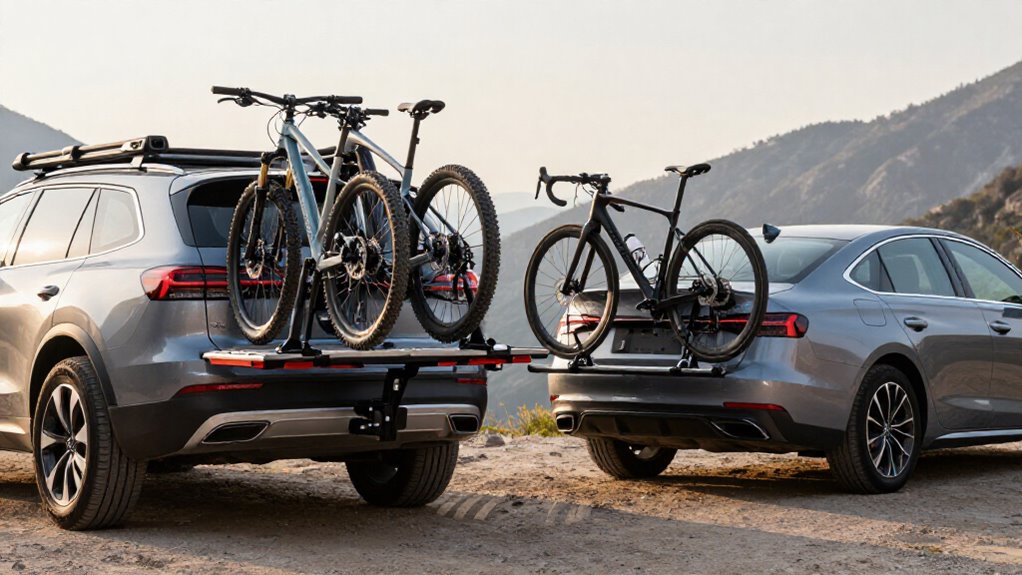
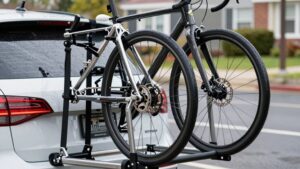
A hitch rack wins if you carry heavier bikes, drive highways, or want faster solo loading. You get a firmer receiver connection, less sway, better paint protection, and typical platform limits of 35–60 pounds per bike, with some e-bike models reaching 65 pounds.
Choose a trunk rack when you need lower cost, rental-car flexibility, or easy apartment storage. Check total rack and tongue-weight limits first; the comparisons below clarify fit, clearance, and tradeoffs for you.
Bike Weight Limits Compared
Bike weight should be the first filter in any rack comparison, because exceeding a rack’s rating can damage the carrier, hitch or vehicle and may create liability issues.
Check the stated per-bike limit, then confirm the rack’s total rating and your vehicle’s tongue-weight allowance. A typical platform model carries 35–60 pounds per bike; robust e-bike versions can reach about 100 pounds. Most trunk models allow roughly 25–35 pounds, so a battery-equipped bike or full-suspension MTB can quickly cross the line.
Remove accessories or batteries only when the manufacturer permits it, and never assume two individual limits override the total.
| Bike type | Safer capacity target | Emotional concern |
|---|---|---|
| Road bike | 25–35-lb rating | Calm margin |
| Standard MTB | 35–60-lb rating | Confident fit |
| Heavy e-bike | 60–100-lb rating | Critical safety |
Receiver-Mounted vs. Strap-Secured
Once your bikes fit the rack’s weight rating, compare how each system attaches to the vehicle. A hitch rack slides into a 1-1/4-inch or 2-inch receiver, then uses a pin or lock to secure the rack. This direct connection makes installation straightforward: insert, align, and lock it. Platform designs, such as tray-style models, support bikes in cradles instead of suspending frames from straps and hooks.
A trunk rack anchors to the trunk or hatch with hooks and tensioned straps. You’ll need to route each strap correctly, tighten it evenly, and check that the bikes don’t contact each other or the vehicle. For liftgate access, trunk systems require adjustment or removal. Many receiver-mounted racks fold away, so you can reach rear without rebuilding the attachment setup.
Highway Stability and Bike Sway
On highways and rough pavement, hitch racks usually control bike movement better than trunk-mounted models. Their receiver-mounted connection creates a firmer base, so you get less side-to-side sway during lane changes, curves, and gusty highway conditions. Platform designs add wheel trays and rigid geometry, helping keep bikes centered rather than swinging from straps.
A trunk rack can work for lighter bikes, but its hooks and tension straps allow more movement over broken pavement. Straps can settle or loosen slightly, so you’ll need to recheck tension periodically. That flex can amplify oscillation when bikes approach the rack’s weight limit. If steady high-speed travel matters most, choose a hitch rack with a snug receiver fit and built-in anti-sway features. Tray models are effective for heavier bikes.
Solo Loading and Rack Removal
If you load and remove bikes by yourself, a hitch-mounted platform rack generally makes the job faster and more controlled than a trunk rack. You slide the rack into the receiver, secure its pin, and roll or lift the bike onto a low tray; a trunk rack requires routing straps, tensioning them, then lifting and balancing the bike on its supports.
For heavier e-bikes, choose a ramp-equipped model such as the EasyFold XT, which carries up to 65 pounds per bike. Removal also favors hitch platforms: the EasyFold XT weighs 45 pounds, folds down, and rolls on casters for garage storage.
Check the rack’s wheel range and weight limit first. Swagman XTC 2 fits 20-to-29-inch wheels but limits each bike to 35 pounds.
Hatch Spoiler and Frame Clearance
For hatchbacks with rear spoilers, a hitch-mounted platform rack usually provides more clearance than a trunk rack because it carries bikes at the receiver rather than against the hatch. It keeps the load lower and away from upper hatch contours, but you must still check clearance during every movement.
- Choose a tilt-away model so you can open the hatch without removing the rack.
- Measure rack-to-spoiler distance before buying; taller spoilers and high trunk-rack contact points increase interference risk.
- Test the hatch fully open and the rack fully tilted; neither bikes nor hardware should touch.
- Favor wheel-clamping platform racks for carbon frames, since they avoid frame contact and finish scuffs.
- Confirm vehicle and bike dimensions, including handlebar and pedal position, before you drive away.
Resale Value and Replacement Straps
Hitch racks generally hold their value better because their rigid receiver-mounted design has fewer consumable parts and supports heavier bikes, such as the 55-pound-per-bike Thule Outpace or 67-pound-per-bike Kuat Piston Pro X. You’ll find stronger used-market demand for hitch systems, particularly models with integrated locks and platform hardware. Their receiver connection eliminates the strap wear that affects trunk racks.
With a trunk rack, inspect each strap and hook regularly. Repeated tightening can stretch webbing, fray edges, or reduce holding tension, making model-specific replacement straps an ownership cost. By comparison, a platform rack such as the 65-pound-per-bike Thule EasyFold XT generally needs only periodic checks of fasteners, hitch tightness, and locks. If you ride often, fewer wear items can offset a hitch rack’s higher initial price.
Exhaust Clearance and Heat Exposure
Beyond purchase price and replacement parts, exhaust clearance deserves a vehicle-specific check. Hitch racks position bikes low at the rear, where tailpipe heat can reach tires, rack hardware, and accessories. Trunk racks sit higher on straps and often remain farther from the exhaust, reducing direct heat exposure.
- Check the tailpipe’s direction with the rack loaded.
- Keep tires, cables, fenders, and panniers outside the exhaust stream.
- Choose hitch designs that raise or tilt bikes away from concentrated heat.
- Don’t let accessories cover the outlet or trap heat near it.
- After a short drive, carefully check temperatures around the mount.
If your hitch setup sits close, adjust spacing or choose a raised rack. Trunk racks usually provide simpler clearance, yet inspect each bike before travel too.
Paint Contact and Scuff Risk
Trunk racks place padded feet, hooks, and straps directly against your paint, so trapped grit or slight strap movement can leave scuffs. A hitch rack keeps most hardware off the body, and a locked, correctly aligned receiver mount limits vibration and bumper contact.
You’ll reduce risk further by cleaning contact areas, checking strap tension, and using wheel-hold platform racks for sensitive frame finishes.
Trunk Rack Paint Contact
Compared with hitch-mounted options, trunk racks create more opportunities for paint contact because their hooks, pads, straps, and suspended bikes rest against or closely behind the vehicle. Unlike a hitch rack, a trunk model relies on careful setup to keep every contact point stable and clear of painted panels.
- Position pads squarely on clean, dry surfaces.
- Route hooks so they cannot rub trim edges.
- Tighten straps to limit bounce and side-to-side sway.
- Check frame tubes and pedals for vehicle clearance.
- Use a Bike Beam when frame geometry causes awkward alignment.
Before departure, inspect rack from both sides and press each bike gently for movement. Recheck after short drive.
This matters with carbon frames: rack-to-frame rubbing can damage finish even when vehicle paint remains protected.
Hitch Rack Scuff Prevention
Hitch racks generally lower paint-contact risk because their solid receiver mount holds bikes farther from the vehicle than a strap-mounted trunk rack. You’ll still need to check clearance before driving: turn the handlebars, inspect tire and pedal spacing, and confirm the frame cannot touch the hatch, bumper, or paint.
A platform model, such as the Thule EasyFold XT, offers the clearest advantage: it secures the bike more predictably and lets you position it away from the car. That matters especially with a carbon frame, which you shouldn’t allow to sway into a rack or bodywork. Trunk racks rely on straps and hooks, so vibrations can loosen their control and create rubbing. Check every contact point and add foam pads wherever accidental contact remains possible.
Rental Cars and Carpools
For rental cars, you’ll usually find a trunk rack more practical because it straps on without requiring a hitch receiver. In a carpool, a hitch rack works well only when each shared vehicle has the right 1.25- or 2-inch receiver and supports your bikes’ weight.
Check vehicle fit, rear-hatch access, and bike capacity before moving either rack between cars.
Trunk Racks for Rentals
When you’re renting a car or organizing a carpool, a trunk rack offers the simplest way to carry one to three lighter bikes without relying on a hitch receiver. Its straps and hooks mount quickly to the rear, so you can handle changing rental vehicles and quick turnarounds. Before driving, confirm the rack fits the car’s trunk or hatch shape and your bikes’ frame or wheel requirements.
- Choose a model rated for your bike weights.
- Prefer tilt-away access when passengers need the hatch.
- Protect paint with clean contact pads.
- Retighten straps after the first few miles.
- Check bikes again after rough roads or highway travel.
Trunk racks suit casual light-bike trips but move more on rough roads. Avoid e-bikes and heavier bikes unless rated.
Hitch Availability in Carpools
Before you commit a rack to a rental-car trip or carpool, confirm that the vehicle has the required 1.25- or 2-inch receiver: a hitch rack can’t work without one, while a trunk rack mounts with straps and hooks on many sedans, hatchbacks, and SUVs.
If one car has a receiver, you can share a hitch rack, but match every bike to its wheel-size and weight limits. The Thule Outpace fits 16-29-inch wheels, carrying 55 pounds per bike. For e-bikes, choose the EasyFold XT platform, rated to 65 pounds per bike. Don’t assume a cheaper option works: the Swagman XTC 2 limits each bike to 35 pounds.
If nobody has a receiver, use a trunk rack; it avoids hitch-size checks and works for the carpool.
Shared vehicles favor trunk racks because they attach with straps and hooks rather than requiring a 1.25- or 2-inch receiver, so you can usually move one between compatible rental cars, sedans, hatchbacks, and SUVs. That flexibility matters when your rental assignment or carpool driver changes.
- Trunk racks typically carry one to three lighter bikes.
- Check trunk shape, spoiler clearance, and secure hook locations.
- Hitch racks work only when the vehicle has the correct receiver.
- Choose hitch mounting for repeat trips in one vehicle: it improves stability and adds locks.
- Confirm the rack maker’s fit guide before collecting keys or loading bikes.
Don’t assume universal fit: bumper geometry and receiver specifications can still rule out an otherwise convenient setup.
Measure first, then pack with confidence.
Apartment Parking Favors Trunk Racks
Apartment dwellers often find trunk racks more practical because they don’t need a hitch receiver or permanent vehicle hardware. If you rent, that matters: you can strap the rack to your trunk or hatch, carry your bikes, and remove it without asking a landlord or altering the vehicle. In a tight apartment lot, its compact profile also helps when you need every inch of parking clearance.
Most trunk models carry one to three bikes, which suits solo riders and couples without the bulk of a hitch setup. They fold for closet or apartment storage, unlike heavier hitch racks that demand more room. You still need to verify fit, tighten straps, and protect bike frames from contact.
Although hitch racks offer greater stability, trunk racks better fit limited parking and storage for your apartment-based riding routine today.
Conclusion
Choose a hitch rack when you carry heavier bikes, drive highways often, or want the steadiest, easiest-loading setup. You’ll get better weight capacity, less sway, and fewer paint-contact concerns, but you’ll need a receiver and more parking room.
Choose a trunk rack when you rent cars, carpool, or live with tight apartment parking. It’s cheaper and more portable, yet straps, spoilers, heat, and frame clearance demand closer attention before every trip, especially during summer travel.