Bike Brake Pad Compound Types Explained: Organic, Sintered & More
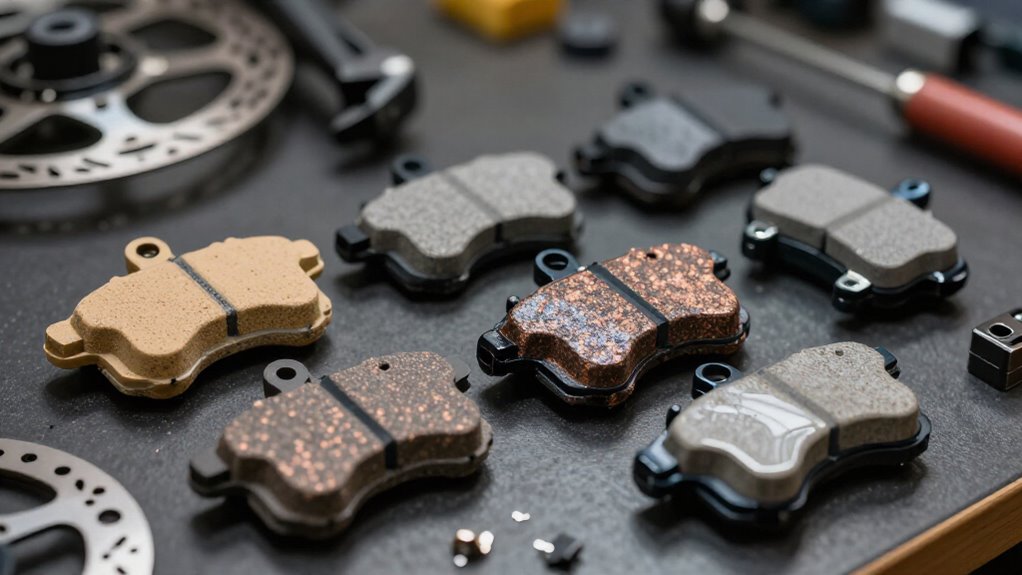
Choose organic/resin pads when you want quiet operation, sharp cold bite, and quick bedding on short, less-aggressive rides, but expect faster wear and heat fade.
Choose sintered metallic pads for hard, wet, muddy, or sustained descents: they resist glazing, tolerate higher temperatures, and last longer, though they’re louder.
Semi-metallic pads balance initial response and durability, while ceramic pads add smooth modulation and heat control.
The details below help you refine that choice for your bike.
Match Compounds to Trail Conditions
Match pad compound to the heat, moisture, and braking load your trails create. For dry, hard-charging descents, choose sintered or metallic pads: they retain dependable friction at elevated temperatures and resist glazing. In wet, muddy, or gritty terrain, use ceramic or full-metallic pads to preserve braking consistency when water and debris compromise softer materials.
Semi-metallic pads suit mixed weather: they combine initial response with more durability than organic options. Choose organic/resin pads for shorter, less-aggressive rides when you want immediate bite and fast bedding; expect faster wear and earlier fade or glazing under repeated heavy braking. Evaluate descent length, rider and bike mass, and braking frequency. Sustained heat can boil hydraulic fluid and produce fade, so select metallic or ceramic pads for high-load riding.
Resin Binders Define Pad Behavior
Resin binders form the polymer matrix that locks fibers, abrasives, and other friction materials into an organic brake pad, so their chemistry largely determines how the pad responds to heat and load. By selecting a tougher, more thermally stable resin, you gain better cohesion and resistance to softening, glazing, and decomposition.
A softer formulation can generate stronger cold initial bite and smoother, progressive modulation, but it generally reaches its thermal limit sooner. Binder chemistry also governs porosity and how securely fillers remain embedded as the surface wears. Compared with sintered metal, a resin-based matrix usually runs quieter and abrades the rotor less, yet it sacrifices pad life under abrasive use.
Carbon- or ceramic-enhanced resin blends narrow that gap: they stabilize friction and raise heat tolerance without producing the harder, more abrupt feel typical of sintered pads. You should consequently judge an organic pad by its binder formulation, not merely its organic label when choosing replacements.
Wet Alpine Descents
On wet Alpine descents, choose ceramic or full metallic (sintered) pads over organic compounds: both retain braking force through rain, grit, and repeated high-energy stops, but they manage the trade-offs differently.
| Compound | Wet-descending character |
|---|---|
| Ceramic | High power; smoother modulation; usually quieter. |
| Sintered | Maximum bite; better glazing resistance; louder. |
Organic pads bed quickly and feel smooth, but sustained wet braking accelerates wear and glazing.
Before installation, sand rotor residue, wipe rotors with isopropyl alcohol, then bed the pads correctly. That preparation promotes a transfer layer and consistent lever response. You’ll choose ceramic when modulation matters; you’ll choose sintered when you prioritize bite and durability.
Check compatibility with your rotor and brake maker’s specification. Follow maker’s rotor and pad guidance before choosing compound for descending.
Ceramic Pads for Heat Control
If you need stronger heat control, ceramic pads use copper fibres to stabilize friction and dissipate heat during sustained braking. They retain reliable wet-weather performance and smoother modulation than organic pads while producing less noise than many sintered options.
Choose them for heavy e-bikes, long descents, or mixed-condition riding where you want fade resistance without an abrupt lever feel.
Ceramic Heat Management
Ceramic brake pads use a dense ceramic-like friction layer with super-fine copper fibres to generate friction while helping manage heat. The embedded fibres conduct and disperse thermal energy through the pad, limiting hot spots during repeated braking. You get fade resistance superior to softer organic compounds, whose resin-rich material can lose friction as temperatures climb.
Compared with sintered metallic pads, ceramic formulations generally deliver similar stopping power but less abrupt initial bite. That trade-off gives you smoother modulation as rotor and pad temperatures vary on long descents. Ceramic pads tend to run quieter than metallic options while maintaining stable performance. They suit riders who prioritize controlled lever feel and thermal consistency rather than the sharpest cold bite. Check manufacturer compatibility and bed them correctly.
Performance In Wet Conditions
In wet conditions, ceramic pads maintain more consistent friction than organic compounds while delivering a smoother, less aggressive lever response than sintered metallic pads. Fine copper fibres within the compound stabilize friction as water films and grit pass through the rotor-pad interface, while also improving heat dissipation. You get predictable braking during prolonged rain without the sharp engagement commonly associated with metallic formulations.
Ceramic pads also resist fade better than organic pads when repeated wet braking raises rotor temperature, yet they don’t depend on the warm-up some sintered compounds need for their best response. Their less abrasive friction character reduces harsh feedback at the lever and commonly produces less noise when moisture and contamination would otherwise amplify squeal. Proper bedding supports this stable friction layer.
Ideal Riding Applications
Choose ceramic pads for long, repeated descents, heavier bikes, and year-round riding where heat control matters but an abrupt metallic feel doesn’t. You’ll benefit most on sustained mountain routes, loaded e-bikes, or all-weather commutes that repeatedly build rotor temperature. Ceramic material resists heat better than softer organic resin, helping you preserve consistent braking and limit fade during successive hard stops.
Choose them when you prefer progressive lever response over sintered pads’ sharper, more immediate engagement. Their smoother modulation lets you meter substantial braking force as corner speed, gradient, and traction change. They also run quieter than many metallic options and transmit a less harsh friction feel through the rotor and caliper. In wet conditions, ceramic pads offer more dependable performance than organic compounds overall.
Rotor Size Affects Pad Choice
Rotor diameter determines heat capacity: a smaller rotor heats faster under the same braking load than a larger one. With smaller rotors, you’ll generally favor heat-resistant metallic or ceramic compounds to limit fade and glazing.
Larger rotors shed heat more effectively, so you can prioritize durable sintered pads with greater confidence on sustained descents.
Heat Capacity And Rotor Diameter
Because rotor diameter sets both braking leverage and thermal capacity, it directly changes the pad compound that best suits your bike. A larger rotor presents more mass and swept surface, so it absorbs each braking event with a smaller temperature rise and sheds heat faster between events. That thermal reserve delays glazing, friction loss, and fluid-temperature escalation during repeated hard braking.
It also gives modulation-focused organic pads more operating margin, while high-temperature sintered or ceramic formulations retain their fade resistance under sustained load.
Rotor size doesn’t work alone. Pad backing plates, caliper design, airflow, rider mass, terrain, and braking frequency determine how quickly heat reaches the pad and hydraulic fluid. Metallic pads usually conduct more heat toward the caliper, whereas organic material transfers less.
Pad Compounds For Smaller Rotors
Smaller 140–160 mm rotors heat up faster under repeated braking, so they generally favor pad compounds that retain friction at higher temperatures. You can use organic/resin pads for quiet operation, quick bedding, and strong cold bite, but repeated hard stops may push them beyond their effective range and produce fade. Sintered pads withstand higher temperatures and maintain more consistent braking in wet or dirty conditions, making them the more robust choice when your small rotor sheds heat slowly.
Semi-metallic or ceramic compounds provide an intermediate option: they typically improve heat resistance over organics while preserving smoother modulation than sintered pads. Prepare the rotor carefully before installation. Sand away incompatible residual transfer film, then wipe the braking track with isopropyl alcohol, ensuring stable initial braking.
Larger Rotors And Durability
Larger discs give your brake system more leverage and thermal capacity, which expands your durable pad options on long, demanding descents. A 180 to 203 mm rotor absorbs and sheds heat more effectively than a 140 to 160 mm rotor, reducing temperature spikes that accelerate organic-pad wear, glazing, and fade.
You can hence favor sintered, metallic, or suitable semi-metallic/ceramic pads when repeated braking, wet grit, rider mass, or steep gradients create sustained load. Their harder friction materials retain bite and last longer at elevated temperatures, whereas softer resin pads offer quieter, sharper cold response but wear faster when heat accumulates. The larger swept radius also reduces required lever force for a given braking torque, helping limit pad stress. Match compounds to terrain, conditions, caliper limits, and rotor compatibility.
E-Bike Cargo Brake Demands
An e-cargo bike places far greater thermal and wear demands on its brake pads than a typical trail bike: higher total mass and repeated hard stops create sustained heat cycles that can fade or glaze light-duty organic compounds. You should prioritize compounds engineered for high-temperature, high-load service.
Sintered metallic pads usually provide the strongest durability, wet-condition consistency, and high-temperature bite; however, they can squeal and conduct more heat toward the caliper and hydraulic fluid. Semi-metallic or ceramic formulations offer a more controlled compromise: smoother modulation than sintered material, strong wear resistance, and dependable wet performance. Ceramic options are commonly quieter and resist fade well. Clean the rotor and bed new pads thoroughly, since an uneven transfer layer reduces friction consistency and can promote glazing.
Verify Caliper Pad Compatibility
Before picking a compound, make sure the replacement pad matches your brake caliper’s exact model, backing-plate profile, thickness, and retention method. Disc pads aren’t universal: match the listing to your caliper model, not your bike brand. Similar Shimano- or SRAM-family systems can use different backing-plate geometry, dimensions, and mounting arrangements. Don’t fit an “equivalent” shape; misfit causes uneven rotor contact.
| Check | Verify | Why it matters |
|---|---|---|
| Model | Caliper code | Ensures listed fit |
| Profile | Plate outline and thickness | Centers pad correctly |
| Retention | Pin, clip, or bolt | Secures pad |
| Holes | Filled versus empty | Supports compound identification |
Empty backing-plate holes indicate sintered pads; filled holes suggest resin-bonded organic material. When changing organic, sintered, or semi-metallic compounds, retain the same approved pad shape, then bed the new pads correctly.
Sintered Isn’t Always Better
Although sintered pads excel in sustained heat, wet conditions, and abrasive terrain, they aren’t automatically the best upgrade for every brake system. Their hard metallic compound lasts, but it can squeal more than organic or ceramic alternatives. It also transfers heat efficiently into the caliper and fluid, which can raise system temperatures and hasten fade in some setups.
- Choose sintered when long, wet, high-load descents justify durability and consistent hot performance.
- Expect less cold bite on initial stops than you’d get from softer organic pads.
- Confirm your rotor supports hard metallic compounds; sintered pads can abrade incompatible discs faster.
For quieter, progressive lever control, ceramic or semi-metallic compounds may suit your riding better. Their lower abrasion can preserve rotors, while their modulation remains predictable.
Bed New Pads Properly
Whatever compound you choose, proper bedding determines whether it delivers predictable braking. After installing new disc pads, sand or wipe the rotor to remove residue, then clean it with isopropyl alcohol. This creates consistent contact and limits glazing.
Make a series of moderate-to-strong stops, rather than one maximum-effort stop, gradually transferring an even friction-material layer onto the rotor. Organic pads usually seat faster and produce sharper early bite, yet can wear and fade sooner under repeated hard braking if incompletely bedded. Sintered pads need a brief warm-up and may be noisier, but thorough bedding reduces squeal and improves damp-condition consistency.
Skip the process, and uneven transfer lowers friction, accelerates glazing, and makes long-descent braking less predictable. Repeat stops until lever feel becomes consistently stable.
Conclusion
You’ll get better braking when you match pad compound, rotor size, and caliper design to your terrain, load, and heat budget. Organic pads give quieter, sharper initial bite in dry conditions; sintered pads resist fade and wear in wet, abrasive, high-temperature use.
Ceramic options stabilize heat on sustained descents. Don’t assume harder is better: verify compatibility, consider e-bike mass, and bed pads correctly. That process lets you trade noise, modulation, rotor wear, and durability deliberately.