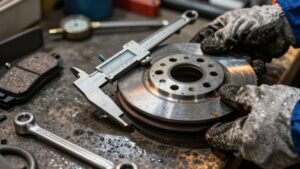
Brake Pad Inspection Schedule
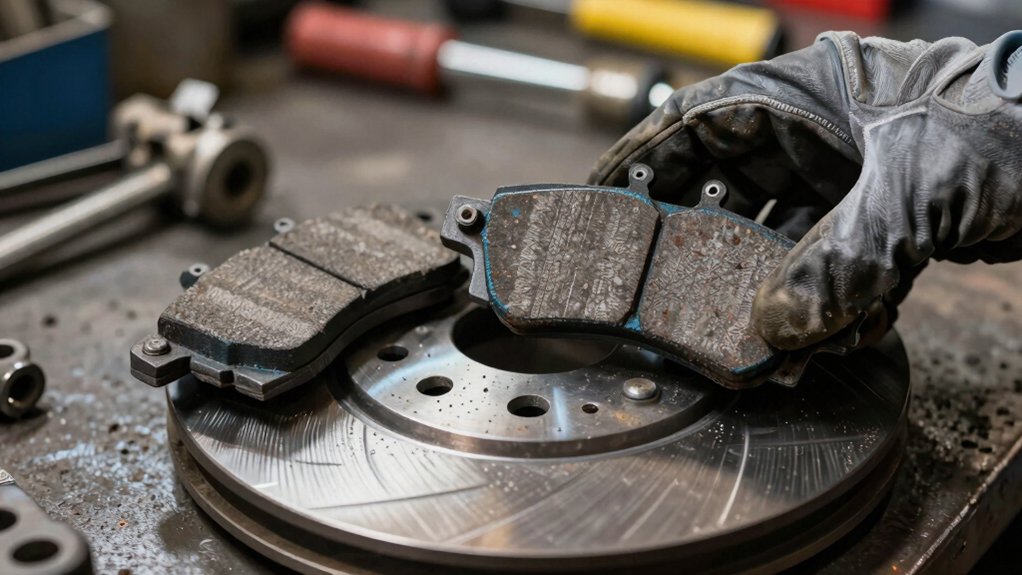
You should inspect your brake pads every 6,000–12,000 miles or at each tire rotation, measuring the thinnest point with calipers and comparing to manufacturer minimums. Check front and rear separately. Note uneven wear that suggests caliper drag.
Identify wear indicators: mechanical tabs, molded grooves, or electronic sensors. Listen for metallic chirps or dashboard alerts. Replace pads before sensors contact the rotor or minimum thickness is reached. Log measurements for trend analysis if you want more detail.
What Is Brake Pad Inspection?
- Measure pad thickness at the thinnest point with calipers every 6,000–8,000 km or at each tire rotation.
- Replace pads immediately when thickness reaches manufacturer minimum (often ~3 mm) or wear indicator contacts rotor.
- Inspect front and rear pads separately; record readings and compare to detect uneven wear or caliper drag.
- Check wear indicator type and location (mechanical tab, groove, or electronic sensor) during each inspection.
- Log thickness, indicator status, and next due inspection to predict service intervals and document trends.
Pad Thickness Comparison Chart
How thin is too thin? You’ll use the thickness chart to gauge pad durability and to time replacements before sensors trigger. Compare measured mm against vehicle type and material to decide action: monitor, plan, or replace. Note ceramic-metallic lasts longest; heavy-duty starts thicker. Pay attention to sensor placement; some activate at approximately 3 mm. Others rely on wear indicators or ECU flags. Inspect front and rear separately; uneven wear suggests caliper or drag issues.
Use professional measurement at the thinnest point for accuracy. Replace before critical zones to avoid metal-on-metal and rotor damage.
| Range (mm) | Condition | Action |
|---|---|---|
| 12–8 | New–Good | Track |
| 7–4 | Fair–Worn | Schedule |
| Critical–Dangerous | Immediate replace |
Minimum Pad Thickness Values
Why does minimum pad thickness matter? You need clear limits to maintain braking performance and safety. Minimum thickness dictates replacement intervals, prevents rotor damage, and sets measurable service criteria.
When you inspect pads, use calipers and measure the thinnest section, comparing to manufacturer minimum thickness values.
- Measure at the thinnest point; record values and compare against minimum thickness specs.
- Replace pads immediately if measurements approach the specified minimum thickness or if pad wear indicators contact the rotor.
- Use a consistent measurement technique and note uneven readings that suggest caliper or hardware issues.
- Log thickness values each inspection to track wear rate and predict replacement intervals.
Follow these procedures to ensure objective, repeatable pad life assessments.
Wear Indicator Location
Check the wear indicator type on each pad: mechanical tabs, electronic sensors, or molded visual grooves. This way, you know what signals to expect. Note the indicator’s location on the friction material or backing plate. Listen for the audible scraping that marks imminent replacement.
Use visible indicator wear or sensor alerts as service interval triggers. Schedule inspection or replacement when indicators show less than 3 mm remaining or an audible warning occurs.
Wear Indicator Types
Where are wear indicators located, and what types will you encounter on brake pads? You’ll see two primary wear indicator types: mechanical and electronic. Mechanical indicators are small metal tabs attached to the pad backing; as pad material wears to a critical thickness, the tab contacts the rotor and produces a distinct squeal, alerting you to reduced pad life.
Electronic indicators use a wired sensor embedded in the pad that closes or opens a circuit when thickness drops below a set point, illuminating a dashboard warning. Some systems combine both types for redundancy. When inspecting, verify the presence and condition of the indicator, ensure wiring and connectors are secure, and record pad life progression to schedule timely replacement.
Location On Brake Pad
How should you locate the wear indicator on a brake pad? You visually inspect the pad edge and backing plate for a stamped notch, groove, or attached metal tab; these indicate the designed wear limit. Start by removing the wheel or using an inspection hole. Then align your sightline with the pad surface at the caliper.
Note whether the indicator is integrated into the friction material or affixed to the backing plate; this depends on material composition and the manufacturing process. Measure pad thickness at the thinnest point relative to the indicator position. If the indicator contacts the rotor or aligns with the minimum thickness mark, schedule replacement. Document indicator type and location for future comparisons during routine inspections.
Audible Indicator Function
Curious how the audible wear indicator warns you before pads fail? You’ll hear a distinct metallic chirp or squeal when the thin wear tab contacts the rotor as pad material approaches minimum thickness. The audible indicator is positioned at the pad edge where it makes contact under progressive wear; this creates a reproducible sound signature that serves as a maintenance warning.
During routine inspections, confirm the tab’s presence, secure attachment, and correct orientation. A bent or missing tab defeats the warning. If you hear intermittent noise, log it and measure pad thickness immediately; don’t assume it’s cosmetic. Technicians use the sound to prioritize service, but you should still verify thickness and related hardware to ensure the indicator will function reliably until pads are replaced.
Visual Indicator Signs
The audible wear tab gives an early warning, but you should also inspect the pad and caliper assembly visually to confirm wear and indicator condition. Position the vehicle securely, remove the wheel when required, and note pad thickness at the thinnest point; less than 3 mm mandates replacement.
Look for built-in visual indicators: slots, chamfers, and stamped wear lines on the pad backing. Inspect caliper-mounted indicators and retainers for proper alignment and corrosion. Check for uneven wear patterns that signal caliper binding or hardware failure.
Record findings as maintenance reminders in your service log and compare to prior measurements to track wear rate. Photograph any anomalies and schedule professional evaluation if indicators show rapid or asymmetric deterioration.
Service Interval Triggers
Where should you look to spot service-interval triggers? Inspect the wear indicator location on each caliper and pad backing plate: it’s the primary service trigger. You’ll find mechanical tabs or electronic sensors positioned at the pad’s minimum-thickness line; these activate a warning or produce an audible rasp when material approaches critical limits.
Check both front and rear assemblies independently, since wear rates differ. Record measured thicknesses and indicator status using minimal terminology for clarity in service planning documentation. If a sensor shows continuity loss or a tab contacts the rotor, schedule pad replacement and rotor assessment immediately.
Include indicator checks at every oil change and tire rotation. Confirm them during annual professional inspections to maintain predictable, safe service intervals.
How Often Should You Check Your Brake Pad Inspection on a Bike?
You should inspect your brake pad inspection at least once a month for routine riders and before every long ride if you commute daily or ride in wet or dusty conditions. Catching wear early keeps repair costs low and prevents the cascading damage that turns a small component issue into a full drivetrain or wheelset replacement.
Frequently Asked Questions
How Often Should Brake Fluid Be Flushed and Replaced?
You should have brake fluid flushing and replacement intervals every two to three years. You’ll schedule a complete brake fluid flush to remove moisture and contaminants that impair hydraulic performance.
During service, technicians will verify fluid condition, hydration level and system pressure; they will replace fluid if degraded. If you notice warning signs such as a spongy pedal, warning light, or leaks, you should seek immediate replacement regardless of interval to maintain safe, reliable braking performance.
Can Uneven Pad Wear Indicate Caliper Failure?
Yes, uneven wear can indicate caliper failure. You should inspect for seized or sticking caliper pistons and slide pins. Additionally, check for uneven pad thickness and rotor scoring.
Measure pad thickness at the thinnest point; check caliper movement and brake fluid condition. Test for braking pull or vibration. If caliper components bind or leak, replace or rebuild the caliper. Furthermore, replace affected pads and rotors to restore even wear and proper function.
Do Ceramic Pads Require Different Inspection Intervals?
Yes, ceramic pads can influence inspection intervals. You should still follow standard inspection intervals. However, ceramic pads typically wear slower; therefore, you can rely on routine checks at oil changes and tire rotations, as well as annual professional inspections.
Adjust inspections if you drive harshly, in bad weather, or notice warning signs. Measure pad thickness at the thinnest point and replace when under 3mm. Document intervals based on observed wear rates.
When Should Rotors Be Resurfaced Versus Replaced?
You should resurface rotors when thickness, runout, and surface damage are repairable to OEM specs. Replace them if below minimum thickness, warped beyond machining limits, cracked, or with excessive scoring.
During service, perform a caliper inspection to ensure sliders and pistons move freely and won’t cause rapid wear. If resurfacing would remove too much material or compromise balance, replace the rotor to restore braking performance and safety.
How Do Driving Conditions Affect Inspection Frequency?
Driving conditions directly change inspection frequency: harsh roads, heavy traffic, rain or snow increase wear, so you’ll inspect brakes more often. Short trips, towing, or high-speed driving accelerate pad and rotor degradation; this prompts inspections every six months or sooner. Mild, steady driving can allow annual checks.
Assess driving patterns against manufacturer guidance. Schedule inspections before long trips or after severe weather to ensure reliable braking performance.
Which Brake Pad Inspection Interval Approach Is Right for Your Bike?
You’ve now got the precise criteria to monitor pad thickness, recognize wear indicators, and schedule service. Use the pad thickness chart and minimum values as your baseline; inspect the wear indicator location and type every oil change or 6,000–10,000 miles.
Rely on audible and visual signs to prompt immediate checks. Document readings and replace pads before they hit the minimum thickness to maintain braking performance, avoid rotor damage, and ensure consistent safety.
Related reading: How to Choose Disc Brake Pads Material — a closer look at this topic.