
What Is Stack and Reach on a Road Bike
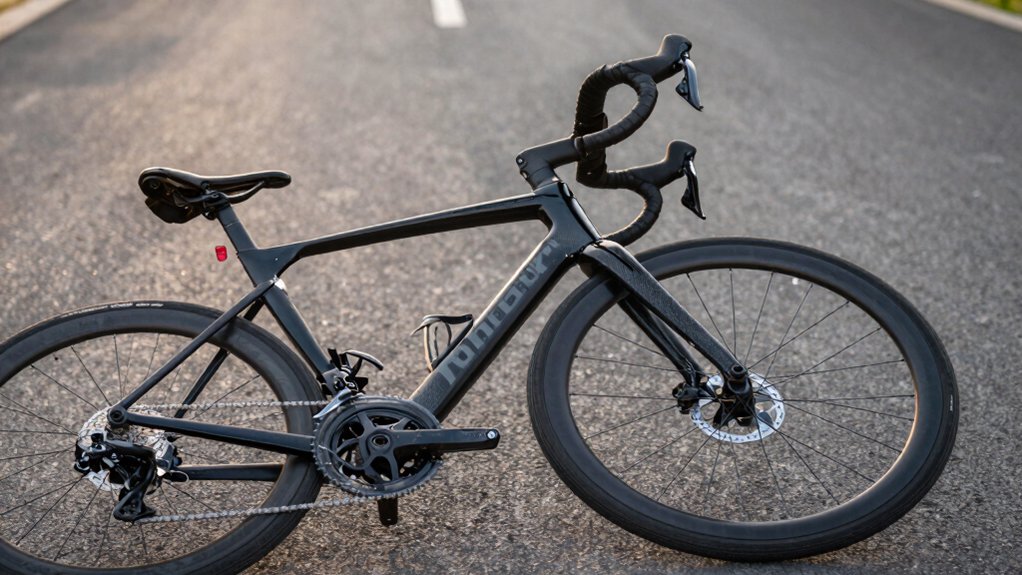
Stack and reach are the frame coordinates you’ll use to size and fit a road bike: stack is the vertical distance from the bottom‑bracket center to the head‑tube top.
reach is the horizontal distance between the same two points.
They let you compare frames independent of stem or bar setup.
Predict torso angle and handling.
And guide spacer, stem, and saddle tweaks for comfort and control.
Keep these as your reference, and you’ll learn how to apply them practically.
Quick Overview
- Stack is the vertical distance from the bottom-bracket center to the head-tube top center, defining front-end height.
- Reach is the horizontal distance from the bottom-bracket center to the head-tube top center, defining cockpit length.
- Frame stack/reach use head-tube top; effective values use hood position (bars) as the reference.
- Higher stack raises the front end and opens the torso. Lower stack increases torso lean and shoulder load.
- Longer reach lengthens cockpit and shifts weight forward. Shorter reach shortens cockpit and shifts weight rearward.
What Stack and Reach Measure (Definitions)
What exactly do stack and reach measure? You treat the bottom bracket center as the fixed X-Y origin for both definitions: stack is the vertical (Y) distance from that origin to the head-tube top center; reach is the horizontal (X) distance to the same point.
These frame origin definitions let you compare geometries independent of stem or handlebar changes. Report values in millimeters; if you need inches, apply unit conversions (1 in = 25.4 mm) before computing ratios. Stack influences front-end height relative to pedals; reach sets cockpit length and rider stretch.
Use the head-tube top center for frame stack/reach and specify whether values are frame (to head-tube) or effective (to hood position) to avoid ambiguity in fit calculations.
How to Measure Frame Stack and Reach : Step‑by‑Step
Want a repeatable method for getting accurate frame stack and reach? You’ll perform a DIY measurement using simple tools and strict tool calibration. Place the bike with the bottom bracket parallel to a level floor and the head tube vertical. Confirm levels and calipers are calibrated before starting.
Locate the bottom bracket center as the origin. Measure vertical (stack) to the head-tube top center and horizontal (reach) to the same point, excluding stem. Record frame values; then repeat at hood position for effective stack and reach, subtracting bottom-bracket offsets if needed. Verify measurements twice for consistency.
- Confirm tool calibration: spirit level, tape, caliper
- Define bottom-bracket center precisely
- Measure vertical and horizontal distances
- Repeat and average measurements for accuracy
Stack vs. Reach: What They Mean for Your Fit
Now that you can measure frame and effective stack and reach reliably, use those numbers to shape your fit. Stack sets your front-end height relative to the pedals; reach sets cockpit length and rider stretch. Compare frame and effective values to quantify required stem length, spacer stack, and saddle fore/aft adjustments.
Use stack/reach ratio to classify aggressiveness. Select higher ratios for upright endurance setups and lower ratios for race posture. Account for aesthetic trends that push compact, slammed cockpits but do not sacrifice biomechanical requirements.
Verify brand parity when switching models: identical nominal sizes can have different stack/reach and headset cup contributions. Measure on your body in the riding position you intend. Then implement stem, spacer, and saddle changes incrementally to reach target geometry.
How Stack Affects Posture and Comfort
How high your frame’s stack is will directly change your spinal angle and shoulder load, so choose it to balance comfort and power. You’ll notice a higher stack opens your torso, reduces lumbar flexion, and shifts load from shoulders to hips. A lower stack increases torso inclination, raising shoulder and neck posture demands.
Combine stack choice with ergonomic padding and selective spacer/stem adjustments to tune pressure points. Monitor neck posture for prolonged rides; small stack changes alter cervical angle substantially.
- Higher stack: reduced spinal flexion, less shoulder strain
- Lower stack: increased aerodynamic torso angle, more shoulder load
- Ergonomic padding: mitigates localized pressure at bars/saddle
- Adjust stem/spacers: fine-tune cervical and lumbar alignment
How Reach Changes Cockpit Length and Handling
Because reach sets the horizontal distance from your bottom bracket to the head tube, it directly determines cockpit length and how stretched you sit over the front wheel. A longer reach increases cockpit length; this shifts your weight forward and raises the effective trail moment you manage through the handlebars. You’ll feel quicker steering response at speed but reduced low-speed maneuverability.
Shorter reach compacts the cockpit and moves weight rearward; this yields calmer steering with more precise low-speed control. Reach also changes cockpit leverage: a longer cockpit increases leverage on steering inputs and front wheel traction, while a shorter cockpit reduces leverage and load on the front tire.
When you evaluate frames, use measured reach to predict handling differences before altering stem length or spacers.
Use Stack:Reach Ratio and Simple Adjustments to Match Your Goals
When you’re choosing or tuning a road bike, use the stack:reach ratio as a quick indicator of intended posture and handling. Then apply simple stem, spacer, and seat adjustments to reach your target position. You’ll compare frame ratios to your desired trade-off between comfort and aerodynamics. Be aware of ratio pitfalls like size-dependent shifts and misleading head-tube vs hood references.
Start with geometry. Then make adjustment tweaks: change stem length/angle for reach, add/remove spacers for stack, alter saddle fore-aft for effective reach, and rotate saddle/handlebar for minor fit. Verify with short test rides and incremental changes.
- Check frame ratio against your target posture.
- Modify stem length or angle to adjust reach.
- Use spacers to fine-tune front-end height.
- Adjust saddle position to normalize cockpit length.
Frequently Asked Questions
You’ll find concise answers to common stack questions, reach questions, fit adjustment tips, and measurement troubleshooting below. Use the FAQs to compare stack:reach ratios, decide stem/spacer changes, and verify measurement technique against the bottom-bracket origin.
If something still looks off, follow the troubleshooting steps to isolate headset cups, BB offsets, or corner-measure errors.
Common Stack Questions
How high should your handlebars sit relative to the bottom bracket? You should set handlebar height based on measured stack and functional needs, not on stack myths or measurement myths. Use frame stack to know head-tube top height from the bottom bracket center; then factor in headset cups, spacers, and stem to get effective stack at the hoods.
Verify by measuring from a fixed corner or using bike geometry tools. Confirm frame stack excludes stem and includes external headset cups. Compute effective stack at hood position by adding spacers and stem rise. Cross-check measurements to avoid common measurement myths (wrong reference points). Adjust spacers or stem angle rather than assuming a different frame geometry.
Common Reach Questions
Having covered how stack defines handlebar height, reach answers how far that height sits from your pedals and controls. You’ll use reach to quantify cockpit length and rider stretch; it alters length perception and influences rider balance. Common questions focus on measurement origin, effective vs frame reach, and how reach scales with size.
You should measure to head-tube top for frame reach and to hood position for effective reach. Longer reach forces a more stretched posture; shorter reach compacts your torso and affects weight distribution.
| Question | Short Answer |
|---|---|
| What is reach? | Horizontal from BB center to head-tube/top |
| Frame vs effective? | Frame: head-tube; Effective: hoods |
| Does reach affect balance? | Yes, shifts weight fore/aft |
| Sizing rule? | Compare within model sizes |
Fit Adjustment Tips
Wondering how to fine-tune cockpit fit without changing the frame? You can correct reach and stack-related issues by adjusting components and contact points. Small changes preserve geometry while altering effective stack and reach.
- Shorten or lengthen the stem; rotate to change effective reach and drop.
- Add or remove headset spacers; adjust stack height precisely.
- Reposition the saddle fore/aft and set saddle tilt for pelvic stability and accurate pedaling.
- Change bar wrap or flip bars for different hand positions and hood reach.
Prioritize incremental changes and measure ride feel after each tweak. Use a tape measure and plumb line from bottom bracket to hood to quantify effective reach and stack adjustments.
Avoid radical component swaps that mask true fit needs. Iterate until power, comfort, and handling align.
Measurement Troubleshooting
After you tweak stem length, spacers, and saddle position, you’ll usually need to verify stack and reach measurements to confirm the fit changes behaved as expected. Check common error sources: mislocating bottom bracket center, measuring to stem instead of head tube top, and neglecting external headset cups.
Use a rigid straightedge and digital calipers or a laser distance tool to reduce parallax and alignment mistakes. Repeat measurements from the same bike orientation; placing the bike diagonally in a corner yields consistent wall offsets. Watch for calibration drift in electronic tools; re-zero before each session and validate against a known gauge.
If repeated readings vary beyond a few millimeters, document technique, swap instruments, and re-measure to isolate user versus instrument error.
Conclusion
Stack and reach give you an exact, reproducible description of a frame’s vertical and horizontal cockpit geometry. Use measured stack to predict saddle-to-bar height and reach to set effective top-tube length and steering posture.
Compare frames by stack:reach ratio to match intended riding style. Then make small stem, spacer, or saddle adjustments to fine-tune fit. Prioritize reach for handling and stack for comfort. Iteratively adjust until posture, power, and steering balance.