
Tubeless Tire Losing Air Troubleshooting
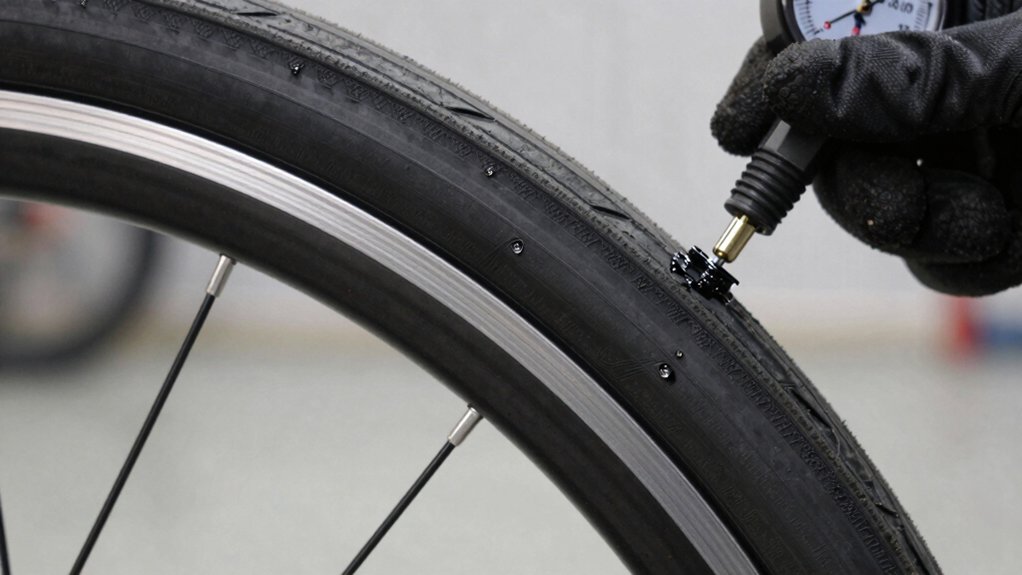
If your tubeless tire’s losing air, first check peak leak rate: a small PSI drop over weeks is normal; a drop of more than 30–40 psi per month is a red flag. Reseat the tire and rim tape.
Tighten and torque the valve core, clear debris, and use quality cores. Inspect sealant: if it’s not sloshing or is crusted, add fresh volume and spin or ride to distribute; sealants cure in 2–6 months, and faster in heat.
Follow these steps, and you’ll find what to fix next.
Quick Overview
- Measure PSI drop rate: >40 psi/month (road 23–25mm) or >30 psi/month (32mm) indicates urgent inspection.
- Check rim tape, bead seating, and remount the tyre if fast leakage is observed.
- Tighten or replace valve core; clean threads; and apply specified valve-core torque before retesting with soapy water.
- Inspect sealant: Remove valve core to check slosh. Replenish and ride 10 minutes to redistribute if low or non-fluid.
- Replace sealant every 2–6 months (up to 12 in cool/humid); sooner if thickening, crusting, or persistent pressure loss occurs.
Peak Leak Rate Chart
How fast is “fast”? You’ll use peak leakage thresholds to decide if your tubeless setup needs work. Check PSI drop against expected ranges: road 23–25mm, 40+ psi/month is a red flag; 32mm, 30+ psi/month. MTB/gravel can lose 20 psi in days with tape/valve faults.
| Tire Category | Peak Leakage Indicator |
|---|---|
| 23–25mm road | >40 psi/month |
| 32mm | >30 psi/month |
If you see a fast drop (high leak), remount and inspect rim tape. Tighten valve base and add sealant per volume table. For inactivity, monitor weekly; for rides, expect redistribution of sealant. Use these clear limits to triage tubeless setup faults and prioritize repairs.
Valve-Core Torque Spec
Peak leakage rates tell you when to inspect valve hardware, because a loose or over-tightened valve core can mean steady pressure loss or a ruined core. You’ll check valve core torque to stop a persistent leak and dismiss any leak rate rumor that suggests overtightening fixes everything. Use a small torque wrench or calibrated valve tool and aim for manufacturer guidance: typically low torque values; many presta cores need only finger-tight plus a quarter turn.
- Confirm core seating before torque: remove debris, dry threads.
- Apply measured valve core torque; avoid hand-only force guesses.
- Recheck for bubbles with soapy water; monitor overnight pressure.
- Replace stripped or damaged cores; use quality cores rated for tubeless duty.
Sealant Cure Time Limits
You need to track how long your sealant remains effective. Most formulas start curing within weeks and can dry out completely in 2–6 months depending on climate and use. Temperature accelerates cure: hot, dry conditions speed it up and cold, humid conditions slow it down. Therefore, check levels more often in heat and consider sealants with anti-drying chemistry or rapid-cure additives if you ride hot and infrequently.
Distinguish cure from surface drying; cure involves losing liquid properties and sealing ability. Replenish or replace when sealant no longer sloshes or bubbles on punctures.
Sealant Cure Timeframes
Because tubeless sealants dry out on a predictable schedule, you should treat cure timeframes as a maintenance interval. Most sealants start to thicken within 2–6 months depending on climate and riding frequency; they will stop sealing effectively once they’ve gelled or separated. Check sealant application volume after two months in hot, dry conditions and every 3–6 months otherwise.
Remove valve core to inspect fluid level and add fresh sealant if you see no slosh. Track rim tape integrity when resealing: contaminated or displaced tape accelerates dry-out by letting air exchange. After adding sealant, spin or ride for 10 minutes to distribute it and verify sealing.
Replace fully gelled sealant; topping up won’t recover separated or crusted products.
Temperature Effects On Cure
How does temperature change sealant cure times, and what limits should you expect? You’ll find cure rate is temperature-dependent: warm conditions accelerate polymerization; cold slows or halts it. At 20–30°C sealant often gels in minutes to hours. Below ~5°C expect multi-day or no effective cure.
That affects two word discussion ideas like “cold storage” and “heat soak” when diagnosing losses. In practice, work in a controlled environment for a reliable tubeless setup. Warm the wheel or store sealant indoors before service. If you suspect incomplete curing, inspect for dry clumps and verify rim tape integrity. Poor tape can mimic uncured sealant leaks.
Adjust monitoring intervals: check pressure sooner in heat, later in cold, and top up if needed.
Maximum Effective Age
When should you replace tubeless sealant to keep it effective? You should treat sealant age as a hard maintenance parameter: most formulas lose active sealing properties in 2–6 months, with extremes reaching 12 months in cool, humid storage. Track installation date and inspect every 2–3 months. Record temperature and ride frequency because subtopic relevance to performance is significant.
Replace sealant when you see thickening, crusting, or persistent pressure loss despite correct bead and valve function. Don’t rely on unrelated constraints like storage convenience or partial-top-ups to justify skipping a full refresh. When you replace, remove old residue if hardened. Then add fresh volume per manufacturer specs and ride 10 minutes to distribute. Consistent schedule prevents dried-sealant failures.
Curing Versus Drying
You’ve learned when to replace sealant. Now look at how it changes inside the tire. Understand curing versus drying: drying removes solvent or carrier, leaving solids that can harden and stop flow. Curing is a chemical cross-linking that permanently solidifies sealant in place. Both reduce sealing ability, but mechanisms differ and affect service life.
Temperature effects accelerate both processes. Heat speeds evaporation and chemical reactions, causing sealant to dry or cure faster. Cold slows them and thickens remaining fluid, reducing mobility. Monitor sealant volume every 2–3 months in hot, dry climates and replace sooner if you see clumps or no slosh.
When inspecting, remove valve core to check liquid level and consistency before adding fresh sealant.
Rapid Cure Additives
Why does some sealant harden almost instantly while others stay fluid for months? Rapid cure additives accelerate polymer cross-linking when they contact air and moisture at a puncture, creating an instant plug. You’ll choose formulations based on the trade-off between immediate sealing and long-term maintenance: high rapid cure content shortens sealant lifespan by promoting solids buildup and clogging valves or bead seats.
For predictable performance, match additive level to your climate and ride frequency. Use more rapid cure in wet, low-speed urban use; use less in hot, dry, or high-mileage riding. Monitor sealant condition every 2 to 3 months, inspect for crust or separation, and replace before solids dominate. Treat rapid cure as a performance parameter, not a universal solution.
Frequently Asked Questions
Why Does My Tubeless Tire Burp Under Cornering?
A tubeless tire burps under cornering because your tubeless setup lets air escape when the bead momentarily unseats or sealant fails at high lateral loads.
Burp causes include low pressure, improper bead seating, incompatible rim-tire fit, worn or dry sealant, or damaged tape or valve sealing. Raise pressure slightly; reseat the bead; check rim tape and valve; refresh sealant; and ensure rim-tire compatibility to stop bead unseating and eliminate burping.
Can Latex Sealant Damage Rim Tape Over Time?
Yes, latex sealant can affect rim tape durability over time. You’ll find that dried sealant residue may degrade some tapes, weaken adhesive, or attract dirt that shortens service life.
For tubeless maintenance concerns, inspect tape regularly; replace suspect tape; and use sealant-compatible high-quality tape. When refreshing sealant every few months, clean the rim bed and reseat tape as needed to preserve a reliable seal and avoid failures.
Is CO2 Safe to Seat Tubeless Tires?
Yes, CO2 is safe to seat tubeless tires when used properly. You’ll get a quick burst of pressure to pop the bead; however, CO2 safety depends on firm, controlled inflation and checking valve cores.
Be aware that CO2 won’t protect against latex sealant damage over time. Sealant can still dry or react with rim tape. After seating, add or top up sealant, ride briefly, and verify there are no leaks.
How Do Temperature Changes Affect Tubeless Pressure?
You’ll see pressure shift because temperature drift changes air volume inside the tire: As temperature rises, air expands and pressure increases; when it falls, pressure drops.
Expect roughly 1–2% pressure change per 3°C (5°F) for typical volumes. That affects ride feel and sealant behavior, so check pressures with temperature swings, adjust inflation accordingly, and account for lower sealant effectiveness if temperatures drop appreciably.
Can Tire Inserts Hide Slow Tubeless Leaks?
Yes, inserts can hide slow tubeless leaks because they fill voids and reduce tire deformation, slowing air loss; that’s inserts effectiveness.
You’ll still rely on sealant longevity to plug small punctures. Dried or insufficient sealant won’t stop leaks even with an insert. Inspect for bead, valve, or tape leaks before blaming inserts.
Monitor pressure regularly, replenish sealant every few months, and fix visible leaks rather than masking them.
Conclusion
You’ve gone through peak leak rates, valve-core torque, and sealant cure windows. Now act. Tighten the valve core to spec, confirm the bead’s sealed, and use fresh sealant within its effective age. Allow the specified cure timeframe at ambient temperature. Remember, cure accelerants only suit severe leaks and short trips.
If slow loss persists after proper torque and cure, inspect bead seating, rim tape, and spoke holes. Replace components that repeatedly fail; you’ll stop most air loss.
