Fat Bike Winter Maintenance Guide
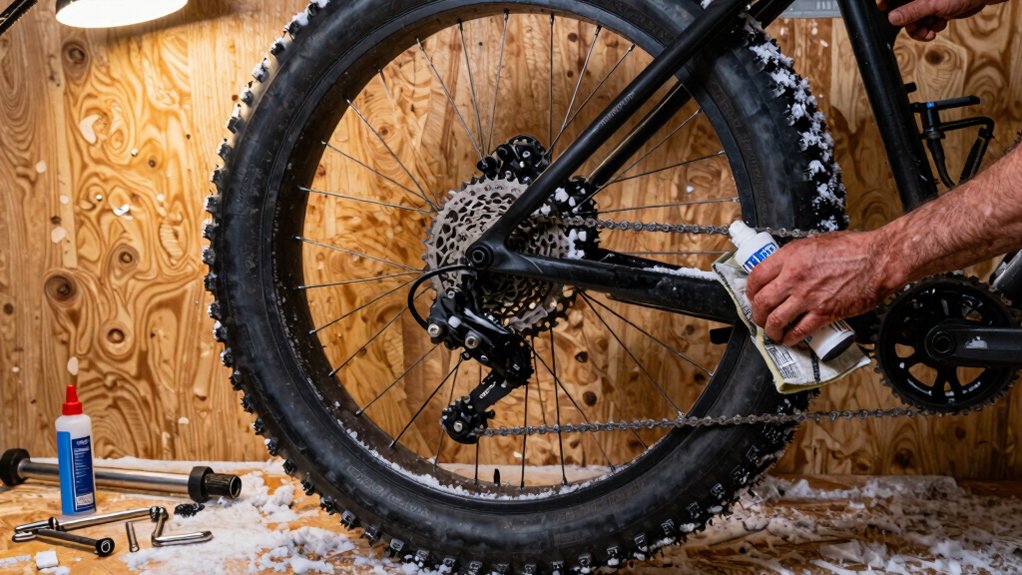
You’ll prep your fat bike by lowering tire pressure for soft snow (4–8 psi) and using 10–15 psi on hardpack or ice.
Check pressures before and after a short warm-up.
Rinse salt off immediately; degrease drivetrain selectively.
Dry thoroughly and use a salt‑resistant wet lube, wiping excess.
Inspect and clean rotors and pads.
Push back pistons and test brakes at low speed.
Store indoors, remove e-bike batteries, and monitor humidity.
Keep going for a full step‑by‑step routine.
Quick Overview
- Reduce tire pressure to 4–8 psi for soft snow, or 10–15 psi for packed ice, and check before every ride.
- Rinse salt immediately after rides. Dry thoroughly, and store indoors in a low-humidity, temperature-controlled spot.
- Degrease drivetrain with a bike-specific cleaner; rinse at low pressure, dry, then apply silicone-based salt-resistant wet lube and wipe excess.
- Inspect brake pads and rotors for glazing or contamination. Clean rotors with isopropyl alcohol, and test brakes at low speed.
- For e-fat bikes, remove the battery overnight. Inflate tires to resting winter pressure, and hang or rack the bike to protect tires and rims.
Quick Winter Prep Checklist for Fat Bikes
Start by checking the essentials so your fat bike’s ready for winter riding: set tire pressure between 4–8 psi for snow. Raise to 10–15 psi if you’ll hit hardpack or pavement. Fit an accurate low-pressure gauge and inspect tires for cuts or worn knobs.
Next, confirm brakes, rotors, and pads are clean and responsive. Listen for squeals and address contamination. Degrease and relube the chain with a winter-grade wet lube resistant to salt. Tighten bolts, check spokes and bearings, and wipe salt from the frame after rides.
Pack an emergency kit with basic tools, patch supplies, a compact pump, and a space blanket. Finally, plan clothing: bring warm layers, waterproof outerwear, and gloves to maintain dexterity and safety.
Set Fat Bike Tire Pressure for Snow, Ice, and Mixed Surfaces
Because terrain and temperature change how your fat bike interacts with snow and ice, you should set tire pressure deliberately for each condition: lower pressures (4–8 psi) on soft snow for flotation and grip; higher pressures (10–15 psi) on packed or icy hardpack to avoid rim strikes.
Check pressures before every ride. Tire temperature will rise as you ride, so recheck after a short warm-up for consistent feel. Use an accurate low-pressure gauge and follow manufacturer bead seating notes when mounting or remounting tires to avoid leaks. Monitor for sidewall deformation and pinch-flat risk.
On mixed surfaces, start in the mid-range and adjust cautiously while stopped. Prioritize safety: inadequate pressure reduces control and increases crash risk. Be precise and conservative.
Clean and Lube Your Drivetrain for Winter Riding
Having the right tire pressure makes riding safer, but your drivetrain also needs attention to keep shifting crisp and prevent corrosion from salt and slush. You’ll start by removing gross grime and using a targeted degreasing technique: apply bike-specific degreaser to the chain, cassette, and jockey wheels. Run the chain through several gear rotations, then rinse with low-pressure water.
Dry thoroughly with a clean cloth to avoid trapped moisture. Inspect for wear and replace any rusty links or frayed cables. Choose a silicone-based wet lube formulated for salt resistance; apply dropwise to each chain link while pedaling backward. Then wipe excess to maintain chain cleanliness.
Recheck shifting under load and store the bike dry to prevent winter corrosion.
Keep Fat Bike Brakes Reliable in Cold and Wet Conditions
Maintaining reliable brakes in cold, wet conditions means you’ve got to inspect, clean, and adjust them more often than during fair-weather riding. Check pads for glazing, contamination, and uneven wear. Replace if glazing resists light sanding.
Clean rotors with isopropyl alcohol after rides to remove grime that causes squeal and reduces pad cooling. Open calipers, remove pads, and flush pistons on hydraulic systems. Push pistons back gently to clear debris.
Watch for caliper corrosion at mounting bolts and around pistons. Treat light surface rust and replace corroded hardware. Bleed fluid if lever feel is spongy or water intrusion is suspected. Test brakes at low speed before descending.
Carry a small brake kit with spare pads, cleaner, and basic tools on winter outings.
Wash, Protect, and Store Your Fat Bike for Winter
How will you keep salt, slush, and freeze-thaw puddles from wrecking your bike over the long winter? Rinse salt off immediately, use a mild degreaser on the drivetrain, then dry every nook to prevent corrosion. Lube the chain with a salt-resistant wet lubricant and wipe excess.
Store the bike indoors where garage humidity stays low; hang it or use a stand so water can’t pool in bearings. Seal entry points and check for pest prevention: mice love saddlebags and foam grips.
- Rinse salt, degrease, dry.
- Apply wet lube, remove excess.
- Lower humidity, elevate bike, ventilate.
- Seal storage, inspect for pests regularly.
Inspect bolts and brakes before each ride; winter damage builds fast.
Frequently Asked Questions
You’ve got practical questions about tire pressure, chain care, e‑bike battery handling, and quick storage between rides: here’s what to check and why. For traction, use low pressures on soft snow and higher on hard surfaces while monitoring with an accurate low‑pressure gauge. For the drivetrain, choose a silicone‑based wet lube and remove old grime before re‑lubricating.
If you ride an e‑bike, keep the battery stored and charged per manufacturer guidance. Always dry and lightly clean the bike after rides to prevent corrosion.
Tire Pressure Tips
Wondering what pressure you should run in snow, ice, or mixed winter surfaces? You should adjust for traction and safety: use lower Snow PSI on soft snow and higher pressure on hardpack or pavement. Check pressure before every ride, account for Cold inflation shrinkage, and use an accurate low-pressure gauge. Follow manufacturer ranges and don’t exceed limits.
- Soft snow: 4–8 psi for maximum footprint and grip.
- Mixed surfaces: 8–10 psi to balance rolling resistance and traction.
- Hardpack/pavement: 10–15 psi to protect rims and maintain handling.
- Monitoring: Check pressure multiple times per week in freezing temps, and re-inflate after warming.
Inspect tires for cuts. Maintain recommended ranges, and prioritize safe control over speed.
Lubrication And Corrosion
Keep your drivetrain moving smoothly and corrosion-free by using the right lubricants and cleaning routine for winter conditions. You’ll strip old grime with a degreaser, rinse salt off immediately, and dry components thoroughly to prevent pitting.
Choose wet silicone-based lubes with salt corrosion resistance and corrosion inhibitors to protect links and derailleurs. Match lubricant viscosity to conditions: slightly higher viscosity holds up in slush and churn but won’t gum in deep cold; very low viscosity runs off.
Apply sparingly, wipe excess, and cycle the chain to work oil into rollers. Inspect cables and housings for water ingress and replace if frayed. After rides, wipe exposed metal, reapply light protection, and store the bike dry to avoid accelerated corrosion.
Battery Care For E-Bikes
Because cold and moisture affect lithium batteries differently than other bike parts, you should treat e-bike battery care as a top winter safety task: monitor battery temperature and follow precise charging routines to preserve range and prevent damage. Keep the pack dry; avoid deep discharges; and limit extreme cold exposure during rides.
- Store and charge at moderate temperatures to protect battery temperature-sensitive cells.
- Avoid full 0% discharges. Maintain 30–80% state of charge to extend charging cycles.
- Warm battery briefly before heavy use if it’s been in the cold. Don’t force-ride a cold pack.
- Inspect seals, connectors, and casing after wet rides. Dry and clean contacts promptly.
Follow manufacturer guidelines and log charging cycles to detect performance loss early.
Storage Between Rides
Between rides, store your fat bike in a dry, temperature-controlled spot and you’ll prevent corrosion, battery performance loss, and component damage from repeated thaw/freeze cycles. Keep humidity low; monitor indoor humidity with a simple hygrometer and avoid basements or unheated garages where moisture collects.
Maintain temperature consistency: don’t let the bike experience wide swings between cold nights and warm days. Wipe salt and slush off before storing, dry all contact points, and remove the battery overnight if you ride an e-fat bike. Inflate tires to a resting pressure within the recommended winter range, check drivetrain lubrication, and hang or rack the bike to keep tires off rough floors.
These steps reduce corrosion, preserve shifting and braking performance, and minimize safety risks on your next ride.
Conclusion
Winter riding rewards you, but it demands careful upkeep. Follow the checklist: adjust pressures for conditions, keep the drivetrain clean and lubed, and inspect brakes and cables before every ride.
Rinse salt and grit, apply protective coatings, and store the bike dry and covered. Regular checks prevent failures and keep you safe; make these tasks routine so your fat bike stays reliable, performs well on snow and ice, and gets you home without surprises.