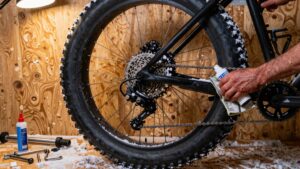
Fat Bike Corrosion Prevention in Winter

You’ll stop winter salt and slush wrecking your fat bike by prepping, rinsing, drying, and lubricating consistently: wipe and lube the chain before rides.
Rinse low-pressure after salty routes; blot and spin to shed water.
Then apply wet oil and a protective aerosol on pivots and bolts.
Fit full-coverage fenders and seal seams.
Store the bike in a warm ventilated spot with a dehumidifier or desiccant.
Inspect greased bearings weekly.
Keep going and you’ll find detailed step-by-step care.
Quick Overview
- Wipe, rinse off salt/slush after rides, and dry thoroughly to prevent corrosive residue.
- Use wet, oil-based chain lube and reapply weekly in heavy salt conditions.
- Spray exposed bolts, pivots, derailleurs, and spokes monthly with a corrosion inhibitor.
- Fit full-coverage fenders and seal seams to minimize salt and moisture hitting frame and components.
- Store the bike in a warm, ventilated space with dehumidifiers or desiccants to avoid condensation.
Quick Winter Corrosion Checklist for Fat Bikes
A quick winter corrosion checklist helps you focus on the high-impact actions that keep a fat bike running through salt, slush, and freeze–thaw cycles. You’ll wipe the chain after every ride to remove salt and moisture. Then inspect chain alignment to prevent uneven wear that traps grime.
Rinse the bike when you’ve crossed salted roads or brine; pay attention to bearings, bottom bracket, and brake areas where ice risk forms. Apply wet lube to the chain and moving parts at least weekly in harsh conditions. Spray a protective aerosol monthly on exposed metal.
Store the bike in a warm, dry spot until fully dry. Replace or re-grease corroded parts promptly to stop progression.
Prep Your Bike Before Cold, Salty Rides
Before you head out into salty, freezing conditions, give your fat bike a focused pre-ride check so you don’t bring corrosion problems home: wipe and lube the chain, spray exposed bolts and pivots with a protective oil, and rinse off any road salt. Fit full-coverage fenders or mudguards when possible to cut slush spray.
Check tire pressure for traction without overinflating; lower pressures help grip soft snow but pick a value that avoids pinch flats. Inspect brake surfaces, cables, and headset for loose or exposed metal, and apply a light aerosol protectant to vulnerable spots.
Choose gloves that allow firm control while keeping moisture off controls. Wet hands increase salt transfer. Carry a small lube and multi-tool for quick roadside protection.
Rinse and Dry After Every Ride
Rinse off salt and grime as soon as you get indoors, then dry every exposed surface thoroughly to stop corrosion from starting. You’ll follow a simple rinse protocol: use low-pressure warm water to wash frames, wheels, and drivetrain, focusing on areas where salt accumulates: bottom bracket, chainstay, and hubs. Avoid blasting bearings; let gentle flow carry contaminants away.
After rinsing, employ a systematic dry technique: blot chain and cassette with a rag, spin wheels to shed water, and use compressed air or a dry towel for hard-to-reach spots. Finish by parking the bike in a warm, ventilated area so residual moisture evaporates. Consistent rinsing and drying prevents salt-driven rust and extends component life.
Choose Lube : What to Use and How Often
Choosing the right lube and sticking to a schedule will keep your drivetrain moving smoothly and resist winter corrosion. Pick a wet, oil-based chain lube for best corrosion resistance in salty, slushy conditions; dry lubes won’t hold up. For lube selection, prioritize water-displacing formulas labeled for winter or “wet” use and a compatible aerosol for quick protective sprays.
Set application frequency: Lube the chain at least three times monthly, or weekly if you ride in heavy salt or slush. Wipe the chain after every ride; rinse the bike when exposed to road salt. Then reapply lube once dry. Don’t forget cassette, derailleurs, pivot bolts and lever clamps—light lubrication weekly in harsh conditions prevents rust and keeps shifting crisp.
Fenders, Sealants, and Sprays That Block Salt
Fenders, sealants, and protective sprays form the first line of defense against salty spray. Choosing the right combination will cut corrosion risk and extend component life. You’ll prioritize fender effectiveness by fitting full-coverage guards that reduce slush on the chainstay, hubs, and brake area. Even on fat bikes, close-fit mudguards make a measurable difference.
Apply sealants to seams, cable ports, and exposed threads. Check sealant performance on metal-to-metal joints and reapply where wear appears. Use aerosol corrosion inhibitors on pivots, derailleurs, and spokes after cleaning; they repel moisture without gumming moving parts. Combine a durable wet lube with a protective spray on non-chain parts for added barrier.
Keep products compatible with paint and rubber, and recoat after heavy salt exposure.
Weekly Inspection Checklist : What to Replace and When
You’ve already reduced a lot of salt exposure with fenders, sealants, and sprays. Now make weekly inspections a habit so you catch wear before it becomes failure. Each week, check chain, cassette, cables, brake pads, bearings, and spokes.
Replace chain at manufacturer replacement intervals or earlier if stretch and pitting appear. Swap brake pads when material is under 1.5–2 mm or contaminated by salt. Inspect cable housings and replace frayed or corroded sections immediately. Re-grease or replace wheel and headset bearings when roughness or play shows.
Keep a small kit of tooling requirements: chain checker, torque wrench, hex set, cable cutters, bearing press or appropriate cups. Log replacements and dates so you track winter turnover and plan parts purchases.
Frequently Asked Questions
Got questions about winter care? You’ll learn a simple post-ride cleaning routine, how to protect against salt and rust, exactly when and what to lube on your drivetrain, and the best storage and drying steps to prevent corrosion.
Ask anything specific and we’ll cover practical, step-by-step answers.
Winter Cleaning Routine
When you ride in salt, slush, or wet winter conditions, a short, consistent cleaning routine prevents rust and keeps shifting and braking reliable. After every salty ride, rinse quickly to remove grit. Then use a degreaser with proper solvent selection for drivetrain grime. Wipe the chain and cassette; inspect brakes and cables for ice buildup and re-lube promptly.
Maintain drying discipline: towel-dry tight spots, run pedals to spin out water, and let the bike warm in a dry space before storage.
- Rinse and spray degreaser on chain/cassette.
- Wipe, brush, and remove residual salt from bolts and pivot points.
- Towel-dry, apply wet lube, and store in a warm area.
Salt And Rust Protection
Keeping up the winter cleaning routine sets you up to answer the most common salt-and-rust questions riders ask. You’ll prevent salt penetration by rinsing after rides, drying thoroughly, and using protective sprays on exposed joints. Watch dissimilar metals: salt plus moisture speeds galvanic corrosion; so isolate fittings with grease or protective tape.
Inspect bearings, spokes, and fasteners frequently. Replace or re-grease compromised parts. Use full-coverage fenders and avoid salted roads when possible.
| Question | Quick Fix | Frequency |
|---|---|---|
| Salt on frame? | Rinse + dry, protect edges | After salty rides |
| Seized bolt? | Apply penetrating oil, heat | As needed |
| Electrolytic rust? | Isolate metals, re-grease | Inspect monthly |
Follow these steps and you’ll minimize salt damage and extend component life.
Lubrication Tips For Drivetrain
A solid lubrication routine keeps your drivetrain shifting smoothly and stops winter corrosion before it starts. Follow a simple schedule of rinse, dry, lube, and wipe to get the best results. You’ll clean salt and grit, dry all parts, then apply appropriate lube.
Prioritize viscosity selection: thicker wet lubes resist salt spray; thinner oils penetrate chain pins faster. Consider dry lubrication for dry, cold days to avoid attracting abrasive grit. Focus on cassette, chain, jockey wheels, and derailleur pivots. Apply sparingly, run the drivetrain to work lube in, then wipe excess.
- Inspect and clean before lubing.
- Choose lube by conditions (viscosity selection).
- Wipe excess; reapply regularly.
Lube moving bolts weekly in harsh winter riding.
Storage And Postride Care
If you bring your fat bike inside and dry it promptly, you’ll stop most winter corrosion before it starts. After a ride, wipe down the frame, chain, cassette, brake calipers, and hubs to remove salt and slush. Rinse only when necessary; then wipe dry and apply wet lube to the chain. Store the bike in a warm, ventilated area, such as a mudroom or heated garage, to allow evaporation and reduce condensation.
Use humidity control, such as desiccant packs or a dehumidifier, where moisture accumulates. Keep temperature zoning in mind: avoid cold spots that create freeze-thaw cycles on metal. Inspect and grease exposed bolts, bearings, and lever clamps before storing.
Check tires and cables weekly during heavy salt exposure.
Conclusion
You’ve got a simple, repeatable routine: prep before rides, rinse and dry after, lubricate appropriately, and add protection where salt and slush hit hardest.
Inspect weekly for worn seals, pitted bolts, and chain wear; replace parts promptly. With consistent attention—mild detergents, non-corrosive lubes, and targeted sprays or film protectors—you’ll stop winter’s salt from turning your fat bike into a rust project.
Stick to the checklist, and you’ll keep riding.