
Endurance Vs Race Road Bike Differences
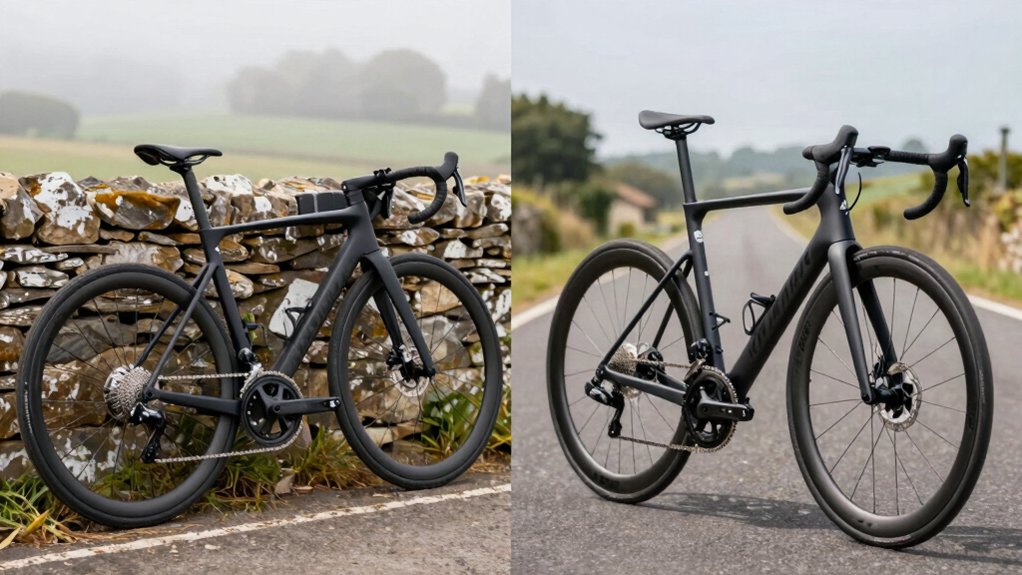
You want clear trade-offs: pick a race bike if you need a low, stretched frame, steeper angles, narrower tires and minimal flex for razor responsiveness; low weight and sprint/agility focus.
Pick an endurance bike if you want taller stack, shorter reach, longer wheelbase, greater tire clearance and engineered compliance for stable tracking and comfort on rough roads.
Geometry, tire width and layup tune handling and compliance. The next sections explain those specifics.
Quick Overview
- Race bikes have lower stack and longer reach for an aggressive, aerodynamic position and sharper handling. Endurance bikes use taller head tubes, shorter reach, and longer wheelbases for comfort and stable tracking.
- Race frames prioritize lateral stiffness and light weight for sprinting and acceleration; endurance frames tune compliance for vibration damping. Tire and wheel choices differ: race favors narrower, high-pressure tires; endurance favors wider, lower-pressure, tubeless-ready setups for comfort and control.
- Material and layup choices reflect goals: carbon for tailored stiffness/weight, aluminum for cost-effective stiffness, steel for predictable, comfortable flex.
Quick Decision Framework: Race vs Endurance Bike
When you need to choose quickly between a race and an endurance road bike, compare three measurable axes: geometry (reach, stack, wheelbase), intended terrain (smooth pavement vs rough/long routes), and handling/stiffness trade-offs. Pick a race bike if you want a low, stretched, highly responsive frame and narrower tires for maximum acceleration and aerodynamics. Choose an endurance bike if you prefer a taller head tube, shorter reach, longer wheelbase, greater tire clearance, and built-in compliance for sustained comfort and stability over varied surfaces.
You’ll assess handling: race bikes give sharp responsiveness and higher energy cost to control; endurance models favor stability and composed tracking. Factor tire clearance and compliance against stiffness and speed. Also weigh price sensitivity and brand perception when prioritizing spec and resale.
Geometry Explained: Reach, Stack, BB Height, Wheelbase
Why do reach, stack, BB height, and wheelbase matter? You use them to predict fit and behavior: reach and stack set your cockpit and posture. BB height affects cornering clearance and pedaling stability; wheelbase trades agility for straight-line stability. Production variance and tubing materials can shift those nominal geometry numbers between frames and model years. Therefore, you should test fit rather than rely on charts.
Reach: Race bikes stretch you forward. Endurance shortens reach for upright comfort.
Stack: Endurance raises stack for reduced neck/back strain. Race lowers it for aero position.
BB height: Lower on endurance to improve stability on rough roads. Higher on race for cornering clearance.
Wheelbase: Longer on endurance for composure. Shorter on race for quick direction changes.
Handling and Ride Feel: Responsive vs Stable Tracking
How sharply do you want the bike to respond under throttle or input? You’ll find race frames deliver nick-of-time responsiveness: shorter wheelbase, steeper head tube, and lower front-end create quick steering and energetic turn-in. That responsiveness demands active input and precise tire pressure tuning to avoid twitchiness on imperfect surfaces.
Endurance frames trade instant reaction for stable tracking. Longer wheelbase, increased fork rake, and more relaxed geometry keep you composed over varied road texture and rougher pavements. You’ll still steer accurately, but with less constant correction, which lowers rider fatigue on long efforts.
Choose race handling when you need razor control and sprint sensitivity; choose endurance when you want predictable tracking, forgiving feedback, and confidence on degraded surfaces.
Comfort Features: Compliance, Damping, and Long-Ride Fit
A bike’s comfort system combines geometry, material compliance, and targeted damping to keep you fresh over long rides. Endurance models deliberately tune those elements for reduced fatigue compared with race designs. You’ll notice purposeful compliance zones in the frame and fork that absorb vibration. Race bikes trade that for lateral stiffness and power transfer.
Frame micro-suspension and engineered flex reduce transmitted shock. Saddle shape and cockpit geometry redistribute pressure for longer comfort. Bar tape thickness and compression characteristics tune hand damping. Seatpost and carbon layup choices control vertical compliance without mush.
Technically, endurance bikes balance damping and pedaling efficiency. Contextually, you accept minor weight or aero penalties to preserve muscle function over hours rather than seconds.
Tire Clearance and Performance: Speed Trade-Offs and Use Cases
Although wider tires add a few grams and a bit more frontal area, they let you run lower pressures and gain real-world speed and control on rough roads that narrow race tires simply can’t match. You’ll trade marginal aero gains for improved comfort and rolling efficiency once you factor vibration losses. Tubeless setups and modern rim widths shrink that rolling-resistance gap.
Choose tire width to match terrain: narrower, high-pressure for smooth pavement; wider, lower-pressure for chipseal and cobbles.
| Use case | Ideal tire approach |
|---|---|
| Smooth road racing | Narrow tires, high pressure |
| Mixed surfaces | Mid-width tubeless, moderate pressure |
| Rough classics | Wide tires, low pressure |
| Commuting/gravel | Wide tubeless, forgiving rim widths |
Frequently Asked Questions
You’ll compare comfort versus performance by evaluating geometry, compliance features, and where you’re willing to trade aerodynamics for reduced fatigue.
Check fit specifics: stack, reach, and bottom-bracket height to predict handling and long-ride posture. Then evaluate tire and wheel options plus frame material tradeoffs (stiffness, compliance, weight) to match your typical terrain and goals.
Comfort Versus Performance
When deciding between comfort and performance, weigh how ride posture, frame compliance, and tire choice affect your power delivery and fatigue over distance. Race bikes give you a lower, stiffer platform that maximizes acceleration and aerodynamics at the cost of more hand, neck, and back loading. Endurance bikes raise the front end, add vertical compliance, and wider tire clearance to cut vibration and cumulative strain. This design preserves sustained power on long, rough rides despite a small sacrifice in short-course speed.
You should compare:
- energy output: race frames boost peak power and sprint efficiency; endurance frames preserve steady-state watts.
- fatigue management: reduced vibration aids muscle recovery across multi-hour efforts.
- terrain fit: wider tires and compliance help maintain power on rough roads.
- logistics: plan nutrition timing to exploit preserved effort on endurance rigs and recover faster after rides.
Geometry And Fit
Because bike geometry directly shapes how you ride, fitting a race or endurance frame means balancing power, comfort, and control for the rides you do most. You’ll notice race frames push you forward with longer reach and lower stack, increasing saddle setback and promoting a stretched, aerodynamic position that optimizes power transfer.
Endurance frames shorten reach and raise the headtube angle for a taller front end. This reduces neck and wrist strain while maintaining efficient pedaling.
Steering changes: steeper headtube angle on many race bikes quickens handling; shallower angles and longer wheelbases on endurance bikes enhance stability over rough roads. When you fit either type, prioritize measured stack/reach adjustments, saddle setback relative to bottom bracket, and small headtube angle effects on handling to match your goals.
Tire And Wheel Choices
Having settled stack, reach, and handling for your intended rides, tire and wheel choices become the next leverage point for balancing comfort, rolling resistance, and control. You’ll pick wider tires on endurance frames to exploit lower pressures and better compliance. Race bikes favour narrower rubber for aero and lower-slope rolling resistance. Rim width affects the tire profile and stability: wider rims pair with wider tires to reduce deformation and improve cornering.
Spoke count matters for durability versus weight; endurance wheels often use higher spoke count for load distribution. Race wheels shave spokes to save grams.
- Endurance: wider rims, 28–32mm tires, higher spoke count, tubeless-ready
- Race: narrower rims, 23–28mm tires, low spoke count, aero focus
- Tire pressure tuned to load and surface
- Consider rim width before tire choice
Frame Material Tradeoffs
Although frame material won’t single-handedly determine your ride, it shapes weight, compliance, durability, and cost in predictable ways you should weigh against your goals. You’ll compare aluminum, carbon, steel: carbon offers low weight and tunable compliance but costs more and can hide damage. Aluminum’s stiffness-to-cost ratio favors race setups where frame stiffness matters. Steel gives durability and predictable flex for endurance comfort.
Consider repairability, corrosion, and long-term fatigue when choosing. Think about where compliance is engineered—seatstays, carbon layup, or tube shaping—since that affects comfort more than nominal material.
Quick reference:
| Material | Weight/Stiffness | Best for |
|---|---|---|
| Carbon | Low weight, variable stiffness | Race or tailored endurance |
| Aluminum | High frame stiffness, affordable | Race-oriented budgets |
Conclusion
Choose the bike that matches how and where you ride: pick a race frame if you prioritize aggressive geometry, lower stack, shorter reach and quicker handling for maximum power transfer and sprint/attack responsiveness. Pick an endurance frame if you want higher stack, relaxed reach, longer wheelbase and greater compliance for sustained comfort and stability on variable roads.
Consider tire clearance, BB height and damping trade-offs. Marginal speed losses buy measurable long-ride performance and control.