The Best Drivetrain Cleaning Routine for Daily Riders
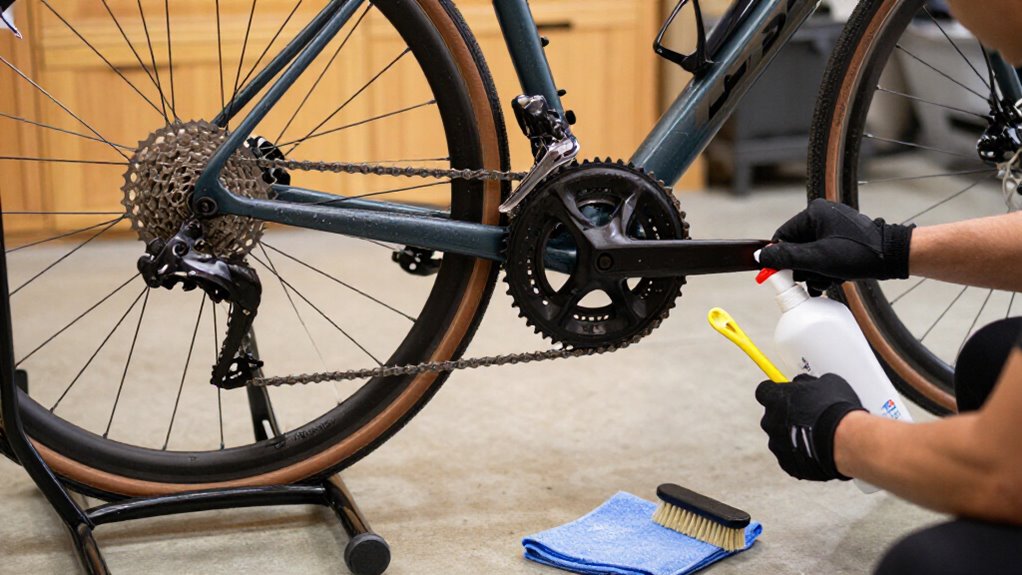
Keep a rag and gloves by your bike, then wipe the chain, cassette, and chainrings after wet rides and every two weeks in dry conditions.
Backpedal the lower chain run through a clean rag, folding it as it darkens.
When grit, black residue, noise, or hesitant shifts appear, use bike-safe degreaser, a nylon brush, gentle rinse, and complete drying.
Lubricate rollers sparingly, wipe excess, and keep degreaser off disc rotors.
The steps below refine troubleshooting.
Five-Minute Routine for Commuters
Keep a clean rag and gloves by your bike, and after any wet commute, wipe the chain, chainrings, and cassette before road grit dries into the drivetrain. This prevents abrasive paste from working into rollers, teeth, and pulley bearings. In wet or winter weather, repeat a light wipe weekly; if roads stay mostly dry, work on a two-week cycle.
Backpedal slowly while you hold the rag around the lower chain run, changing to a clean section as it darkens. For stop-and-go dust, floss between cassette cogs with a shoelace for 30 to 60 seconds, then wipe pulley faces and outer cogs. If the drivetrain grows noisy, dry it completely, apply the correct lube sparingly, and remove excess. Don’t pressure-wash your commuter. Shift through gears; crisp operation confirms success.
Gather Degreaser, Brush, and Rags
Before you clean beyond a quick post-ride wipe, stage a small drivetrain kit: bike-specific degreaser, a stiff nylon brush, two or three microfiber cloths, disposable shop rags, gloves, and condition-appropriate chain lube. Choose a mild citrus or water-soluble formula; harsh solvents can harm paint, plastics, and rubber seals. Keep eye protection nearby, follow label dilution and dwell instructions, and work where ventilation is good.
Use a tray or absorbent mat to capture runoff, not storm drains. Set the tools within reach before you begin; this prevents cross-contamination and keeps clean cloths clean. Gentle spray bottle supplies rinse water.
- Use dedicated cloths for final drying.
- Reserve shop rags for black residue.
- Select wet, dry, or wax lube.
- Add a toothbrush or chain-cleaner device.
Mileage-Based Cleaning Intervals
Use mileage as a baseline, not a fixed rule: for fair-weather road riding, wash the drivetrain every 150–200 miles or every two to three weeks, then wipe the chain and cassette after each ride. Inspect it before departure; visible grit, grinding noise, or dull shifting overrides the schedule.
| Riding condition | Interval | What you gain |
|---|---|---|
| Fair-weather road | 150–200 miles | Calm, quiet shifts |
| Dry commuter | Every two weeks | Confidence before commuting |
| Wet/winter or gravel/MTB | After grime exposure | Relief from abrasion |
| Mixed pavement | Inspect each ride | Early warning |
Rain, road spray, dust, mud, and stream crossings override distance. Clean after grimy rides. Dry commuters can use a two-week rhythm; switch to weekly cleaning in wet or winter conditions.
Record mileage and conditions to refine your schedule over time.
Backpedal Chain Through Rag
Use a clean, lint-free rag, hold it gently around the chain, and backpedal slowly and steadily. Reposition or fold the rag as it darkens so you remove contamination rather than smear it across the links. Continue until the rag picks up little remaining grime, then inspect the chain’s inner and outer runs.
Choose A Clean Rag
A clean, lint-free microfiber rag gives you a quick, controlled way to remove remaining surface grime before lubrication. Choose a fresh, absorbent section with no embedded grit, loose threads, or residue. Microfiber lifts oily film and fine particles without shedding fibers into rollers or sprockets.
Shift to the smallest chainring and smallest rear cog to create clear access along the lower chain run. As you slowly backpedal, let the moving chain draw the rag across each link. Check the cloth after several revolutions. Dark transfer means contaminants remain, so continue with a clean area of the rag. Replace it when it becomes heavily soiled, since a saturated rag can redeposit grit. Stop when it stays mostly clean, then dry any remaining wet spots before applying lube.
Hold The Chain Gently
With the chain on the smallest chainring and smallest rear cog, wrap a clean rag loosely around the lower chain run and turn the pedals backward slowly. Hold the rag with one hand using light, even pressure; don’t pinch the chain or clamp it against the links. Before wiping, apply degreaser and let it dwell for about one minute.
As the chain passes through the cloth, the fibers wick loosened grit and old lubricant from its outer plates and link gaps. Reposition to a clean section whenever the rag turns dark. Continue until it no longer lifts substantial grime and the chain appears markedly cleaner. Then dry the drivetrain, lubricate the rollers, allow the lube to settle, and wipe away excess so dirt won’t adhere again.
Backpedal Slowly And Steadily
Turn the cranks backward slowly and steadily, feeding the entire chain through the rag rather than working one section repeatedly. Maintain light, even pressure as the links pass through the cloth. Slow rotation gives the rag time to lift dissolved grime from the plates, rollers, and link gaps without snagging the drivetrain.
Continue until you’ve rotated the cranks through the chain’s full travel and the cloth no longer picks up dark grit. You’ll see a cleaner chain before moving on. Don’t rush or pedal forward: controlled backpedaling keeps your hands clear and lets you monitor for stiff links, rust, or deposits. Once the chain is clean, dry it completely before applying the lube suited to your riding conditions. This prevents lubricant from trapping grit.
Reposition The Rag Often
Reposition the rag every few crank revolutions so the chain runs through a clean section of cloth rather than redistributing removed grit. After two or three turns, loosen your grip, rotate or fold the rag, and clamp a fresh area around the lower chain run. Keep steady, light pressure: the cloth should contact the side plates, outer surfaces, and roller area without pinching the chain or pulling it sideways.
Work systematically along the rag’s length, changing to an unused panel before it becomes saturated. As you backpedal, move the chain through front and rear gear positions, so the cloth meets it as it travels across cog lines. Hold the rag clear of chainrings and derailleur pulleys, and keep your fingers outside the moving drivetrain.
Check For Remaining Grime
How do you confirm the chain is actually clean? After degreasing and scrubbing, shift into a gear that gives you access to the lower chain run. Wrap a clean section of rag around the chain, apply pressure, and backpedal slowly. The rag acts as an inspection tool: it shows whether black or brown grit remains.
Watch the chain surface as it moves. It should appear uniformly clean, not spotty or oily around inner links. Keep turning until the rag stays mostly clean over a pass. If it darkens again, repeat degreasing and brushing, then test once more.
Complete this check before drying and lubricating. Residual grease and grit will combine with fresh lube, accelerating buildup and shortening the interval before your drivetrain needs attention.
Rainy-Day Drivetrain Adjustments
After rainy rides, you’ll need to clean the drivetrain more often to remove abrasive road grit before it accelerates wear. Wipe the chain, cassette, and chainrings promptly, then let them dry fully before lubrication.
Apply a wet-weather lube to the rollers and wipe off excess so it protects without collecting dirt.
Increase Cleaning Frequency
In rainy or winter conditions, increase drivetrain cleaning beyond your dry-weather schedule: wipe the chain and cassette after every ride to remove water-borne grit before it packs into cassette gaps and derailleur pulleys.
Rain washes road film, salt, and fine debris into moving parts, so a dry-weather biweekly routine isn’t sufficient. For wet commuting, make a light inspection and clean a weekly minimum. Rotate pedals or rear wheel, inspect chain runs, cassette valleys, and pulley teeth, then wipe away visible contamination. If noise increases, shifting hesitates, or black residue remains, perform a full degrease-and-scrub instead of waiting for a mileage interval. Dry drivetrain completely with clean rags, including between cogs and around pulleys. Frequent removal prevents abrasive paste from substantially accelerating premature drivetrain wear.
Use Wet-Weather Lubricant
Choose a wet-weather chain lubricant when rain, puddles, or winter grit are part of your daily route. Its durable film resists wash-off better than dry lube, keeping the chain’s rollers and inner links protected through moisture-heavy commutes.
After each wet ride, wipe away grit from the chain and cassette before applying lubricant. Rotate the pedals or rear wheel slowly and place a small amount on each roller, targeting the chain’s working surfaces rather than coating outside plates. Let the lube settle according to its label, then wipe away excess. Too much wet lube combines with road debris into a sticky paste, increasing friction and accelerating wear.
Use mileage intervals as a fair-weather guide. If shifting dulls, clean and re-lube. Rain needs more frequent service.
Dry Components Promptly
Wet-weather lube protects best when you remove moisture and abrasive grit promptly. After every wet ride, wipe the chain, cassette, and rear derailleur plates with a clean rag. This prevents grit from drying into grinding paste around pins, rollers, and jockey wheels. If the drivetrain looks contaminated or sounds gritty, don’t wait for your mileage-based service interval.
Use low-pressure water only when needed, then dry every treated surface thoroughly. Don’t pressure-wash the drivetrain: it can force water into bearings and small pivots. Apply degreaser only to visibly contaminated chain and cassette, rinse gently, and dry before relubricating. In winter rain, make this wipe-down routine automatic after each ride. Add wet lube when the chain begins to sound noisy or runs rough in wet conditions.
Quiet Shifts Under Load
Quiet shifts under load start with a clean, low-friction drivetrain: grit on the chain, cassette cogs, and rear derailleur makes the mechanism work harder when you’re climbing or accelerating. Spray chain-specific degreaser onto chain, cogs, and derailleur pivots; let it dwell as directed; scrub with firm brush. Rotate pedals slowly to reach each roller and tooth profile. Rinse thoroughly, clear residue from cassette gaps and derailleur guide areas, then dry completely.
Apply dry lube for clean routes or wet lube for persistent moisture, targeting rollers, not coating drivetrain. Let it penetrate, then wipe off excess. Wipe chain after every ride, especially wet ones, and complete a wash every 150–200 miles or two to three weeks. Clean sooner whenever shifting loses its crisp, quiet feel.
Chain Skipping Under Light Pedaling
Under light pedaling, chain skipping usually points to grit packed around the chain, cassette cogs, or chainring teeth, where it disrupts smooth engagement. Clean the cassette and chainrings with degreaser, then scrub and rinse until the teeth are clear of mud and dust. Deposits can make the chain climb or slip on individual teeth even at low load.
Dry every part completely. Check that the chain flexes and tracks smoothly through each gear; test by backpedaling while watching the derailleur. Apply dry lube for dry commutes or wet lube for frequent wet roads, targeting rollers and wiping away excess.
If it doesn’t stop, inspect chain stretch and cog and chainring profiles. A stretched chain or shark-fin teeth can skip under gentle pressure after cleaning.
Avoid Degreaser on Disc Rotors
Keep degreaser confined to the chain, cassette, and chainrings: if it reaches a disc rotor, oily residue can cause squeal, reduce braking power, and contaminate the pads. Shield the rotor while you spray and rinse, directing runoff away from its braking track.
- Cover rotor with clean rag before drivetrain work.
- Apply degreaser directly to chain components, never aerosolize near brakes.
- For rotor grime, use lightly soapy cloth; clean residue with rubbing alcohol and let it dry.
- Lube only chain rollers, then wipe excess thoroughly.
If degreaser contacts rotor, stop and clean it thoroughly with rubbing alcohol before riding. Don’t soak or spray cleaner directly on the rotor. A controlled application prevents pad contamination and preserves consistent brake bite in wet daily conditions each ride.
Inspect Chain Wear Monthly
Inspect chain wear about once a month, and check more often after riding through rain, winter salt, or dusty grit. Moisture and abrasive debris accelerate elongation and can hide problems beneath accumulated lubricant. After wiping the chain, use a chain-wear gauge according to its markings. If it indicates measurable stretch, clean and relube the drivetrain, but schedule chain replacement promptly. A worn chain shifts poorly and damages cassette cogs and chainrings faster.
Between scheduled checks, listen and feel while riding. Loud running in dry weather, shifting that feels sluggish or less smooth than usual, and unusually heavy grime on the chain or cassette warrant earlier service. Clean the drivetrain whenever it looks or sounds dirty, then repeat the gauge check. Track results to identify accelerating wear.
Conclusion
Keep your commuter drivetrain clean by following a short, repeatable process: wipe and backpedal the chain, brush debris from the cassette and jockey wheels, then lubricate sparingly.
Adjust your schedule for mileage, rain, and gritty roads, and keep degreaser away from disc rotors. If shifts grow noisy or the chain skips, inspect alignment, lubrication, and wear before parts fail. Spend five minutes regularly, and you’ll reduce friction, protect components, and maintain dependable shifting every day.