Bottom Bracket Standards Explained: A No-Confusion Guide
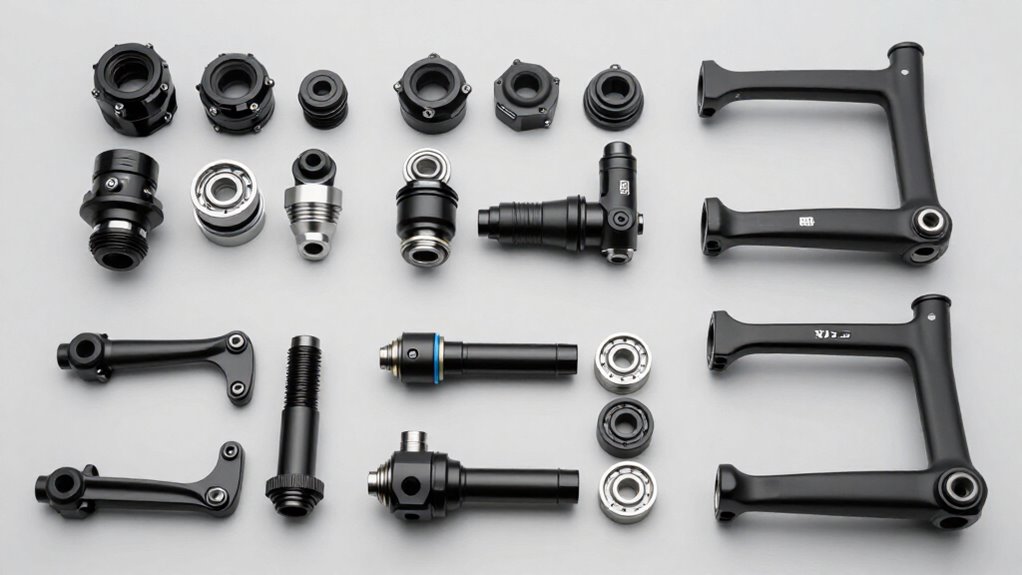
To identify your bottom bracket, you must measure the bare shell’s inside diameter and width, then determine whether it is threaded or press-fit.
Match replacement cups to that frame standard, not width alone.
Next, match bearing inner diameter to your crank spindle: 24, 29 mm DUB, or 30 mm.
BBRight needs offset measurements because its 79 mm shell is asymmetric.
Correct tools and dimensions prevent incompatible parts; the details ahead clarify each standard in turn.
Shell Diameter Determines Compatibility
Bottom-bracket shell inner diameter is a primary compatibility measurement because it determines which cups, collars, or bearing cartridges can physically fit your frame. Don’t identify a replacement by shell width alone: measure the bore and confirm the standard. An English-threaded shell has an approximately 33.7 mm inner diameter and 1.37 × 24 TPI threads, so it accepts its matching threaded cups, not larger systems.
T47 uses M47 × 1.0 threads and an approximately 46 mm frame bore; its components generally can’t interchange with English-threaded parts.
Press-fit families likewise rely on bore size: PF41/BB86 measures about 41 mm, PF42/BB30 about 42 mm, and PF46/OSBB/BBright about 46 mm. Match the replacement cup, collar, or cartridge to the measured shell ID before ordering parts for your frame.
Bearing Bore Controls Spindle Choice
Once you’ve matched the shell diameter, match the crank’s spindle to the bearing bore—the bearing’s inner diameter. The spindle must fit the bearing’s inner race directly or through the correct adapter sleeve. A 24 mm spindle needs a 24 mm bearing ID; a 29 mm SRAM DUB spindle needs 29 mm; and a 30 mm spindle needs 30 mm.
Check the complete bearing specification, not only its outside diameter: 24x37x7 has a 24 mm bore, while 30x42x7 accepts a 30 mm axle. In cup-based press-fit systems, select cups whose installed bearings match your spindle. A sleeve can reduce an oversized bore, but it can’t make an undersized bore accept a larger spindle. Don’t force a mismatch; it damages bearings and prevents correct crank operation. Confirm the crank maker’s specified bearing interface first, always.
Measure Shell Width Before Ordering
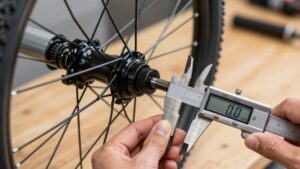
Before ordering cups or bearings, measure the bare bottom-bracket shell from the drive-side face to the non-drive-side face in millimeters. Remove the crank and any existing cups first, then use calipers and record the result.
Width separates standards that share a bore diameter: PF41 retains a 41 mm ID but spans roughly 86, 132 mm widths. T47 shells can measure 68, 73, 83, or 100 mm, and each requires cups matched to that width.
Likewise, PF30/OSBB commonly uses 68 mm road or 84.5 mm mountain shells, while BBright variants may be 68, 73, 83, or 100 mm. Don’t order from diameter alone: T47 and PF46 both measure about 46 mm internally. On older direct-fit frames, 90.5 mm and 95.5 mm identify Trek BB90 and BB95.
Threaded Versus Press-Fit Shells
You’ll identify a threaded shell by its internal threads, which accept screw-in cups such as BSA or T47. A press-fit shell has a smooth, dimension-specific bore that holds bearings or cups by interference fit.
Match the shell’s thread or bore diameter, width, and your crank’s spindle standard; these systems aren’t interchangeable without the correct bottom bracket or adapter.
Threaded Shell Construction
A threaded bottom-bracket shell has internal threads that accept threaded cups, rather than a smooth bore that holds press-fit bearings or cups by interference. You identify the shell by removing the crank and measuring its internal diameter and width. An English (BSA) shell typically has a roughly 33.7-millimetre internal diameter and uses 1.37-inch-by-24-TPI threads. Its cups normally tighten with right-hand threads on the non-drive side and left-hand threads on the drive side.
T47 gives you a larger M47 × 1.0 cup thread and an approximately 46-millimetre shell ID, while retaining the same side-specific thread directions. Match the cups to both the shell’s diameter and its thread specification; width alone doesn’t establish compatibility. Don’t assume a threaded shell uses English dimensions: measure before ordering cups.
Press-Fit Shell Construction
Press-fit shells replace internal threads with a precisely sized, smooth frame bore that retains a bearing or cup through an interference fit. Instead of screwing cups into a 1.37×24 TPI English shell, you press components into a bore specified by diameter and tolerance. Common nominal bore classes include PF41, PF42/BP30, and PF46, each named for its frame inside diameter.
The bore, cup or bearing outside diameter, and their stack-up determine retention.
You’ll need a press for installation and a puller for removal; don’t strike bearings into place. Unlike threaded cups, press-fit parts have no tightening direction. Frame accuracy matters: an undersize or oversize bore can complicate service and shorten component life. Many systems use composite cups to accommodate manufacturing variation and provide an interface.
Key Compatibility Differences
Threaded and press-fit bottom brackets differ first at the frame shell: a threaded shell has internal threads that accept screw-in cups, while a press-fit shell uses a smooth, precisely sized bore that retains cups or bearings through an interference fit.
With English (BSA) shells, match 1.37×24-TPI threads: non-drive cup tightens clockwise, but drive-side cup tightens counterclockwise. T47 uses M47×1.0 threads and an approximately 46 mm shell ID.
Press-fit identification starts with bore diameter and width: PF41, PF42, and PF46 describe 41, 42, or 46 mm bores; variants specify width. Match frame dimensions and tolerances to the bearing or cup, not merely crank. A 24 or 30 mm spindle can be correct yet not fit your shell; choose a bottom bracket designed for both interfaces.
Asymmetric BBRight Shell Offsets
With BBRight, you get a 79 mm press-fit shell whose added width sits on the non-drive side, leaving the drive-side bearing position BB30-like. This offset gives the frame more drive-side clearance for a larger downtube and chainstay while preserving practical crank and Q-factor geometry.
Before you buy cups or a crank, measure the shell width and identify the side-specific bearing layout, because BBRight parts don’t interchange directly with symmetric BB30 or PF30 systems.
How BBRight Offsets Work
BBRight achieves extra frame width by moving the bottom-bracket layout off the bike’s centerline rather than widening it equally on both sides. You get a press-fit system built around BB30-style, 30 mm crank and bearing dimensions, but its shell is asymmetric. The drive side follows BB30’s 68 mm reference geometry, while the non-drive side extends outward using a BB90-like arrangement.
Together, those dimensions create an effective shell width of roughly 79 mm, not a centered 79 mm bore.
That offset is designed into the frame, its bearing seats, and the crank’s installed position. When you replace parts, use BBRight-specific bearings, cups, or a compatible direct-fit setup. Don’t assume symmetric BB30 or PF30 hardware will locate the bearings correctly; matching shell width alone isn’t always enough.
Drive-Side Clearance Benefits
Rather than widening the bottom bracket equally on both sides, BBRight keeps a BB30-style drive-side layout and adds most of its extra width on the non-drive side. This preserves packaging where your chainstay, crank, and heel pass the frame. The direct-fit bearing bores place the asymmetric structure in the frame itself, so you gain room without adopting a BB90-width layout. In practice, the 79mm shell gives designers stiffness and non-drive support while retaining a compact drive-side envelope. That can reduce interference constraints near the drivetrain and lets frame tubes be shaped efficiently.
| Design feature | Practical result |
|---|---|
| BB30-style drive side | Compact drivetrain-side envelope |
| Extra non-drive width | Space moved away from drivetrain |
| 79 mm total shell | Balanced stiffness and packaging |
| Frame-bore offset | Clearance follows frame design |
Compatibility And Measurement
That offset means you can’t identify a BBRight frame by shell width alone. Measure the shell at roughly 79 mm, then establish how its bearing seats sit relative to the frame centerline. BBRight is asymmetric: its drive side follows a BB30-style arrangement, while its non-drive side uses BB90-style integration.
The resulting layout is not mirrored.
For a parts check, record shell width, shell inner diameter—commonly about 42 mm in this BB30-derived family—and each side’s bearing or cup offset. BBRight uses 6806 bearings pressed directly into the frame, so install components specified for Cervélo’s bearing positions. Don’t treat a generic BB30, PF30, or PF41 unit as interchangeable simply because a bearing appears to match. You must match the spindle system and the frame’s asymmetric bearing placement.
Installing a SRAM DUB Crank
Installing a SRAM DUB crank starts with identifying your frame’s bottom-bracket shell standard, inside diameter, and width. Remove the old crank and bottom-bracket parts, then confirm the shell’s measurements. DUB uses a 28.99mm spindle, so install only bearings or adapters specified for your shell.
| Shell | DUB action |
|---|---|
| BSA | Thread compatible cups into shell. |
| T47 | Thread compatible cups into shell. |
| PF30/BB30 | Press specified cups or bearings. |
| BB86/92 | Press specified cups or bearings. |
For threaded systems, fit DUB-compatible cups before inserting the crank. For press-fit systems, use a bearing press and the specified DUB cups.
Slide in the spindle, check alignment and rotation, eliminate side play, then torque the crank hardware to SRAM’s specification. Don’t force incompatible parts; they’ll compromise fit and service life long term.
Italian Threads: Both Right-Handed
Italian bottom brackets use a 36 mm × 24 TPI ISO-style thread in a typically 70 mm-wide shell, but their key service distinction is that both cups have right-hand threads. You tighten each cup clockwise and loosen it counterclockwise. Don’t apply the BSA rule to the drive-side cup: English/BSA drive-side cups use left-hand threads, whereas Italian cups don’t.
Before ordering replacements, verify the frame’s 36 × 24 threading and measure or confirm its 70 mm shell width. Italian cups aren’t interchangeable with BSA cups despite superficial similarity. Use the correct Italian-thread cup tool and install cups to the manufacturer’s torque specification.
Also match the bottom bracket to your crank’s spindle interface. Thread standard alone doesn’t determine whether you need square-taper, splined, or another compatible spindle system type.
Assuming BB30 and PF30 Interchangeability
Thread identification prevents one common mismatch, but BB30 and PF30 create another: they share 30 mm-spindle, 6806-style bearing geometry yet aren’t direct substitutes. Both accept the concept of a 30 mm spindle, but their frame-side interfaces differ.
- BB30 presses bearings directly into the frame shell, so bore accuracy controls fit, alignment, sealing, and noise.
- PF30 presses composite cups into the shell; those cups carry the bearings and provide a more controlled interface.
- Don’t install BB30 bearings in a PF30 shell or PF30 cups in a BB30 shell without a purpose-designed conversion solution.
- Confirm your crank’s specific spindle, bearing, preload, and support-hardware requirements. A nominal 30 mm spindle alone doesn’t guarantee compatibility. Use the system-specific parts specified by the crank and bottom-bracket manufacturer for correct installation.
Check Your Frame’s BB Code
Before you buy a replacement bottom bracket, identify your frame’s BB code from the shell itself: remove the crank, determine whether the shell is threaded or a smooth press-fit bore, then measure its inner diameter and width. Threads point to a threaded system: BSA measures 1.37×24 TPI, with a 33.6–33.9 mm bore; T47 uses M47×1, 46 mm. On English BSA, the non-drive cup has right-hand threads and the drive cup has left-hand threads.
A smooth bore requires a press-fit code: PF41, PF42/BB30, and PF46/PF30 or BBright correspond to approximately 41, 42, and 46 mm IDs. Pair ID with width: BB86 is 41×86.5 mm, BB92 41×91.5 mm, while BB90/95 are 37 mm ID. If numbers don’t match, check manufacturer documentation or ask a mechanic; don’t guess.
Conclusion
You’ll ensure bottom-bracket mistakes when you identify the shell standard before buying parts. Measure shell width and inside diameter, confirm threaded or press-fit construction, and note any offset such as BBRight.
Match the bearing bore to your crank spindle, especially with DUB, BB30, and PF30 systems. Don’t treat similar names as interchangeable.
Finally, read your frame’s BB code and thread direction; Italian cups use right-hand threads on both sides. These checks ensure fit and service life.