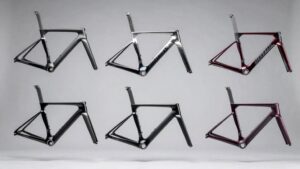
Road Bike Frame Materials Explained
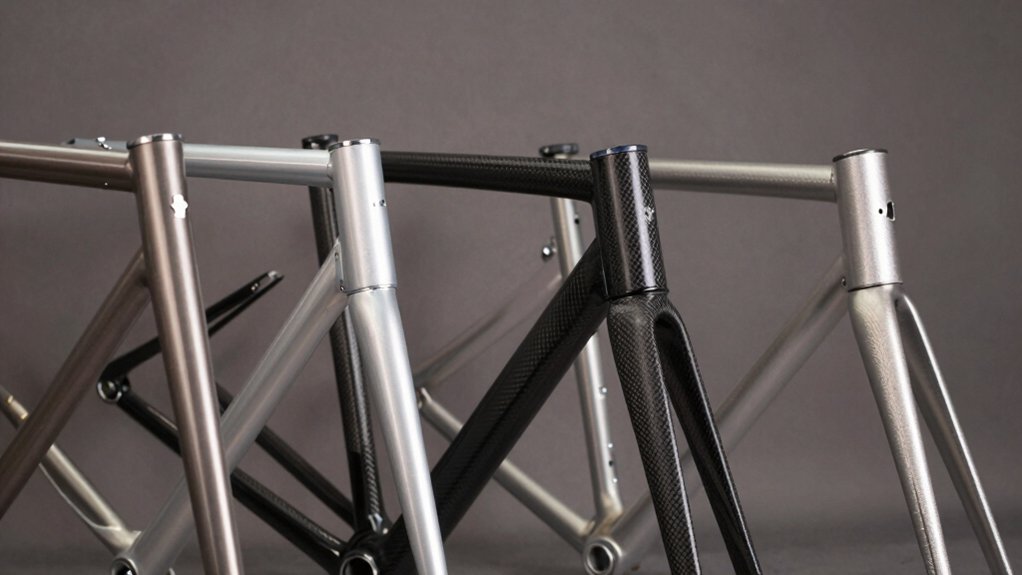
You’ll pick frame material by what you ride, how much you weigh, and what you’ll tolerate.
Carbon gives the lowest mass and tunable stiffness for racing; however, it needs impact inspection and costly repairs.
Aluminum is stiff, affordable, and punchy for crits; however, it can be harsher and ages under fatigue.
Steel and titanium trade lightness for lasting comfort, repairability, and durability for touring or long days.
Keep scrolling to see discipline-by-discipline trade-offs and maintenance tips.
Quick Overview
- Carbon: Lightest and tunable for targeted stiffness/comfort, best for racing but costly and repair-sensitive.
- Aluminum: Stiff, cost-effective, and responsive for sprints and crits; however, it provides a firmer ride and has a finite fatigue life.
- Steel: Durable, repairable, and comfortable for endurance or touring. It is heavier but predictable and long-lasting.
- Titanium: Corrosion- and fatigue-resistant with a smooth ride and lifetime durability; however, it is priced at a premium.
- Choose by discipline, budget, maintenance needs, and life-cycle trade-offs: weight, comfort, repairability, resale.
Quick Guide: Pick a Frame Material by Discipline and Budget
Which frame material suits you depends on what you ride and what you can afford. You evaluate discipline tradeoffs by matching material properties to use: carbon for minimal mass and tunable stiffness in racing; aluminum for cost-effective stiffness and responsive handling in criteriums and entry-level road. Titanium or steel is ideal for endurance, touring, and rough-surface comfort where durability and fatigue resistance matter.
You should question budget myths that claim only carbon is performance-worthy. Aluminum often matches geometry and responsiveness at far lower cost. Factor long-term durability, repairability, and recyclability: aluminum and steel are easier to repair and recycle; carbon is tunable but costly to fix; titanium resists fatigue. Choose by intended mileage, terrain, and replacement budget, not marketing alone.
Why Weight, Stiffness and Comfort Matter
Why do weight, stiffness and comfort matter? You select frame material to optimize power transfer, fatigue management and sustained speed. Lower mass reduces climbing energy cost and accelerative work; studies show marginal gains compound over long efforts. This influences weight perception under load.
Stiffness governs drivetrain efficiency and handling precision; localized stiffness improves sprint and cornering response, while excessive global stiffness raises transmitted vibration.
Comfort modulates rider output via ergonomic comfort: reduced vibration lowers fatigue, preserves power and improves concentration on long rides. Materials differ in tunability: carbon lay-up, titanium springiness, steel compliance and alloy stiffness. You match material properties to intended use. Quantify trade-offs by measuring vibration, compliance and stiffness-to-weight ratios for objective comparison.
Aluminum Frames : Strengths, Trade-Offs, Ideal Riders
Although aluminum frames trade some long-term fatigue resistance for lightness and cost-effectiveness, they deliver a high strength-to-weight ratio and lateral stiffness that riders use to convert power into quick accelerations and precise handling. You’ll get predictable, efficient power transfer from 6000-series and 7000-series alloys with tube profiles sized to compensate lower density; tube walls are thicker and diameters larger than steel to maintain stiffness.
Expect a firmer ride that modern compliance tuning and wider tyres mitigate. Consider fatigue aging: repeated stress cycles reduce service life relative to titanium or steel, so inspect welds and specify appropriate duty. Aluminum’s recyclability limits are better than carbon’s but vary by alloy and local recovery infrastructure; factor end-of-life management into choice.
Carbon Frames : Performance Benefits and Durability Limits
If you’ve been weighing aluminum’s stout stiffness and cost advantages, carbon fiber offers a different engineering trade-off: it lets manufacturers place material only where it’s needed. This yields the lightest frames with the highest stiffness-to-weight ratios. You’ll notice faster accelerations and targeted compliance because layup optimization tailors fiber orientation and ply count for specific tubes and junctions. Carbon’s damping reduces road buzz compared with alloy, improving endurance performance.
High stiffness-to-weight enables aggressive race geometries. Tunable layups let you balance comfort, compliance, and torsional stiffness. Impact damage can delaminate plies; inspect for cracks and soft spots. Resin creep under sustained load/heat affects long-term modulus retention. Repair is feasible but often costly and scrutinized for structural integrity.
Use carbon where performance gains justify maintenance and inspection discipline.
Steel Frames : Comfort, Touring and Real-World Strengths
What makes steel frames endure as a touring and comfort choice is their predictable strength-to-weight behavior and proven reparability. You get a compliant ride because steel’s modulus and slender tubing damp road vibration better than aluminum, reducing rider fatigue on long days. Proven grades (Reynolds 520, 631, 853) balance tensile strength and formability for loaded luggage and rough roads.
Steel tolerates field repairs; fillet or sleeve repairs are practicable, so downtime’s minimal. Be mindful of galvanic corrosion when mixing metals: proper isolation and coatings prevent electrochemical attack. Unlike aluminum, steel exhibits favorable lifetime fatigue characteristics when stressed within design limits; however, it’s heavier.
For touring and bikepacking where durability, predictable failure modes, and serviceability matter, steel remains a rational, evidence-backed choice.
Titanium Frames : Durability, Ride Feel and Who Should Buy
Why choose titanium for a road frame? You get a high strength-to-weight alloy (e.g., 3Al-2.5V, 6Al-4V) that resists corrosion and fatigue. This addresses common durability myths with metallurgy and fatigue data rather than anecdotes.
- Lifetime-grade fatigue resistance confirmed in lab cycle tests
- Corrosion immunity removes need for coatings or frequent maintenance
- Measured compliance provides long-distance vibration attenuation
- Cost-per-performance favors long-term ownership over replacement cycles
- Practical for mixed-surface touring and fast endurance rides
You should buy if you value longevity, low-maintenance endurance, and a forgiving ride without sacrificing too much weight. Target buyers include anglers of long miles, bikepackers, and riders who prioritize asset durability over up-front cost.
Ride-Feel Comparison: Comfort, Responsiveness, Weight Trade-Offs
Balancing comfort, responsiveness, and weight comes down to material properties and design choices: you’ll trade stiffness for compliance across aluminum, carbon, steel, and titanium.
Carbon yields the lightest frames and the highest stiffness-to-weight; it lets you tune lay-ups for compliance or sprint responsiveness. Aluminum is stiff and responsive, but it transmits more buzz unless frame design, wider tires, and lower tire pressures compensate.
Steel and titanium absorb vibration, boosting seat comfort and reducing rider fatigue while adding mass. In practice, geometry, tubing profiles, and tire choices often dominate subjective feel. Matching lower tire pressures with appropriate rim and tyre widths can recover comfort without huge weight penalties.
Select material by prioritising race responsiveness, long-ride comfort, or minimal mass; do not base your choice on myths alone.
Cost, Maintenance and Repairability by Material
How much you’ll spend over a bike’s life depends as much on material as on intended use and repairability. You should assess upfront cost, expected maintenance intervals, repair complexity and how warranty coverage and resale value offset lifetime expense.
Materials behave differently: Aluminum is affordable but fatigues. Carbon is light and costly to repair. Steel is repairable and durable. Titanium resists corrosion and lasts but commands a premium.
- Aluminum: low purchase price, routine maintenance, moderate resale value.
- Carbon: high purchase price, specialized repairs, warranty scrutiny, variable resale value.
- Steel: low-to-mid purchase price, weldable in the field, solid resale value.
- Titanium: high purchase price, minimal corrosion maintenance, strong resale value.
Service costs scale with repair complexity and parts availability.
How to Choose: Match Material to Budget, Discipline and Priorities
Which frame material suits you depends on three clear factors: budget, riding discipline, and long-term priorities. Decide budget first: aluminum gives the best cost-to-performance for racers or entry-level riders. Carbon suits elite racers needing minimal weight and tuned lay-ups if you can afford limited color options and higher service costs. For endurance, touring, or loaded bikepacking, prioritize steel or titanium for compliance, durability, and repairability. Titanium commands premium pricing but offers lifetime fatigue resistance.
Match discipline to material: choose stiff alloy or carbon for sprinting and crits. Choose compliant steel or titanium for long days and rough roads. Factor brand history for proven designs, warranty, and resale. Finally, weigh maintenance, crash tolerance, and recyclability against initial outlay to select the best frame.
Frequently Asked Questions
You’ve got practical questions about materials, from common tradeoffs to how weight affects ride feel. I will compare durability and maintenance profiles. I will show cost-versus-performance tradeoffs with evidence-based guidance.
Use this FAQ to match material strengths to your budget, discipline, and priorities.
Common Material Questions
Curious about trade-offs between frame materials? You’ll want clear, evidence-based answers on longevity, repairability, and environmental impact: including scandium debates and recycling ethics to make an informed choice.
What’s the lifespan difference between alloys, steel, titanium, and carbon? How repairable is each material after impact or fatigue-related damage? What are the quantified recycling pathways and losses for aluminum vs. carbon? Do scandium-treated alloys materially change strength-to-weight or just marketing claims? How do manufacturing energy and end-of-life disposal compare across materials?
You’ll evaluate stiffness, corrosion, fatigue resistance, repair cost, and lifecycle impact. Use peer-reviewed failure data and manufacturer specifications when comparing. Ask for test reports and recycling stream documentation before deciding.
Weight And Ride Feel
After comparing longevity, repairability, and lifecycle impacts, you’ll want concrete answers about how weight and frame material affect the ride you actually feel and the performance you get. Lighter materials like carbon and titanium reduce inertial mass; this improves acceleration and climbing efficiency. Aluminum is light and stiff; steel is heavier but adds rotational stability.
Frame flex varies: carbon layups and titanium tubing can be tuned for lateral stiffness with vertical compliance. Aluminum typically shows higher pedalling stiffness and harsher vibration transmission. Tire pressure interacts directly with perceived comfort and rolling resistance. Lower pressure increases compliance but can raise rolling resistance and pinch-flat risk.
Choose material and pressure as a system: match frame flex characteristics to intended use (racing, endurance, touring) for best performance.
Durability And Maintenance
How long will a frame last and what upkeep does it need? You’ll see wide variation by material: aluminum shows finite fatigue life, steel and titanium endure longer, and carbon depends on lay-up and impact history. You should perform regular crack inspection and follow simple maintenance to maximize service life.
- Inspect joints, welds, and high-stress areas monthly for cracks or delamination.
- Monitor mileage against manufacturer fatigue life data; retire frames that approach rated cycles.
- After crashes, do a professional non-destructive test on carbon or suspect aluminum.
- Keep components torqued to spec and protect finishes to limit corrosion initiation.
- Store dry, clean, and avoid prolonged UV or chemical exposure to preserve resin and metals.
Cost Versus Performance
Mileage, material fatigue data, and inspection schedules all affect the true cost of ownership. It makes sense to compare upfront price against long-term performance. You’ll weigh aluminum’s low purchase cost and recyclability against shorter fatigue life; plan periodic inspections and potential replacement.
Carbon costs more initially and for repairs; however, its superior stiffness-to-weight and tunable lay-up often reduce component upgrades and improve aero testing outcomes. This can offset price for racers. Steel and titanium sit between: steel is cheap to repair and durable for loaded touring. Titanium’s high fatigue resistance gives lifetime value despite premium price.
Don’t forget extras: paint and color customization add cost, and validated lab or wind-tunnel data should inform value judgments.
Conclusion
Choose the frame material that matches your discipline, budget and performance priorities. Aluminum gives low weight and high stiffness for sprinting and racing; however, it trades comfort and fatigue resistance. Carbon maximizes stiffness-to-weight and vibration damping for competitive riders; yet, it demands careful inspection and repair protocols.
Steel delivers predictable compliance, durability and easier field repairs for touring and commuting. Balance measured weight, measured stiffness and maintainability against real-world use to optimize long-term value and safety.